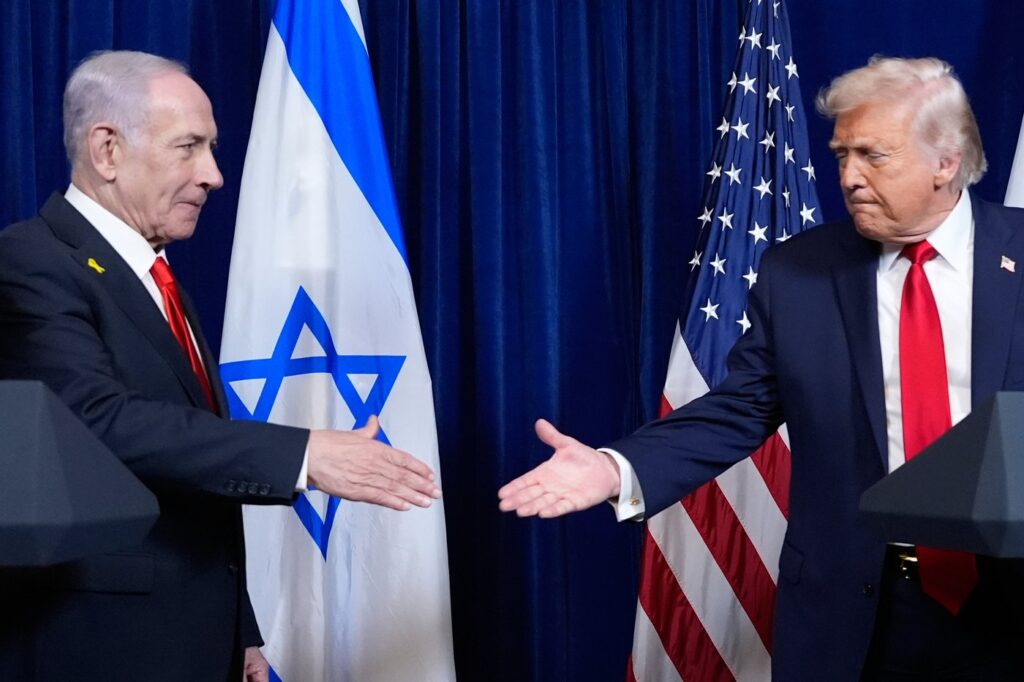
JERUSALEM - Israel's recent military actions against Lebanon and Iran have highlighted a rift between U.S. President Donald Trump and Israeli Prime Minister Benjamin Netanyahu. Both leaders initially aligned in their military strategy, but distinct national priorities have emerged, particularly after Trump's public admonition to Israel not to strike Beirut during its conflict with Iran-backed Hezbollah militants.
Following Israel's strikes on Beirut, Iran responded by launching ballistic missiles at Israel for the first time since a ceasefire in April. This led Israel to retaliate against Iranian targets despite Trump's ongoing negotiations with Iran. As the situation cooled, it became evident that the differing objectives between the two leaders would likely persist.
With elections approaching in both the U.S. and Israel, Trump is motivated to de-escalate the conflict to alleviate rising gas prices and unfavorable public opinion regarding the war. In contrast, Netanyahu faces pressure to demonstrate effectiveness against Hezbollah and Iran, amid criticism over his handling of the ongoing conflicts resulting from Hamas's attack on October 7, 2023.
Initially, when the U.S. and Israel launched an attack on Iran on February 28, 2025, their collaboration appeared unified. Netanyahu aimed to weaken Iran's military capabilities, eliminate its nuclear ambitions, and unseat its leadership, while Trump leveraged the strikes as a milestone in his foreign policy. However, a divergence soon became apparent; Trump preferred a swift resolution similar to the U.S. intervention in Venezuela, whereas Netanyahu signified a willingness to engage in a prolonged conflict to decisively defeat Iran and its allies.
As the conflict continued, frustrations mounted among both American and Israeli audiences—though for different reasons. In the U.S., soaring gas prices sparked discontent among Trump's base, with November elections looming, putting substantial pressure on his administration. Conversely, Netanyahu faced backlash over his failure to achieve a decisive military victory more than two years post-Hamas attack, with persistent threats from Hezbollah and an ongoing Iranian nuclear program.
The situation in Lebanon exacerbated tensions, as fighting persisted between Israel and Hezbollah despite declared ceasefires. Iran's demand for Lebanon to be part of a broader truce seemingly aligns with Trump's interests on negotiations, while Israel remains committed to neutralizing the threat posed by Hezbollah. Reports indicate a tense phone call between Trump and Netanyahu, where Trump expressed frustration when Israel conducted strikes that jeopardized U.S.-Iran negotiations.
In interviews following the strikes, Trump stated his dissatisfaction with Israel’s actions in Beirut, where a residential building was hit, resulting in civilian casualties. He further claimed authority over decision-making in the alliance, emphasizing his expectation for Israeli restraint. Following Trump's remarks, Israel continued its military operations against Iran, signaling a lack of alignment between the two allies.
Despite the visible rifts, both Trump and Netanyahu attempted to downplay the fundamental disagreements. Following the strikes, Netanyahu affirmed Israel's right to self-defense while expressing appreciation for his dialogues with Trump. While these types of tensions are not uncommon in the U.S.-Israel relationship, the visibility of these disputes is unprecedented, according to analysts like Michael Singh from the Washington Institute for Near East Policy.
While some experts see the potential for a significant rift, others believe Netanyahu is managing to navigate the situation without jeopardizing the core alliance with the U.S. However, basic disagreements regarding strategies in Lebanon, Iran, and Gaza remain unresolved, indicating an ongoing complex dynamic in U.S.-Israel relations.