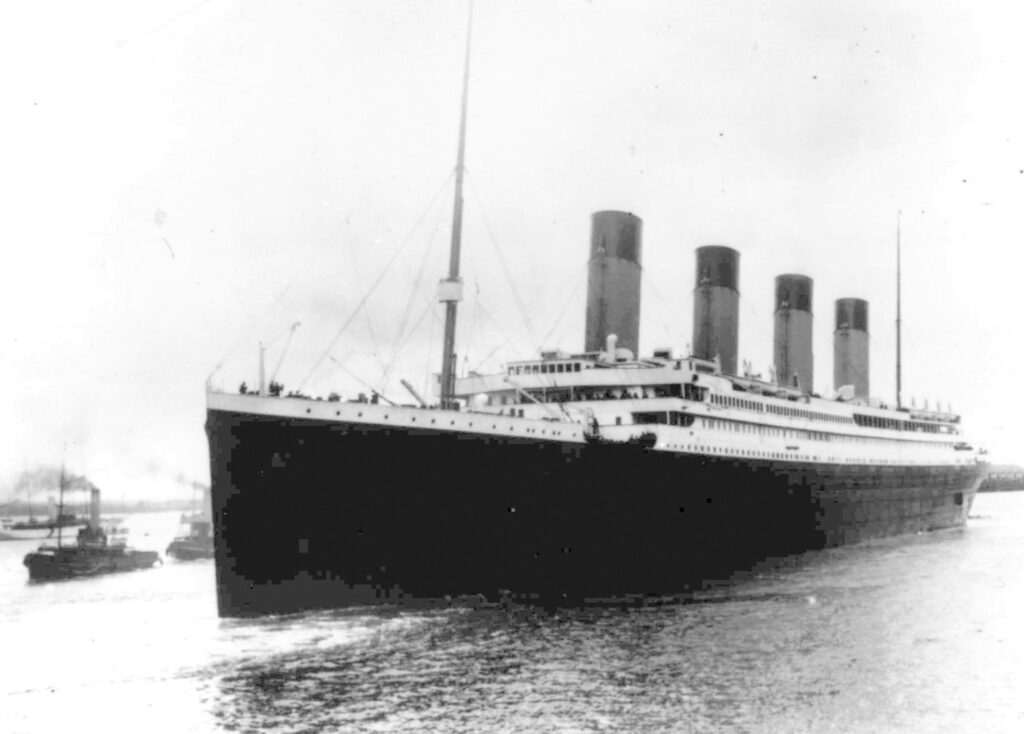
A recent plan to auction over 100 artifacts salvaged from the wreckage of the Titanic is encountering resistance from the U.S. government. According to newly unsealed court documents, RMS Titanic Inc., the company holding exclusive salvage rights to the shipwreck in the North Atlantic, is proposing this auction despite past agreements that restricted the artifacts to display in museums and traveling exhibitions.
Based in Georgia, RMS Titanic has suggested auctioning these artifacts and showcasing them in a global tour across four undisclosed cities. The auctioned items reportedly include a bronze cherub, a necklace made of gold nuggets, and a heart-shaped pendant. The National Oceanic and Atmospheric Administration (NOAA), which oversees U.S. interests concerning the wreck site, asserts that this auction would breach RMS Titanic's legal obligations toward the site.
In their opposition to the auction, government officials stated that RMS Titanic does not seek court approval for its plans, does not believe that such approval is necessary, and claims it can sell the artifacts without restrictions. The representatives for RMS Titanic, however, have maintained that their proposed auction complies with existing court orders and agreements concerning the artifacts.
This proposal marks the latest effort by RMS Titanic to monetize Titanic artifacts. Since 1987, the company has salvaged thousands of items, including portions of the ship's hull. Though RMS Titanic generates revenue through exhibitions, the company has previously sought to sell items due to financial struggles, efforts that have faced significant legal challenges from U.S. courts, preservation groups, and families of Titanic victims.
Some artifacts retrieved, particularly those saved by survivors or picked up by rescuers, have successfully been auctioned, commanding high prices. For instance, a life jacket worn by a passenger sold for over $900,000 in April, while a gold pocket watch given to the captain who rescued the survivors fetched nearly $2 million in 2024. Auction experts suggest the enduring fascination with the Titanic and the scarcity of artifacts contribute to the high demand and inflated prices for such items.
The auction plan has sparked a trans-Atlantic dispute, as RMS Titanic aims to sell artifacts that were among the first salvaged from the wreck and initially taken to France. Ownership of those items was awarded to the salvager by French authorities, with the French oceanographic institute IFREMER collaborating with the Woods Hole Oceanographic Institution on the wreck discovery.
NOAA argues that all approximately 5,000 items, regardless of their claim jurisdictions in France or the U.S., ought to remain in a single collection, based on conditions stipulated by a U.S. court. The agency asserts that a French court's stipulations also mandated that the artifacts not be individually sold and must be preserved as a cohesive collection.
RMS Titanic has countered these claims, asserting that the U.S. court lacks authority over artifacts assigned ownership in France. Meanwhile, French government representatives have not responded to inquiries about the situation.
Some underwater explorers are voicing their disapproval over the idea of selling Titanic artifacts, arguing that these pieces of history should be preserved for public benefit. Veteran ocean explorer Greg Stone expressed that while recovering artifacts is acceptable, it should be undertaken responsibly and preferably by nonprofit entities. Richard Daynard, a law professor who advocates for public interest, emphasized that the regulations governing Titanic artifact display and sale serve to protect the wreckage's integrity, ensuring it is accessible for public education rather than becoming commodities for the wealthy.