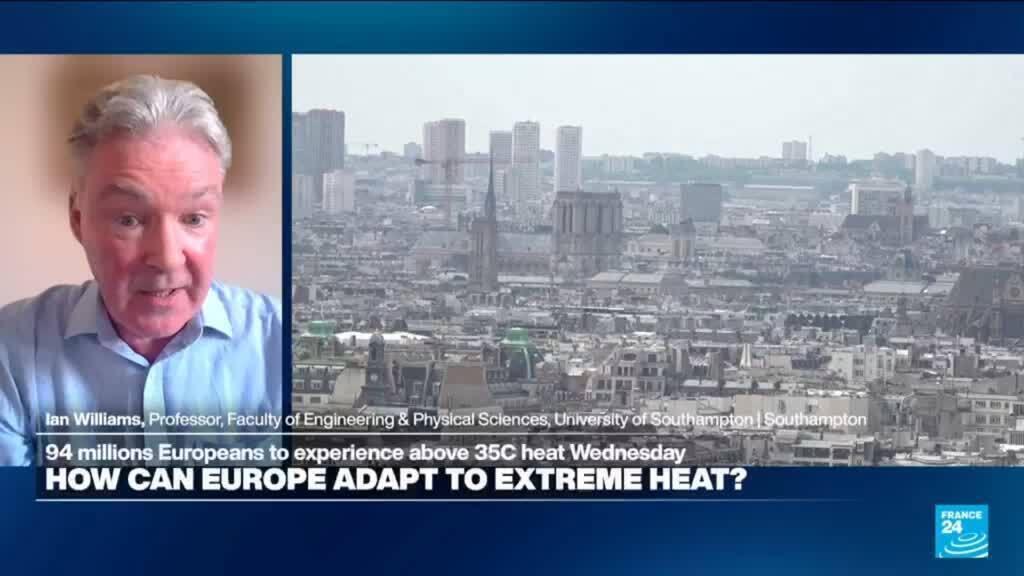
Nadia Massih has invited Ian Williams, a Professor of Applied Environmental Science at the University of Southampton, UK, to share his insights on the ongoing heatwave in Europe. Williams contends that the current extreme weather conditions should no longer be viewed as isolated incidents, but rather as indicators of a new climatic reality influenced by human-induced warming. He emphasizes that the rising temperatures and intense heat extremes are part of a larger trend directly related to the accumulation of greenhouse gases in the atmosphere.
While Williams acknowledges the positive impact of adaptation measures, he stresses that these strategies, while effective in reducing mortality and mitigating social disruption, cannot fully counteract the increasing severity and frequency of heat waves attributed to climate change. This growing crisis makes clear that even the most prepared societies are not immune to the escalating challenges posed by extreme heat events.
France is highlighted by Williams as a prime example of a country that has implemented significant reforms in its heat governance framework following the tragic heatwave of 2003, which resulted in a high number of fatalities. He notes that France's post-2003 reforms represent one of the most comprehensive frameworks for managing heat risks in Europe. These adaptations include early warning systems, public health initiatives, and infrastructural changes designed to protect vulnerable populations from the adverse effects of excessive heat. However, Williams asserts that despite these advancements, the nation is still grappling with the reality of increasingly intense heat extremes.
Williams further illustrates that while adaptation measures are necessary and can indeed save lives, the broader context of climate change presents an insurmountable challenge. The ongoing increase in greenhouse gas emissions continues to drive up global temperatures, leading to more frequent and extreme heat events. He emphasizes that the time-honored adage "forewarned is forearmed" applies here; societies may adapt and prepare, but the fundamental changes in climate demand a much larger and immediate global response.
The professor warns that as climate change progresses, even the most robust systems of governance and public health may falter in the face of extreme events. Williams insists that there is a critical need for a unified international effort to address the root causes of climate change, primarily the emissions contributing to global warming. While local and national adaptation strategies are vital, they must be part of a broader commitment to mitigating greenhouse gas emissions globally.
In conclusion, as Europe and other regions experience heightened heatwaves attributed to climate change, the message is clear: adaptation efforts, while essential, are insufficient alone. There is an urgent call for nations to engage in concerted actions that address the overarching issue of greenhouse gas emissions and the systemic challenges posed by an increasingly volatile climate. Ian Williams' insights serve as a critical reminder that the fight against climate change is as much about ensuring immediate safety and preparedness as it is about addressing the long-term drivers of environmental upheaval.