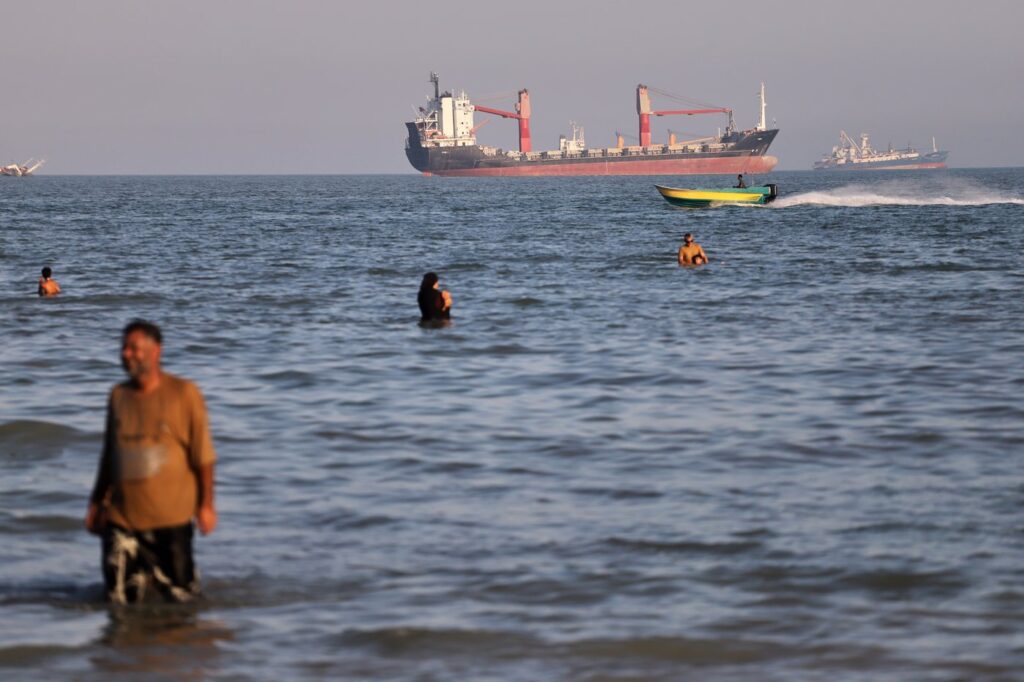
On June 26, 2026, the United States conducted military strikes against Iran in response to a recent drone attack on a cargo ship in the Strait of Hormuz. This incident marked a significant escalation in tensions between the two nations, coming shortly after an interim agreement was reached to work towards concluding a prolonged conflict and reopening this critical maritime route.
U.S. President Donald Trump condemned the drone attack, asserting that it was a violation of a recently established ceasefire. The military operations targeted missile and drone sites, along with coastal radar installations in Iran. Trump expressed his displeasure with Iran's actions, stating, "I don’t like the fact that they took a shot yesterday, actually four of them.”
Iranian officials responded defiantly. Ebrahim Azizi, head of the Iranian parliament’s national security commission, asserted on social media that the Strait of Hormuz is under Iran's control and urged respect for the rules, distinguishing "control" from "escalation." Azizi characterized the drone attack not as a ceasefire violation but rather as "ceasefire management." Following the strikes, U.S. Vice President JD Vance communicated that Iran should “pick up the phone” to discuss any disagreements, but cautioned that “violence will be met with violence.”
The U.S. strikes concluded approximately one hour after U.S. Central Command announced the military actions. This timing indicates a swift response to the provocations. Prior to the drone strike, a British military report cited an incident where a container ship was attacked by a projectile off the coast of Oman, which occurred just after Iran issued a warning to vessels regarding access routes through the strait.
The ongoing conflict has complicated the U.S. and Iran's diplomatic negotiations regarding a permanent resolution to the war. Iran has increasingly challenged U.S. interests in the Strait of Hormuz, despite the recent interim deal. This tension coincided with the United Nations initiating operations to assist stranded vessels in the strait, switching to an alternative route along the shores of Oman after the attack.
The International Maritime Organization halted the evacuations of affected vessels post-attack, emphasizing the need for guarantees regarding the safety of other ships. Despite this setback, reports indicated that around 115 vessels had recently exited the strait, although roughly 500 remained in the area under threat of further incidents.
Analysts from the maritime data company Windward noted that the drone strike represented a serious challenge to the growing confidence in commercial shipping through the Strait of Hormuz. Although transits were still occurring, the pace of normalization had noticeably slowed. Before the drone attack, transit numbers had risen, with 78 vessels moving through the strait shortly before the conflict escalated again.
Meanwhile, on the same day, delegations from Israel and Lebanon announced a potential step toward peace following earlier conflicts involving Israeli forces and the militant group Hezbollah. Lebanon’s ambassador to the U.S. referred to the framework as a way to restore stability and peace for the Lebanese people. Israeli Prime Minister Benjamin Netanyahu endorsed this agreement, emphasizing that Israel would maintain its presence in southern Lebanon until Hezbollah was disarmed and no longer a threat.