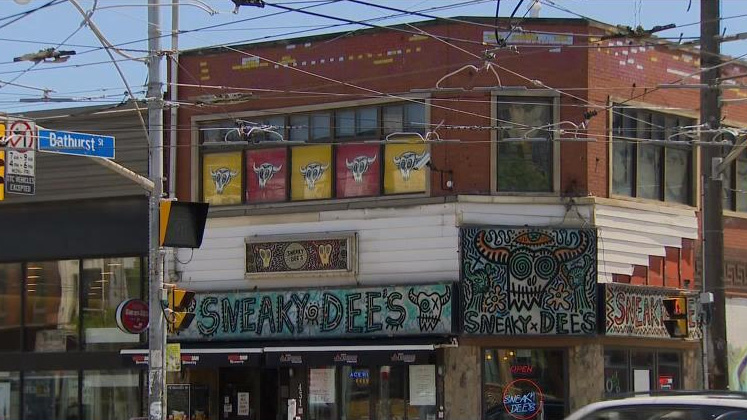
In a significant turn of events, Sneaky Dee's, a beloved downtown restaurant and dive bar in Toronto, has been saved from demolition. Councillor Dianne Saxe commended the concerted efforts of the community in advocating for the preservation of this iconic venue after a proposed redevelopment plan was officially withdrawn by the developer.
The proposal involved constructing a 16-storey building at the intersection of Bathurst and College streets. This decision to retract the application came just ahead of a scheduled meeting on July 8 of the Toronto and East York Community Council, which Saxe noted was poised to approve the redevelopment.
While the developer did not specify the reasons for withdrawing the application, Saxe indicated that an "unexpected breakthrough" occurred two weeks prior. Members of the Save Sneaky Dee's movement discovered critical information that suggested the developer did not possess ownership of all five properties needed for the redevelopment project, raising significant doubts about the validity of the proposal.
Saxe described the subsequent investigation that ensued as a collaborative effort, stating that she requested a title search that ultimately confirmed the developer owned merely two of the five properties mentioned in the application. This revelation led to concerns about the legitimacy of the redevelopment plan.
Upon inquiring with the developer regarding this inconsistency, Saxe was informed that the discrepancy was merely an error in the application. The developer claimed to have received "oral consent" from the Royal Bank to proceed with the plans. However, sceptical of this explanation, Saxe reached out directly to senior representatives at the Royal Bank to confirm their position regarding the redevelopment.
The response was unequivocal: the Royal Bank had not given any consent for the redevelopment of the property. In a letter submitted by Globe Realty Holdings Ltd, a subsidiary of the Royal Bank, it was clearly stated that "RBC has no agreement of purchase and sale or any agreement of any kind" and that they would oppose any official plan redesignation or zoning amendments related to the proposal.
Shortly after this revelation, the developer submitted a letter withdrawing their application, much to the relief of the community. Saxe attributed this victory to the active involvement of the community, highlighting that many individuals signed petitions, attended meetings, shared personal stories, and posed challenging questions to prevent the destruction of one of Toronto's cherished music venues.
Saxe's statement emphasized the importance of community involvement in such matters: "Community voices mattered. Community action mattered. Together, we proved that when people come together to protect the places that define our city, extraordinary things are possible." This incident serves as a testament to the power of collective action in safeguarding cultural landmarks against the pressures of development.