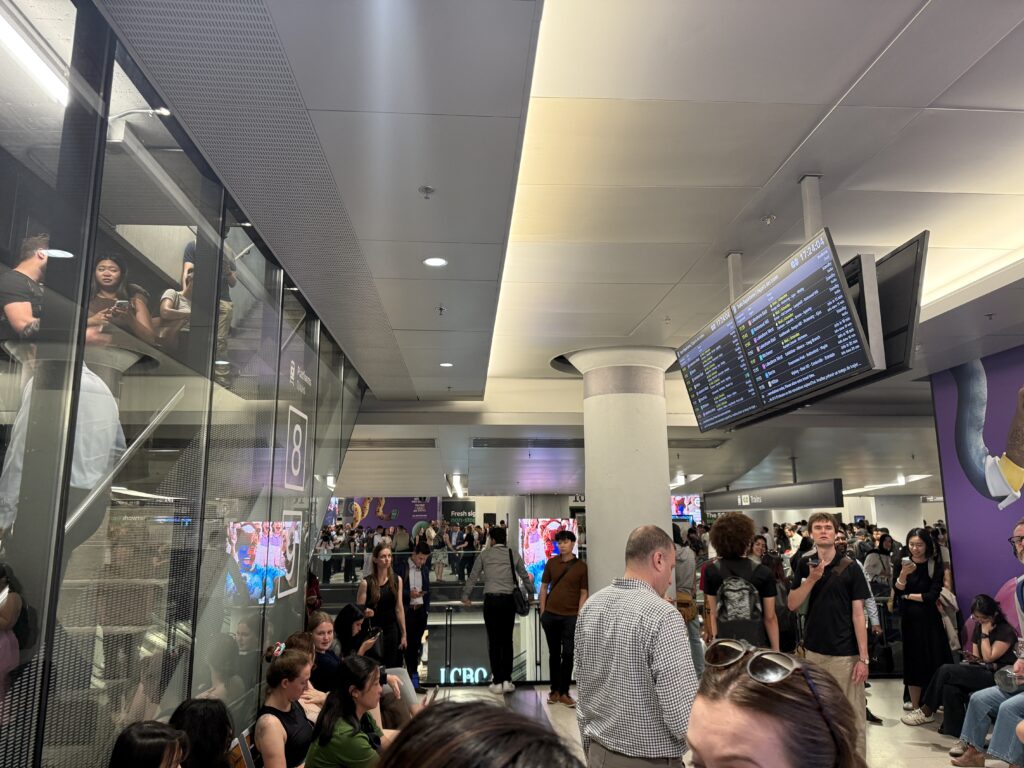
Significant delays and several cancellations affected GO Transit riders in Toronto on Tuesday evening, leading to a frustrating experience for commuters trying to return home. The chaos was particularly palpable at Union Station, where images captured large crowds of passengers densely packed together, anxiously awaiting updates on their train departures. The bustling atmosphere was heightened by the collective uncertainty as passengers scanned the overhead information screens for any signs of movement.
According to Metrolinx, the transit agency responsible for GO Transit services, the extreme heat wave gripping the region necessitated slower train speeds, prompting modifications to the service schedule due to track conditions. This adjustment is a precautionary measure to ensure the safety and reliability of train operations during such extreme weather conditions.
The situation escalated as passengers reported delays exceeding an hour on various lines, with some trains being completely canceled. This left many individuals stranded and scrambling to find alternative transportation options amidst the sweltering conditions. The high temperatures recorded reached a scorching 36 degrees Celsius on Tuesday, exacerbating the already tense commuting situation.
Environment Canada has issued warnings about the prolonged heat, indicating that the oppressive weather will persist until Thursday or Friday in areas situated near Lake Erie and Lake Ontario. The heat wave not only affects travel but also poses health risks to residents, contributing to an overall sense of discomfort and urgency in the region.
In addition to the extreme heat, Southern Ontario is currently under a yellow-level alert due to poor air quality. This warning is set to remain in effect through the night and into Wednesday. The combination of high temperatures and diminished air quality raises concerns about the well-being of individuals, especially those who are sensitive to such conditions.
As commuters faced these challenges, the impact of the heat wave on public transit highlights the intersection of environmental factors and urban mobility. The delays and service interruptions experienced by GO Transit riders serve as a reminder of the vulnerability of transport infrastructure to extreme weather events, necessitating ongoing attention and adaptation to ensure safe and reliable services in the future.