CAIRO (AP) — Yemen’s Iran-backed Houthi rebels announced on Saturday that they launched missiles and drones targeting Saudi Arabia. This action was described as retaliation for Saudi airstrikes on the crucial Red Sea city of Hodeida, marking a significant escalation in tensions over essential shipping routes in the Middle East amid ongoing conflicts between the United States and Iran for influence in the region, particularly regarding the Strait of Hormuz.
Brig. Gen. Yahya Saree, the military spokesman for the Houthis, stated in a pre-recorded message that the missile attack targeted facilities in Yanbu and Jizan, both located on the Red Sea and associated with Aramco, the world’s largest oil company. Saudi Arabia’s civil defense reported multiple alerts in these cities early Saturday; however, no further comments were made by the kingdom.
Remarkably, there were no reported strikes in Iran overnight, indicating a possible shift from nearly two weeks of U.S. attacks. The Houthis claimed their intention to block the Bab el-Mandeb Strait for Saudi-related shipping as a response to the blockade imposed on Yemen and a recent assault on the international airport in Yemen’s capital, Sanaa.
Mahdi al-Mashat, leader of the Houthi-led Supreme Political Council governing Yemen’s rebel-controlled territories, asserted that the only way to prevent such a blockade would be to end the aggression from Saudi Arabia and lift the blockade in place. The Bab el-Mandeb Strait is of paramount importance, as it links the Red Sea to the Gulf of Aden, with approximately 12% of global trade, including a significant portion of container traffic, passing through this vital chokepoint.
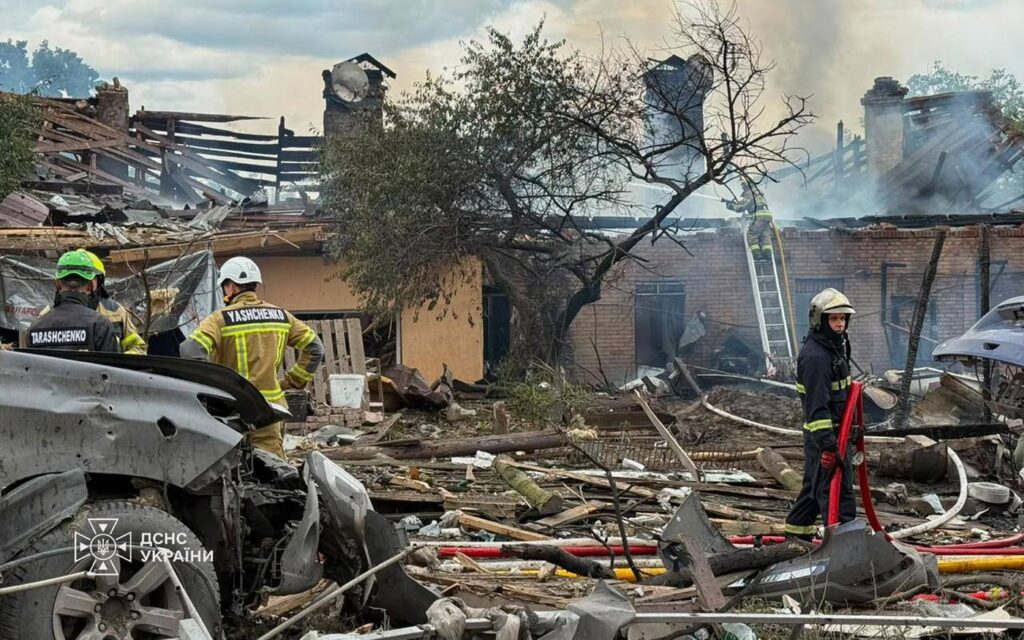
This week, the Houthis reportedly targeted two Saudi oil tankers in the Red Sea, prompting retaliation from Saudi Arabia, which conducted strikes on Hodeida. A spokesperson for the Saudi-led coalition stated the coalition did not hit the port but targeted “legitimate military targets” in Hodeida linked to threats against commercial vessels in the Red Sea. In contrast, a Houthi-run health ministry spokesperson claimed the strikes resulted in injuries to two individuals.
Meanwhile, Iran’s foreign minister, Abbas Araghchi, emphasized the need for “diplomacy and dialogue” to resolve the ongoing conflict in Yemen without resorting to military confrontations. In a significant development, Iranian officials condemned an alleged Ukrainian attack on an Iranian commercial vessel in the Caspian Sea, resulting in one fatality and another injury. Iran has characterized this incident as an act of aggression, demanding accountability from Ukraine.
Ukrainian President Volodymyr Zelenskyy stated that Ukraine had achieved considerable success with long-range strikes in the Caspian Sea, targeting vessels involved in military cargo shipments associated with Iran. As international mediation efforts continue between the U.S. and Iran, Israeli Prime Minister Benjamin Netanyahu is scheduled to meet with U.S. President Donald Trump next week to discuss the escalating situation.
The conflict has taken a heavy toll, with reports indicating over 7,000 fatalities, including those in Lebanon. More than 3,400 deaths have been reported in Iran, as the devastation continues to spread across the region. Iranian health ministry statistics highlight not only the loss of life among military personnel but also the civilian casualties, encompassing U.S. service members, Israeli civilians, and foreign workers.
In Lebanon, the casualty figures remain significant, with over 4,000 deaths reported since the outbreak of hostilities, particularly following Iran-backed Hezbollah's aggressive actions against Israel. As tensions mount, both military and civilian populations face the dire consequences of this prolonged conflict.
___
Dell'Orto reported from Jerusalem. Associated Press reporter Cara Anna in Lowville, New York, contributed to this report.
Samy Magdy and Giovanna Dell'Orto, The Associated Press