PARIS (AP) Recent heat waves and minimal rainfall across Europe have led to historic wildfires in France and Spain, prompting one of the largest evacuation efforts on the continent since World War II. This alarming wave of evacuations has seen hundreds of thousands of individuals forced to flee their homes as flames rage through vast areas.
As rising temperatures are expected later in the week, firefighting efforts become increasingly complicated. Wildfires have already scorched an area four times the size of Paris in southwestern France and are spreading perilously close to Madrid, Spain’s capital. Climate data indicates that Europe is experiencing heat increases at an unprecedented rate, having faced multiple extreme heat events throughout the year.
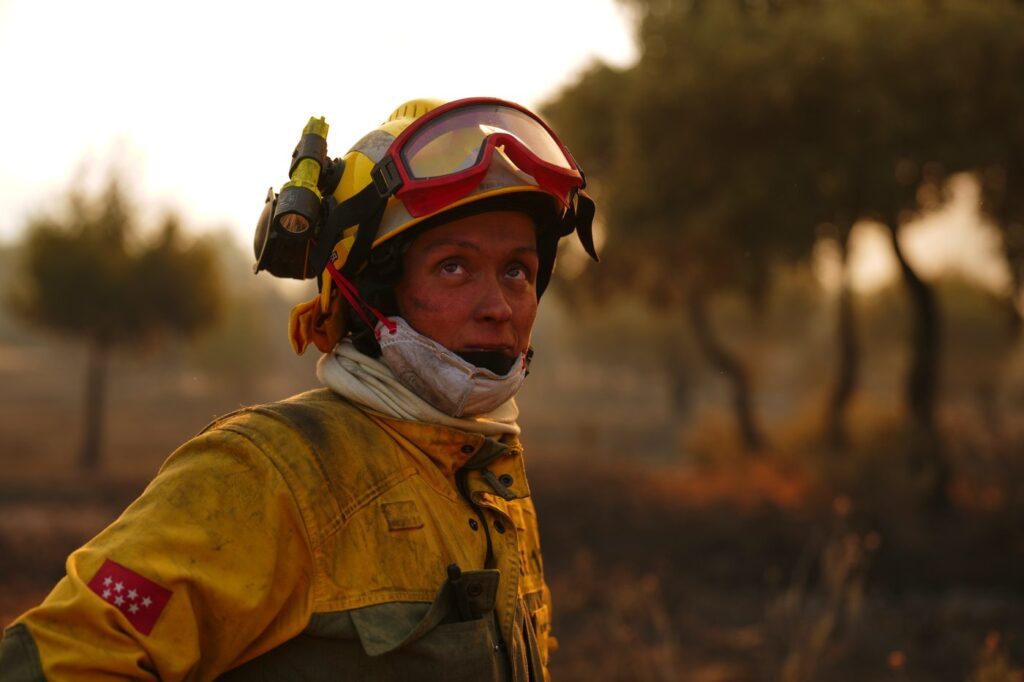
In Spain, firefighters have described the magnitude of the wildfires as too catastrophic to confront directly. However, there is a silver lining emerging from France, where recent reports suggest that the progression of a significant fire in the Gironde region may have finally slowed.
Climate change is a key factor exacerbating the situation, as Europe has seen hotter, drier summers due to rising temperatures. The intense heatwave experienced in June has resulted in persistent drought conditions. Record-breaking temperatures have resulted in moisture being drawn from vegetation, consequently turning it into fuel for the fires. A study released in June by World Weather Attribution indicated that the recent extreme heat would not have occurred without the effects of climate change.
June has also been recorded as the hottest month in France, with temperatures averaging 3.8 degrees Celsius (6.8 degrees Fahrenheit) above normal and rainfall levels nearly 50% below average. In Spain, the risk of wildfires during the summer months has been compounded by climate change, which has made summers hotter and drier. The decline of industries that previously utilized forest resources has left many areas vulnerable to fire outbreaks.
Reports from national and European Union authorities indicate that this year’s wildfires have surpassed previous records. The EU's European Forest Fire Information System estimates that over 300,000 hectares (3,000 square kilometers or 1,160 square miles) have been consumed by flames in both France and Spain. France’s Interior Ministry reported that since January, 13,566 fires have blazed across over 116,000 hectares (1,160 square kilometers or 448 square miles), marking the highest figure in its modern history.
Additionally, Spain has documented its largest and third-largest fires ever, with one catastrophe in Ávila, west of Madrid, engulfing over 50,000 hectares (500 square kilometers or 193 square miles), an area five times larger than Barcelona. Earlier in the month, a fire in southeastern Almeria resulted in the tragic deaths of 13 individuals, marking it as one of the deadliest blazes in recent Spanish memory.
Over 300,000 individuals have been forced from their homes in the ongoing crisis, making it one of the largest evacuation operations in European history. In France alone, more than 250,000 people have been evacuated, with 220,000 in the Gironde region, as authorities take measures to keep vacationers and campers safe amidst the danger. In Spain, nearly 79,000 people have been evacuated, alongside another 30,000 who have been ordered to remain in their homes in affected regions.
In response to the overwhelming infernos, European Commissioner for crisis management, Hadja Lahbib, announced that the EU has dispatched seven planes and four helicopters from various member countries to France and six additional planes to Spain. Lahbib emphasized the importance of support and solidarity among European nations, stating, “No country should ever have to face a disaster of this scale alone.” The EU’s Copernicus satellite program is also contributing by supplying emergency authorities with updated fire risk maps.