Most Americans believe the ongoing war in Iran has not been worth fighting, as revealed by a recent AP-NORC poll. President Donald Trump's approval rating regarding his handling of the Iran situation has slightly decreased, indicating public dissatisfaction with his administration’s approach to the conflict, which has persisted longer than initially expected.
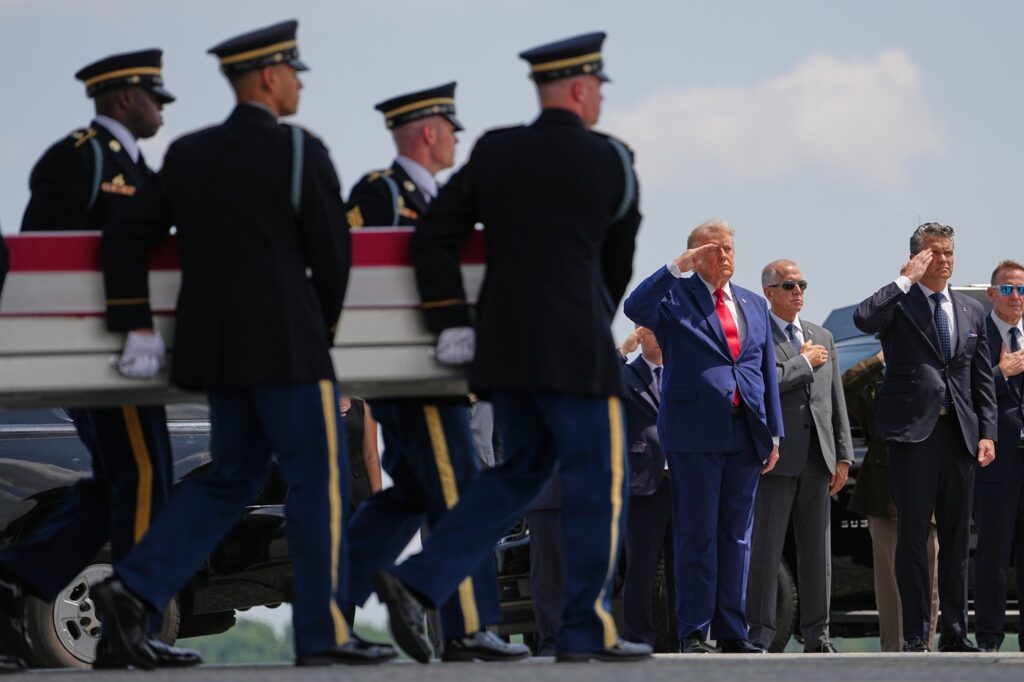
Approximately two-thirds of U.S. adults surveyed claim that the war, which began on February 28, has not been worthwhile. This sentiment is shared by a significant majority of Democrats and independents, along with about 37% of Republicans. The poll, conducted from July 23 to 27, coincided with a brief pause in attacks between the U.S. and Iran after a nearly two-week escalation, during which the U.S. targeted Iranian military and commercial sites, and Iran retaliated against U.S. military facilities, resulting in the deaths of 18 American service members.
The findings from this survey illustrate the declining popularity of the Iran war, which poses a potential challenge for congressional Republicans facing reelection in November. Currently, only 28% of U.S. adults approve of Trump’s handling of the Iran situation, a slight decline from 34% in the previous month. Among Republicans, approval has also dipped, with only 61% expressing satisfaction compared to 71% in June. This shift is noteworthy, especially given the comparatively higher approval ratings for Trump’s overall presidency.
Robert McClary, a Republican from Sugar Grove, Ohio, has become skeptical about the administration’s management of the war. He recalls Trump campaigning on a promise to avoid new wars in the Middle East during the last election. McClary expressed distrust toward the current administration about the rationale behind entering the conflict and the associated risks to American soldiers.
Moreover, the poll indicates a divergence between Americans' goals regarding the conflict and those articulated by Trump. While two-thirds express a strong desire to prevent Iran from obtaining nuclear weapons, a higher number prioritize keeping gasoline prices low and negotiating a permanent ceasefire with Iran. This reflects a growing concern about the economic implications of the war for ordinary Americans.
Overall, there is minimal support for continuing military operations in Iran. Only about 20% of U.S. adults favor prolonged military action, while approximately 30% suggest a pause and a search for negotiations toward a renewed ceasefire. Another 20% would prefer a complete halt to military actions against Iran. Notably, many Republicans want to maintain military action, particularly those identifying as "very conservative." In contrast, non-MAGA Republicans lean toward advocating for either a ceasefire or a total stop to military activities.
Concerns about rising prices due to the conflict are prevalent among Americans. Around 72% stress the importance of preventing domestic oil and gas prices from rising, an increase from earlier in the year. Gas prices have surged, and inflation remains a concern, prompting fears about the impact on consumer spending. For instance, about 40% of adults report that the cost of gasoline is a major source of stress in their lives, rising from 30% in February.
Even among Republicans, opinions on the Iran conflict vary. While a significant portion values preventing Iran from acquiring nuclear weapons, many also express concerns about the economic fallout of the military actions. This juxtaposition showcases the complexities within the Republican electorate regarding foreign policy and its domestic ramifications.
The AP-NORC poll consisted of 1,165 adults and was conducted using a sample drawn from NORC’s AmeriSpeak Panel. The margin of sampling error for adults overall is plus or minus 3.7 percentage points, with higher margins for specific party affiliations.