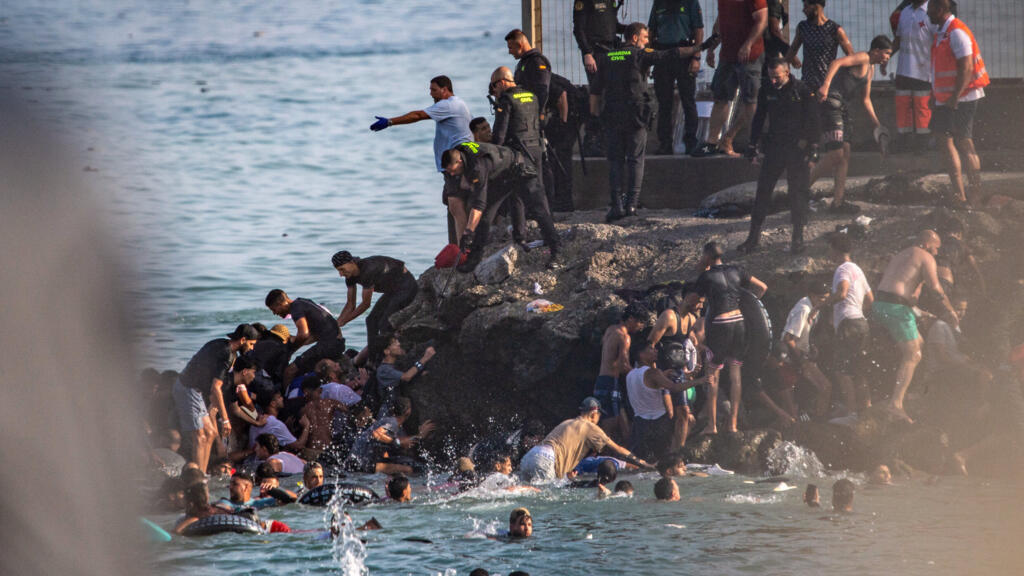
In a staggering development, Spanish authorities have reported that over 49,000 migrants made the perilous journey from Morocco to Spain within a mere 24-hour period. This unprecedented influx has raised significant concerns about the humanitarian crisis unfolding at the borders of Europe, particularly around the Spanish enclave of Ceuta, where migrants have faced treacherous conditions.
Among those who attempted the crossing, reports confirm that at least 18 individuals lost their lives during the harrowing endeavor. Many of these migrants resorted to swimming across the border, often spending hours battling the strong currents of the sea in their quest for safety and a better life. The arduous trip underscored the desperate circumstances that compel individuals to undertake such dangerous passages.
The arrival of these migrants has had an overwhelming impact on Ceuta, a small coastal city that is geographically situated on the northern tip of Africa but politically a part of Europe. Notably, the number of migrants that arrived in this single day represents over half the population of the enclave. This surge has triggered alarms regarding the capacity of local authorities and the available resources to manage such a large influx within a short span of time.
As the situation continues to evolve, humanitarian organizations and local governments are scrambling to provide necessary assistance and shelter to those who have arrived. The conditions in Ceuta can be challenging, with overcrowded facilities and limited resources struggling to meet the growing demands of housing and care for migrants. Local officials are calling for increased support from national and international bodies to address this growing crisis.
The Spanish government's response has also been scrutinized, as officials attempt to strike a balance between border security and humanitarian obligations. With many migrants fleeing conflict, poverty, and persecution in their home countries, the urgent need for comprehensive immigration reform and support systems is evident. The humanitarian implications of such large-scale movements of people cannot be overlooked, drawing attention to the broader challenges facing European countries in managing migration.
In summary, the recent surge of migrants crossing from Morocco to Spain highlights a critical humanitarian issue that demands immediate attention and action. The tragic loss of life and the overwhelming number of arrivals at Ceuta illuminate the desperate measures taken by individuals seeking refuge and a chance for a better future. With over half the local population represented in a single day of arrivals, the implications for local resources and support systems are profound. It is a reminder of the ongoing global migration crisis that remains a pressing challenge for not just Spain, but Europe as a whole.