CEUTA, Spain (AP) — The tragic story of a 17-year-old girl, who fled from Tangier, embodies the desperate circumstances faced by many migrants. She reached Spanish territory while her 8-year-old brother drowned in the Mediterranean Sea, and their mother disappeared amid the chaos when tens of thousands surged towards the breakwater, attempting to abandon Morocco.
This incident is part of a larger crisis involving over 800 minors who have arrived in Ceuta following a collective push by migrants. Four days after the tumultuous event, these minors find themselves confronting a frightening reality and an uncertain future.
The teenage girl recounted her journey to an Associated Press photojournalist, illustrating how she and her family joined a massive crowd swimming around a border fence to reach Spain. Like many others, they sought improved opportunities. Due to her age and vulnerability, the AP has withheld her identity.
Amid the tragedy, she witnessed Spanish police retrieving her brother's lifeless body from the water. Although she managed to reach shore, she was separated from her mother and has since been surviving on her own. Locals have shown her kindness, providing food and clothing; one woman even took her in to bathe. Despite her efforts to seek help at a government-run center for youths, she found it to be full.
“I saw people stepping on the dead,” she expressed through a translator, as she does not speak Spanish. “Now we are children begging on the street.”
As of Monday, around 860 minors remained in Ceuta after crossing the border, as confirmed by local officials. AP journalists observed several other minors also asking for food. These children are part of a larger group of approximately 3,000 to 5,000 migrants who have not been expelled from Ceuta, out of an original influx of 60,000. Spanish authorities confirmed that 72 individuals died, mostly in the water, during the perilous crossing. Morocco reported an additional 11 deaths that were not included in the Spanish figures.
According to Spanish law, adult migrants may apply for asylum, but if their requests are denied, they face expulsion. The threshold for Moroccans to receive humanitarian protection is generally very high. However, unaccompanied migrant minors are entitled to care and protection from Spanish authorities.
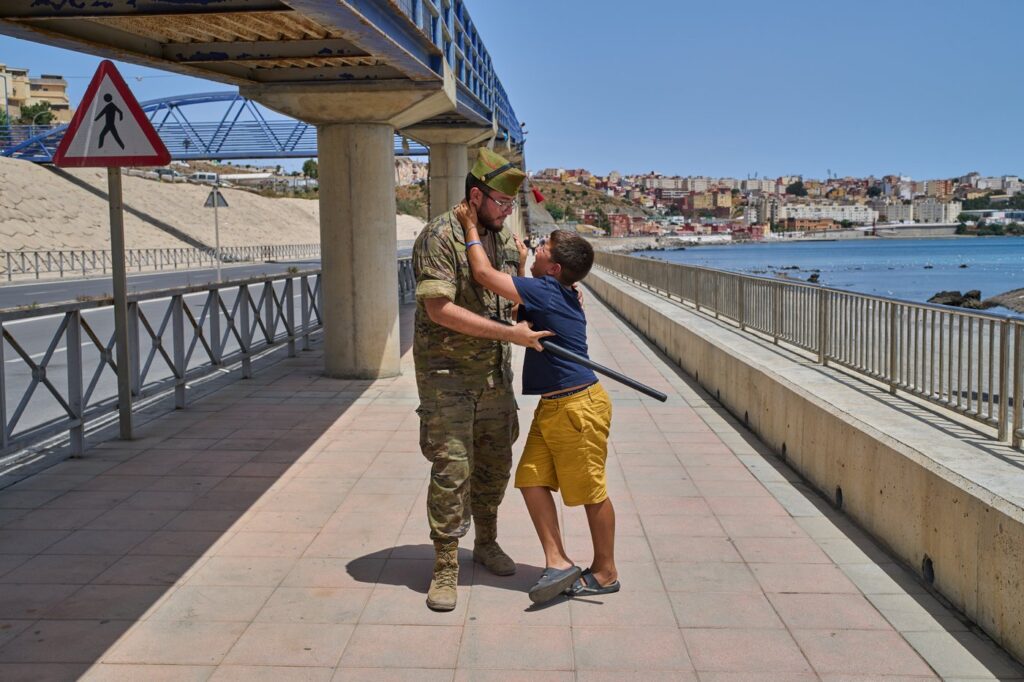
In one poignant incident, an Associated Press journalist witnessed Spanish soldiers escorting a distraught unaccompanied Moroccan boy who was pleading not to be sent back to Morocco. Due to pressure from local residents — who insisted the boy was a minor — along with media presence, a lieutenant colonel in the Spanish Army intervened, preventing his repatriation and transferring the boy to the Spanish Civil Guard instead.
Most Moroccan adults have either chosen to return voluntarily or have been sent back by Spanish police. Among those still in Ceuta are many individuals from other countries, including Sudanese fleeing war, Palestinians from Gaza, Afghans, and migrants from various African nations. The city’s migrant center, designed to accommodate 600 people, is currently at full capacity, leading to food shortages among the migrants, as reported by AP journalists.
Ramsés Mohamed Azumik, a local migration activist from Asociación Elín, explained, “The strategy is that hunger, thirst, and exhaustion force these people to finally decide to voluntarily return to Morocco.” Many migrants have resorted to sleeping or resting on beaches or hills around the small Spanish enclave. In the distance, their ultimate aspiration of reaching mainland Europe looms across the sea.