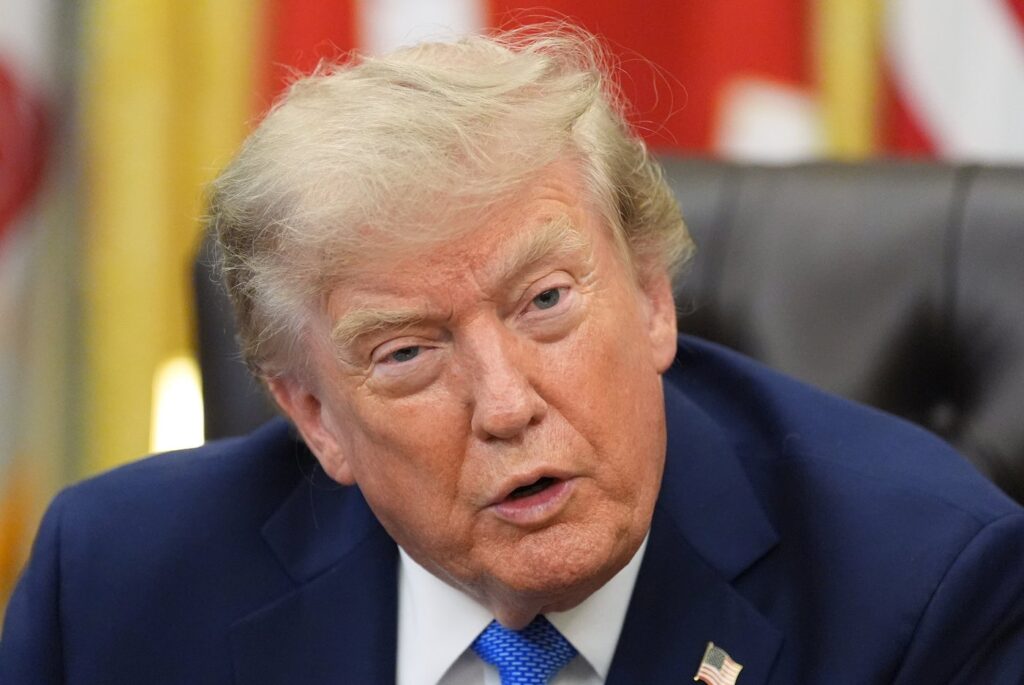
Former President Donald Trump has signed an executive order that proposes significant changes to the childhood vaccine recommendations, advocating for the separation of the measles, mumps, and rubella (MMR) vaccine into individual shots administered at separate medical visits. This initiative is consistent with Trump’s long-standing belief, despite the prevailing scientific consensus that supports the current vaccination schedule.
The order directs the Department of Health and Human Services (HHS) to enhance vaccine research, which is already extensive, and to establish a plan for offering single-disease vaccines for measles, mumps, and rubella, a practice not currently available in the United States. Trump's announcement focuses on parental rights and autonomy regarding medical decisions, labeling the executive order a "major victory" for these causes.
Public health experts have expressed significant concerns regarding Trump's proposals, asserting that spacing out vaccinations can increase the risks of children contracting preventable diseases. The scientific community has emphasized that vaccines undergo rigorous evaluations for safety and efficacy, with continuous monitoring post-approval. Dr. Andrew Racine, president of the American Academy of Pediatrics, criticized the executive order, stating it spreads unnecessary fear and uncertainty, and affirmed that the science surrounding vaccines and their delivery has not changed.
Notably, the revised vaccine recommendations suggested by Trump are not mandated federally, as states maintain authority over school vaccination requirements. The executive order urges states with vaccination mandates to adopt the administration’s proposed schedule. While the HHS has previously attempted to overhaul vaccine guidelines under the Trump administration, those efforts have faced legal challenges, resulting in the courts blocking them.
The Biden administration's newly confirmed CDC director, Dr. Erica Schwartz, is faced with a challenging position regarding Trump's initiatives. Public health law expert Lawrence Gostin suggests that the interpretation of presidential power may allow Trump to implement changes against the recommendations of the CDC if deemed necessary.
When questioned about the reasoning behind splitting the MMR vaccine, White House officials did not provide supporting studies, attributing the decision to Trump’s previously indicated viewpoints. Nonetheless, research highlights that combination vaccines are effective in ensuring higher vaccination completion rates among children by age two.
Previously, Trump had appointed Robert F. Kennedy Jr., a known vaccine skeptic, as Health Secretary. Under his leadership, there were attempts to create more restrictive immunization guidelines, which faced judicial blocks. Throughout his presidency, Trump maintained a focus on establishing a connection between vaccines and rising autism rates, despite scientific consensus debunking such claims. The topic remains a contentious issue, with continued advocacy from various experts reiterating no causal link has been established between childhood vaccines and autism.
The timing of Trump’s executive order comes as schools nationwide are reopening and amid rising cases of measles, leading to concerns that misinformation regarding vaccinations could aggravate vaccine hesitancy. Federal data indicates a decline in kindergarten vaccination rates, with an increasing number of children obtaining exemptions from mandatory vaccinations in the forthcoming school year.
As the public grapples with the implications of the executive order and its potential effects on vaccination strategies, health experts continue to advocate for adherence to established vaccination schedules, emphasizing that the deployment of vaccines plays a critical role in public health and preventing disease outbreaks.