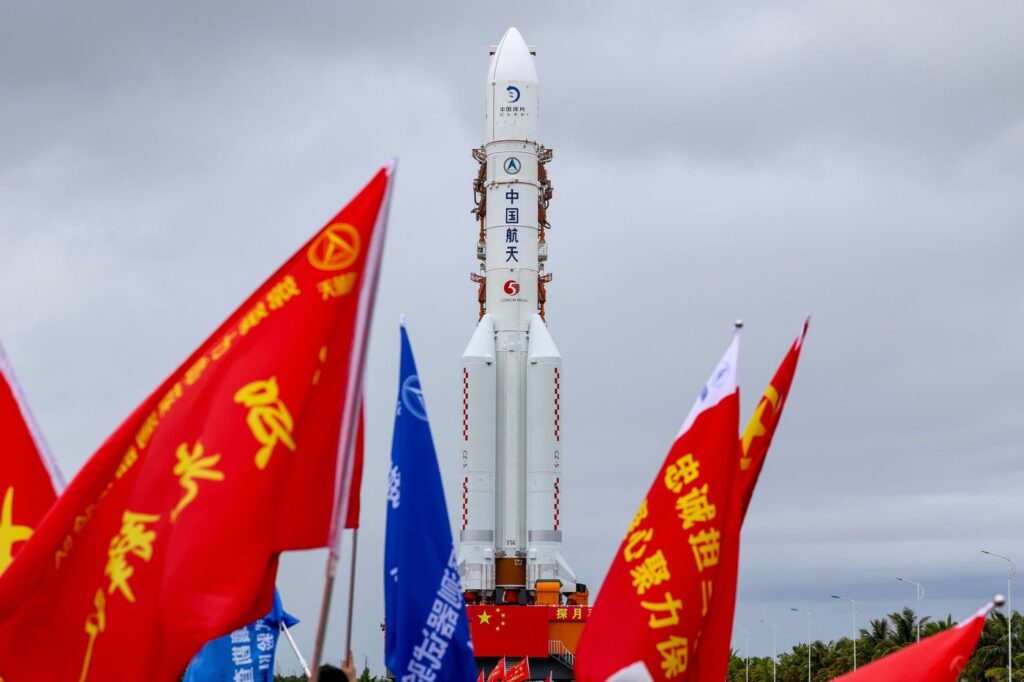
HAIKOU, China (AP) – On Sunday, China announced the postponement of its highly anticipated Chang’e-7 lunar mission, which had been planned to conduct significant explorations, including the search for water ice on the moon. Originally scheduled for launch in the coming days, the mission was set to take off from the Wenchang Space Launch Site located on China’s southern Hainan island.
The China Manned Space Agency released a brief statement explaining that the mission did not meet necessary launch conditions and would not occur within the planned window this year. The decision to postpone was based on a "comprehensive assessment" and adhered to the principles of "prudence, reliability, and absolute mission success." However, the agency did not provide further details regarding the specific reasons behind the delay.
In the weeks leading up to the scheduled launch, extensive preparations were underway at the Wenchang launch site for the Chang’e-7 mission. This mission was to be the seventh in the Chang’e moon exploration program, which aims to achieve breakthroughs in key technologies associated with lunar exploration. The official Xinhua news agency had previously reported on the mission's objectives.
The Chang’e-7 mission was designed to explore permanently shadowed craters on the moon and perform environmental and resource surveys of the lunar south pole. These tasks are crucial for understanding the moon's resources and potential for future human exploration. The name Chang’e relates to a Chinese moon goddess, reflecting the cultural significance of the mission.
It is worth noting that the Chang’e-6 probe had previously made headlines by successfully returning to Earth in 2024 with rock and soil samples from the far side of the moon, marking a historic achievement in lunar exploration. This context underscores the importance of the Chang’e program in advancing China's capabilities in space exploration.