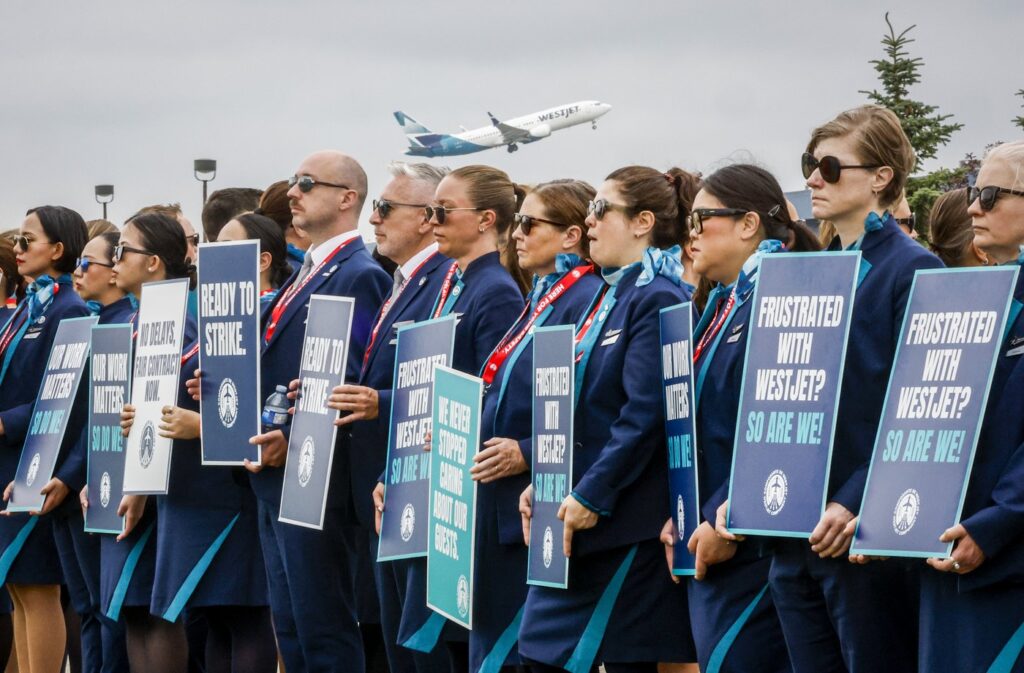
WestJet flight attendants have reached a significant milestone by overwhelmingly approving a new three-year agreement, successfully concluding a challenging round of negotiations. The bargaining process was marked by a one-day strike and resulted in the cancellation of hundreds of flights, much to the frustration of travelers.
The union representing the cabin crew, CUPE 8125, which consists of approximately 4,400 members, reported that just over 90 percent of its members participated in the vote and expressed support for the ratification. This vote concluded earlier this week after a week-long ballot period that ended on Monday.
Union president Alia Hussain expressed satisfaction with the results, indicating that the strong mandate from members underscores the meaningful gains made during negotiations. The deal was solidified earlier this month following stalled discussions, primarily related to the pay structure and compensation for ground work duties performed by the cabin crew.
According to the agreement, which is effective from January 1, 2023, and will remain in place until December 31, 2028, the flight attendants will receive an exceptional wage increase totaling more than 18 percent over the three-year period. The pay hikes will include a notable 13 percent increase taking effect this October, a subsequent 2.75 percent rise scheduled for January 2024, and an additional 2.5 percent increase expected at the beginning of 2028.
Moreover, the union announced that the agreement introduces new paid compensation for various duties that the cabin crew previously conducted without any remuneration. This reflects a crucial step toward ensuring that the employees are better compensated for the variety of responsibilities they undertake.
Hussain highlighted the importance of this contract, noting that it represents the union’s second agreement and emphasizes the progress made in securing compensation for the full scope of work carried out by the members. This is a crucial development, especially in a competitive airline industry and amid increasing demands on flight crew members.
The labor dispute preceding this agreement led to significant operational disruptions for WestJet, affecting many travelers heading to their summer destinations. During this tense period, WestJet faced the cancellation of more than 900 flights as the airline struggled to stabilize its service. The company eventually managed to restore its flight schedule gradually as negotiations progressed.
This newly ratified contract not only showcases the resolution of a pressing labor issue but also sets a precedent for future negotiations within the airline industry. It highlights the importance of ongoing dialogue between employees and management to foster a more resilient and supportive working environment.
Overall, the settlement reflects a dedication to improving working conditions and ensuring fair compensation for the flight attendants who play a vital role in airline operations.