Plans for a new political party have emerged in the British Columbia legislature as two Members of the Legislative Assembly (MLAs) who recently defected from the provincial Conservative party aim to offer an alternative for disillusioned voters. Ian Paton, the MLA for Delta South since 2017, announced on Monday his decision to leave the Conservative caucus, opting to serve as an Independent.
Paton's announcement follows that of Peter Milobar, another MLA who departed from the Conservative party earlier this month. Milobar, recognized as one of the party's moderate voices, cited "ideological alignment" concerns with the new leader, Kerry-Lynne Findlay, whose leadership has shifted the party further to the right, emphasizing themes of "faith, freedom, and family."
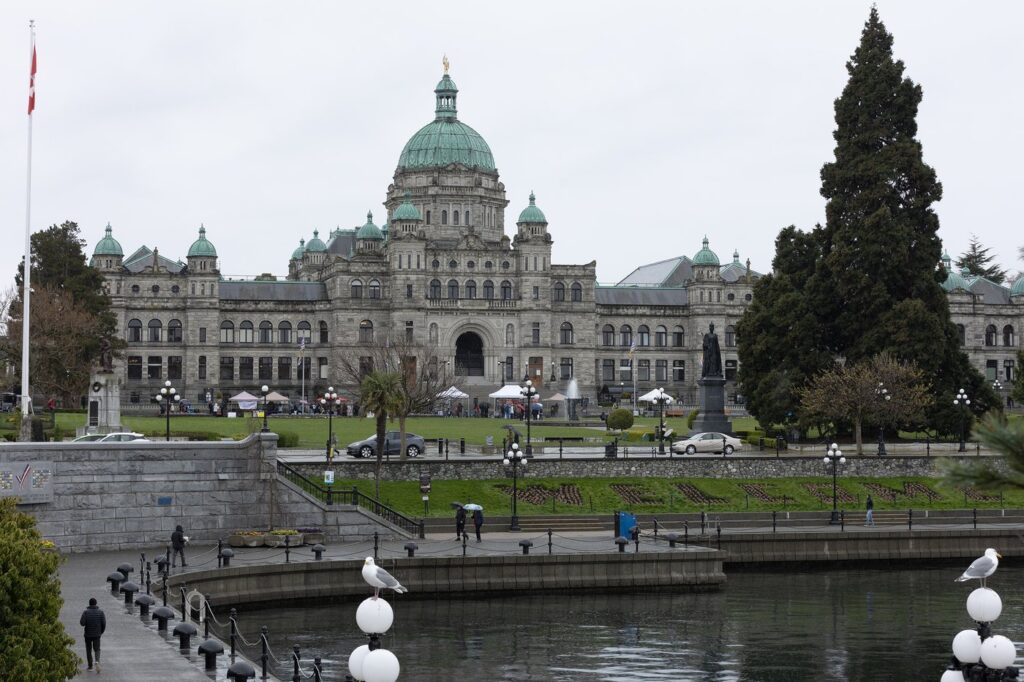
During a press conference in Victoria, the two MLAs expressed their intentions to register a new official party with Elections BC before the upcoming fall legislative session. "We are in the process of getting things organized. There will be much more to come," Milobar commented, indicating potential additional defections from the Conservative ranks.
Milobar revealed his concern about the prospect of vote splitting, but wanted to provide an avenue for voters dissatisfied with the governing New Democratic Party (NDP) who do not resonate with the Conservatives under Findlay. "It’ll be an uphill climb, absolutely, but many people have reached out to say they want to get on board," he stated.
Paton echoed similar sentiments, aiming to create a political home for those feeling "politically homeless" in British Columbia. He shared that feedback from his constituents indicated dissatisfaction with the Conservative Party’s current trajectory, with as many as "eight or nine out of ten" residents expressing their concerns to him.
Reflecting on past elections, Paton noted that when he and Milobar first campaigned in 2017, over 797,000 individuals voted for centrist options. "Where are they now?" he pondered, urging former centrist voters to return if they could align with a more centrist platform.
On the same day, the Conservative Party announced several changes to their shadow cabinet under Findlay's leadership. This reshuffle saw Kelowna-Mission MLA Gavin Dew appointed as finance critic, with additional roles reallocated among other party members.
Meanwhile, another party known as CentreBC is already positioning itself as an alternative for voters disenchanted with the Conservatives. Founded in 2025 and led by Mike Bernier, a former BC Liberal cabinet minister, CentreBC emphasizes the need for a socially progressive and fiscally responsible choice in the electoral landscape.
Despite Milobar’s acknowledgment of the existence of CentreBC, he noted that many former Independents and Conservative caucus members do not wish to align with that party. Instead, he felt there was a preference for a new entity to emerge, suggesting an eagerness for a fresh political dynamic.
Hamish Telford, a political science professor, highlighted that the decision by Milobar and Paton to establish a new party rather than aligning with CentreBC was puzzling but favorable, as having two sitting MLAs provides the new party with official status which can enhance media visibility and outreach. "They’ll be in the hallways, scrumming with reporters and getting their message out," he remarked.
Paton emphasized his previously comfortable position within the Conservative party until Findlay's leadership which prompted significant changes including personnel shifts within the party. Notably, several key staff members have departed, marking a restructuring phase for the Conservatives.
Political experts anticipate that the moves by Milobar and Paton could have significant implications for the Conservative party, particularly as Findlay's approach risks alienating more moderate members. Stewart Prest, a political lecturer, indicated that this period might define the Conservative party's identity as they navigate changing voter sentiments.
In conclusion, Milobar and Paton's venture into forming a new party represents a response to the evolving political landscape in British Columbia, where issues of ideological alignment and voter representation are central to their motivations.