The leader of the Seneca Nation in upstate New York has expressed strong disapproval of President Donald Trump's recent directive to rename Lake Ontario as "Lake America." This decision has been criticized for disregarding a treaty established over 225 years ago and showing "blatant disrespect" for Indigenous peoples, who originally named the lake. J. Conrad Seneca, the President of the Seneca Nation, publicly condemned the renaming on Friday, advocating for the continued use of the name Lake Ontario as a tribute to the Indigenous communities in both the U.S. and Canada, who inhabited the area well before the formation of the two nations.
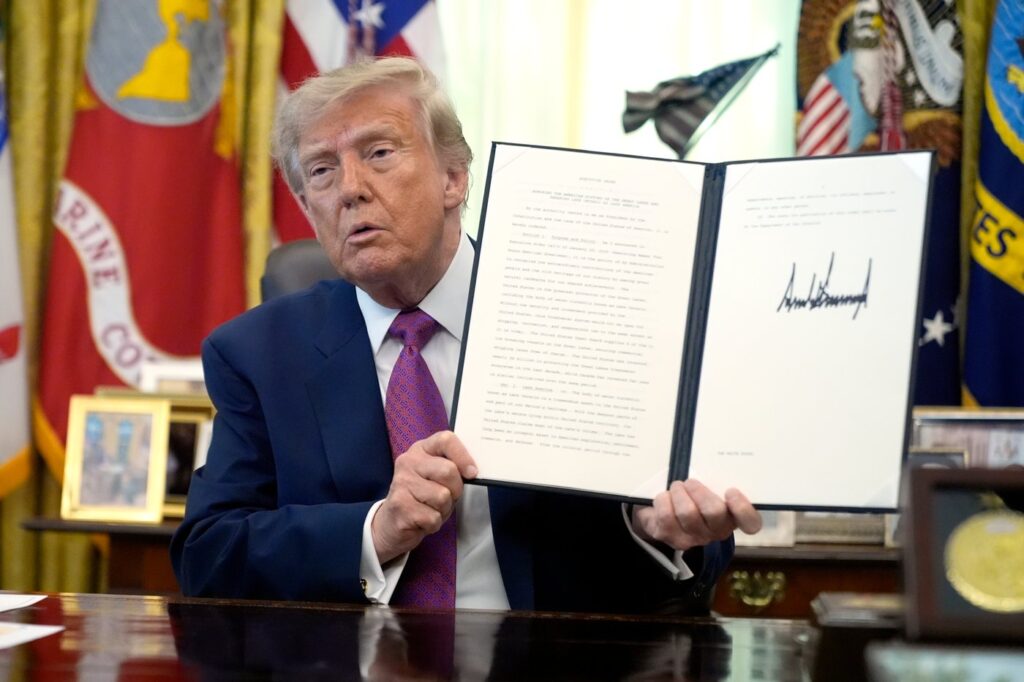
Seneca emphasized that "The President cannot assert ownership over our culture or erase it through irresponsible political action." This statement highlights the deep-seated concerns regarding Indigenous rights and cultural recognition, factors that are often overlooked in political decisions. Trump’s recent order mandates the Interior Department to adjust the lake's name within 30 days as part of an intensified trade conflict between the U.S. and Canada.
The Seneca Nation's President argued that this renaming infringes upon the 1794 Treaty of Canandaigua, which was signed by President George Washington in collaboration with the Haudenosaunee Confederacy, promoting continual peace and friendship. The Seneca, one of the six nations within the confederacy (also known as the Iroquois Confederacy), believe that this treaty’s integrity is being undermined by the name change.
The name Lake Ontario has Indigenous origins, stemming from the Huron people's term "ooniatarí:io," which translates to "lake of shining waters." The province of Ontario in Canada, established in 1867, derives its name from this lake. In the traditional Seneca language, the term for the lake is "sga:nyodai:yoh," signifying "beautiful lake." This further emphasizes the cultural significance of the lake's name and the importance of maintaining its original designation.
Trump mentioned this name change as tensions escalated between the U.S. and Canada following the announcement of new tariffs on Canadian goods, prompted by stalled trade discussions. The Canadian government swiftly responded with its own retaliatory tariffs on American imports. Additionally, officials in Canada criticized the proposal of altering the lake's name, underscoring its Indigenous heritage, which predates both the Canadian Confederation and the U.S. Declaration of Independence. Canadian Prime Minister Mark Carney firmly rejected the idea, asserting that Trump cannot unilaterally impose such a change on Canada.
In previous claims, Trump has contended that Canada is taking advantage of the U.S. in terms of trade and military dealings. He has even suggested the notion of making Canada the "51st state." This rhetoric illustrates the ongoing strain in U.S.-Canada relations and the implications for Indigenous sovereignty in the context of national policies.