WASHINGTON (AP) - U.S. forces conducted military strikes against Iranian rocket launchers in the Strait of Hormuz on Sunday, marking their first military action in a month and breaking a lull in the conflict that has persisted for over six months. Iran vowed to retaliate against what it described as a deadly attack, subsequently launching missiles at U.S. sites in Jordan.
According to Tim Hawkins, a spokesperson for the U.S. Central Command, Revolutionary Guard Corps forces were preparing to launch rockets and sea mines into the strait. The U.S. military had recently finished clearing sea mines from international shipping routes in the strait. Iranian semiofficial news outlets reported explosions near Larak Island, with the Guard declaring "the martyrdom and injury of several of our fighters and compatriots."
In a dramatic response, Iranian state television displayed ballistic missiles being launched at U.S. military bases in Jordan. The Jordanian armed forces confirmed they intercepted eight missiles that breached the country’s airspace early Monday morning.
U.S. military officials contested Iran's assertions that the strikes were aggressive, stating they were a "limited, precise action" aimed at minelaying forces. "In essence, Iran created the threat, and the U.S. military eliminated it to protect civilian mariners, commercial shipping, and the free flow of global commerce," maintained the U.S. Central Command in a statement.
The possibility of escalating conflict in the region poses significant risks, especially as Iran has targeted U.S. military bases and infrastructure in Gulf nations since the onset of the war on February 28. The last confirmed U.S. military actions against Iran occurred on July 29, when the U.S. targeted numerous Revolutionary Guard sites, including coastal defense positions. Following his allies' advice, U.S. President Donald Trump stated he would refrain from new strikes on August 1.
In the days leading up to these military actions, the Trump administration had signaled a strategic pivot toward increasing economic pressure on Iran rather than resorting to military interventions to address the ongoing conflict. This shift includes actions against any nation or entity continuing to engage in business with Tehran.
Following the U.S. strikes, Gen. Hossein Mohebi, a spokesperson for the Guard, labeled the attack a "fatal mistake by the Trump regime" amid the economic war, asserting that the enemy would face military and economic consequences. The administration's pivot to sanctions comes as it grapples with dwindling munitions stockpiles after months of fighting, raising capacities about the effects on U.S. military readiness globally.
Trump's initial urgency to conclude the war has seemingly diminished, as he has emphasized he is “not in a hurry” to bring Iran back to the negotiating table, claiming the Islamic Republic's leadership is under considerable stress. However, recent appointments to Iran’s senior security leadership reflect its resolve despite years of sanctions.
Trump has repeatedly asserted that the U.S. and Israeli campaign has severely impacted Iran’s military capabilities, with Iranian officials estimating losses of $270 billion from direct and indirect damages due to the conflict. Initial Israeli military strikes in the early phases of the war significantly undermined the Iranian leadership structure.
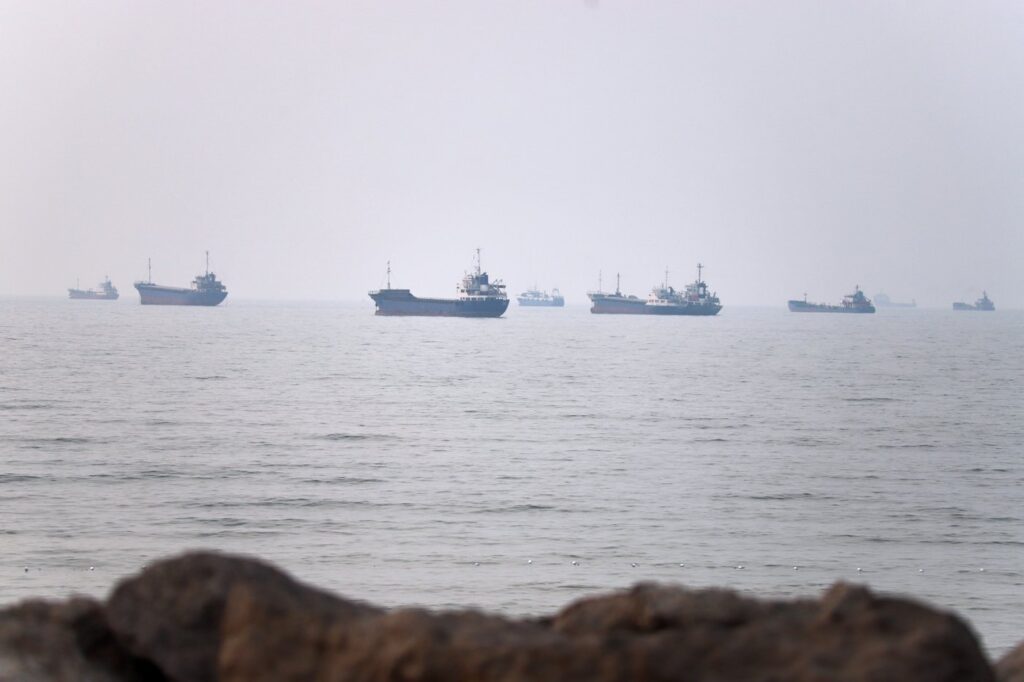
While Iran has sustained significant losses, it has found leverage by conducting attacks on vessels within the Strait of Hormuz, which plays a crucial role in global oil transportation. Despite the increased risk, Iran still possesses the means to target vessels transiting the corridor, through which about 20% of the world’s oil generally flows.
The price of crude oil saw an increase in response to the recent U.S. attacks, with U.S. oil rising by 1.8% to $84.94 per barrel and Brent crude increasing by 1.9% to $89.79. Iran continues to assert its control over the strait, maintaining that U.S. access remains contingent upon its compliance with prior agreements.
As of Sunday, the U.S. military had redirected 83 commercial vessels while disabling three under its blockade of Iranian ports. A multinational coalition, led by the U.S. Navy, reported that commercial traffic through the Strait of Hormuz remained at reduced levels following the escalations, while a British military-led monitoring agency indicated that an unknown projectile had struck a tanker near Khasab, Oman, without casualties or environmental harm being reported.