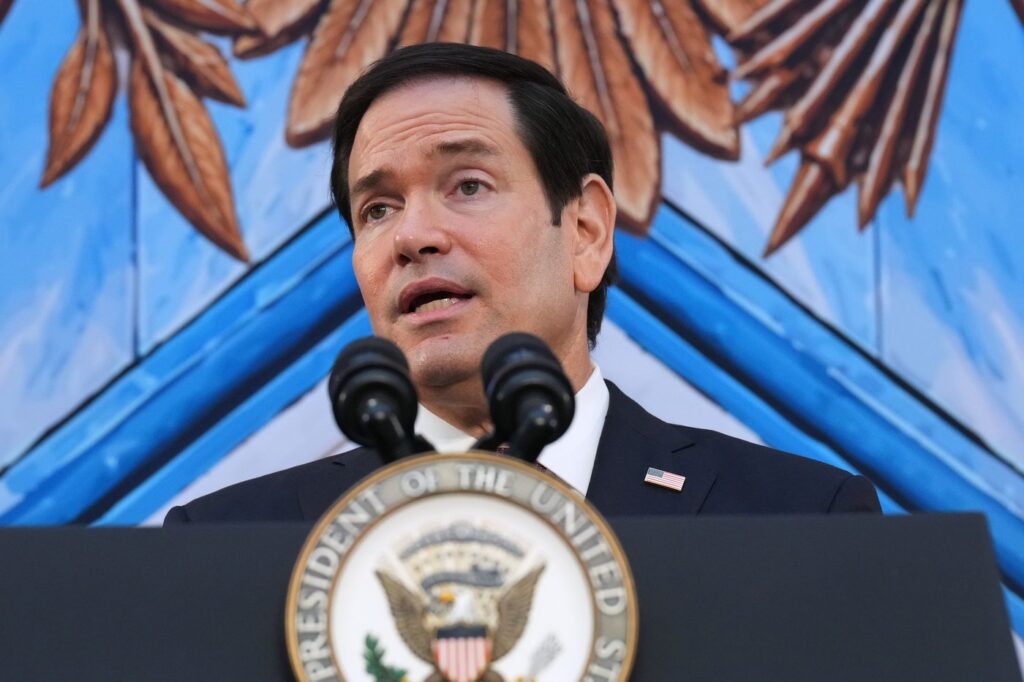
BARRANQUILLA, Colombia (AP) — U.S. Secretary of State Marco Rubio commenced a three-nation tour of Latin America on Tuesday, expressing strong support for Colombia's new president, Abelardo de la Espriella. De la Espriella has actively embraced President Donald Trump's policies targeting drug trafficking and illegal migration. Rubio stated that strengthened cooperation between the United States and Colombia is a priority, marking a shift in leadership towards right-wing conservatism in a region that had seen a leftward tilt in recent decades.
During his visit, Rubio emphasized the importance of U.S.-Colombia collaboration, particularly in enhancing security and counter-narcotics efforts. He clarified that Colombian leaders have not requested direct American military intervention against drug traffickers; instead, they have asked for support in terms of equipment, intelligence, and specialized training. Rubio reiterated that Colombian authorities are prepared to lead the fight against drug cartels, but require backing from the U.S.
De la Espriella highlighted the “long-term strategic partnership” between Colombia and the U.S., committing to combat drug trafficking through various measures, including the resumption of coca crop fumigation and targeting drug laboratories. The president stated that Colombia aspires to be the primary U.S. security partner in the hemisphere, reflecting an alignment with American interests across the region.
As part of his agenda, Rubio is also visiting Ecuador and Peru, two countries that share similar views on drug trade and migration issues. The Trump administration has intensified military operations aimed at curtailing narcotics trafficking, while seeking to enhance U.S. energy independence and tackle illegal migration. Rubio’s trip underscores a broader trend of aligning regional policies with U.S. interests.
After concluding discussions in Colombia, Rubio defended a massive oil deal he secured with Venezuelan leaders but noted he had not yet included Venezuela in his tour itinerary. He asserted that his future visit to Venezuela would eventually take place, emphasizing the significance of controlling oil fields previously dominated by China, Russia, and Iran. The deal is expected to generate significant revenue for the Venezuelan economy, which has suffered due to years of mismanagement.
While in Barranquilla, Rubio and President de la Espriella signed agreements for potential civilian nuclear power cooperation and the protection of essential mineral supplies tied to technology and defense sectors. Rubio expressed optimism about the common interests shared between the three countries in terms of regional security and economic engagement.
Colombian Foreign Minister Omar Bula described Rubio's visit as a pivotal moment for rebuilding a strategic alliance with the United States, emphasizing that discussions would center on security and collaboration in combatting drug trafficking. Meanwhile, President de la Espriella's administration has pledged to take a tough stance on illegal immigration, particularly regarding Venezuelans without residence permits, as part of broader efforts to enhance domestic security.
De la Espriella has also executed military operations against illegal armed groups, although these measures have faced criticism due to civilian casualties, including minors. The president's hardline approach represents a departure from the peace negotiations initiated by his predecessor, Gustavo Petro, which he considers ineffective in curbing violence and crime.
As Rubio’s tour coincides with intensified U.S. military operations against narcotics trafficking in Latin America, recent actions include sinking a vessel linked to the Ecuadorian criminal group Los Choneros. This marks a notable shift in U.S. strategy, aiming to mitigate casualties among those involved in drug trafficking operations.
Rubio is scheduled to conclude his tour in Lima, Peru, where he will meet with newly-elected President Keiko Fujimori, who represents a similar political shift towards conservative governance. The broader implications of this tour suggest an ongoing realignment of Latin American policies in favor of U.S. interests, particularly concerning security and counter-narcotics initiatives.