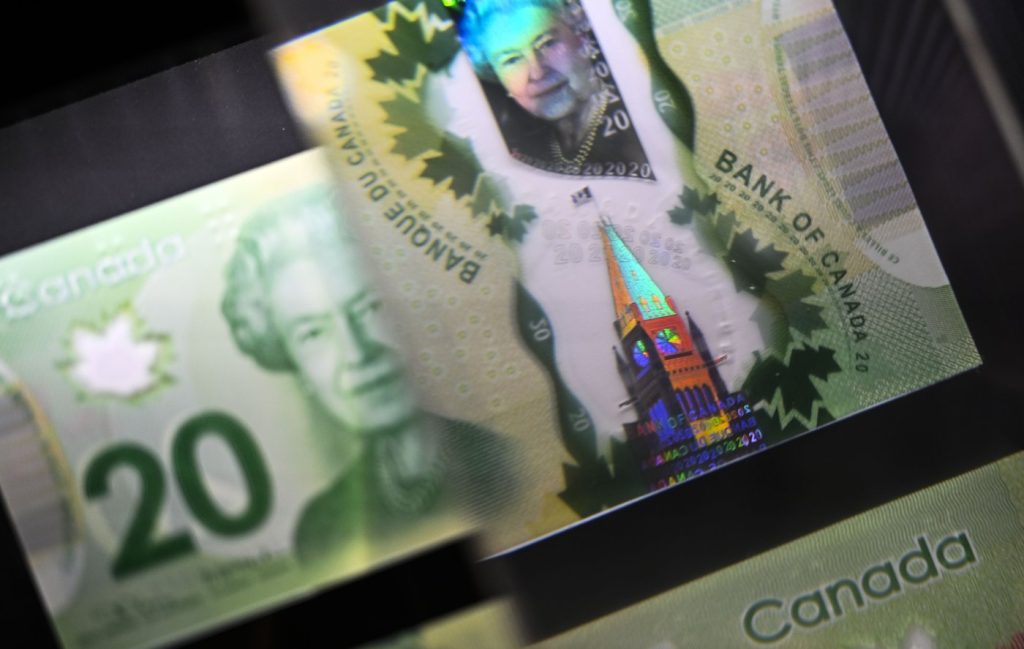
Economists are predicting that inflation remained stable in August, primarily due to a decline in gasoline prices compared to earlier summer levels. However, the ongoing trade dispute between Canada and the United States may result in increased financial strain for consumers in the near future.
Statistics Canada is scheduled to release the latest consumer price index (CPI) data for August on Monday, with a Reuters poll suggesting that annual inflation held steady at three percent last month, according to LSEG Data & Analytics.
Tu Nguyen, an economist at RSM Canada, commented, “We’re expecting the headline number to not go above three percent. We are still seeing the inflationary pressure coming solely from gasoline prices and energy prices. The rest of the economy is pretty stable.”
Gasoline price fluctuations during the spring and summer have largely been influenced by the tensions arising from the conflict in Iran. Nguyen noted that while hostilities appeared “less turbulent” in August, crude oil prices have recently hovered around US$100 per barrel. “So that period of a little bit more peace has ended,” she added.
Nguyen elaborated on the broader implications of elevated gasoline prices, stating, “The longer that goes on, the more it sort of spreads throughout the economy because everything we buy has to go through some transportation channel. If gasoline prices are higher, electricity prices are high, then everything gets more expensive.” Despite a slight decrease in gasoline prices month-over-month in August, RBC economists Nathan Janzen and Abbey Xu reported that gas prices were still up 23 percent compared to the previous year.
In a recent move, the Bank of Canada decided to leave its key policy rate unchanged at 2.25 percent, marking the seventh consecutive hold. Bank of Canada Governor Tiff Macklem stated the central bank is closely monitoring whether cost pressures stemming from the Iran conflict might lead to rising inflation concerns among consumers.
The Bank of Canada has indicated that significant spillover effects from higher energy prices into broader inflation could compel policymakers to consider raising interest rates. However, Janzen and Xu noted that there has been limited evidence of this pass-through effect thus far, with inflationary pressures remaining concentrated in a relatively narrow range of categories beyond direct gas price impacts and energy-intensive products like airfares.
RBC anticipates that the central bank will maintain its key interest rate for the remainder of the year, with gradual rate hikes projected for 2027. The report emphasizes that the trajectory of inflation will depend critically on whether underlying inflation stays near the target level and whether the broader economic recovery continues on track.
Another factor likely to exert upward pressure on consumer prices in the coming months is the escalating trade conflict, which recently saw U.S. tariffs imposed on various Canadian goods as of August 22. This prompted Canada’s implementation of counter-tariffs on American products starting on September 8.
Nguyen cautioned that increases in consumer prices might become more apparent in the September data but emphasized that these retaliatory tariffs are “not going to have a huge impact on inflation overall.” She pointed out, “For a lot of these products, there are substitutes, so the Canadian household can choose to buy a Canadian product or a product that’s imported from Europe or Asia that is not from the U.S.” She further added that “a 50 percent tariff is basically going to translate into no one buying that particular product.”
This economic landscape reflects the complex interplay of global events impacting local economies and consumer prices, as economists continue to analyze upcoming data for potential shifts in inflation and monetary policy implications.