VICTORIA — The deficit forecast for British Columbia has surged by $450 million, reaching an unprecedented $13.8 billion. This increase has primarily been attributed to a “calculation error” regarding natural gas royalties, leading one critic to label the situation a state of “fiscal crisis.”
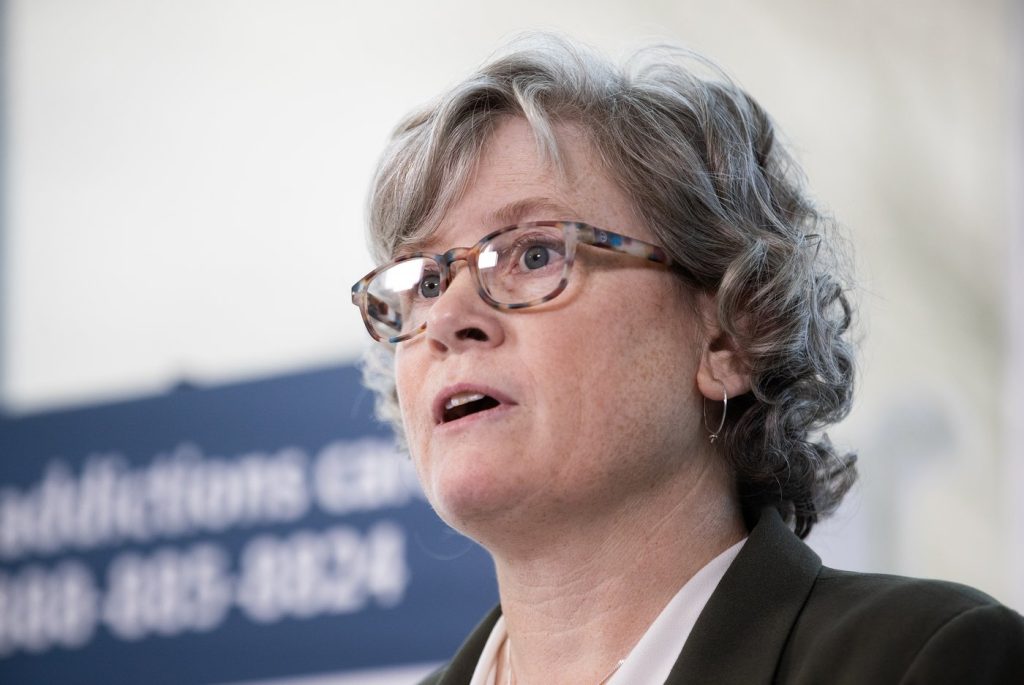
Finance Minister Josie Osborne, who assumed her role just last month, unveiled the first quarterly report on Monday. The report revealed nearly $800 million additional revenue; however, spending is also on the rise. The extra revenue is attributed to income and sales taxes, although costs for wildfire fighting are projected to exceed $614 million. Osborne noted, “If we backed out the 614 million extra dollars for wildfire recovery, (if) we had a different wildfire season, then we would have seen a different number for the final deficit.” She emphasized that the government remains committed to protecting British Columbians during wildfire events.
Osborne further highlighted that refundable tax credits for businesses and renters increased by $458 million. Conversely, projected royalties from natural gas declined by $531 million. The Finance Ministry stated that this decrease reflects lower prices and a significant $306 million error in the price forecast initially outlined in Budget 2026. The government has previously acknowledged this as a “serious mistake” in calculating natural gas prices. In order to restore public confidence, steps are being taken to prevent such errors in the future.
Osborne remarked, “(I) don’t want in any way to diminish the seriousness of this,” stressing the importance of trust in government figures for the public. Critics have responded vocally to the financial situation. Peter Milobar, the former finance critic for the B.C. Conservatives and interim leader of a breakaway party, indicated that these fiscal numbers demonstrate the government’s inability to manage provincial finances effectively. He remarked, “It, very much, points to a province in a fiscal crisis, and the changing of the finance minister really won’t help that any.” Osborne replaced Brenda Bailey, who stepped down due to a diagnosis of early-stage cancer.
Milobar articulated that balancing the budget is achievable but requires considerable growth and development in the private sector. He asserted, “It means the government has to not just talk about trying to attract large projects and get the private sector economy going, but they actually, truly need to get out of the way.” Conservative finance critic Gavin Dew echoed these sentiments, stating that the fiscal update highlights the NDP government’s ongoing spending and mathematical challenges. He noted, “The government is collecting more tax revenue and still can’t keep the books under control.”
Bridgitte Anderson, president of the Greater Vancouver Board of Trade, concurred, stating that the fiscal update indicates that B.C.’s finances are misaligned. She elaborated, “Repeated warnings about the state of provincial finances (have) not been heeded and spending is still growing faster than the economy that pays for it.” In response to the criticisms, Osborne reaffirmed the government’s commitment to making prudent decisions for British Columbians. “We still have work to do, and we will stay focused on protecting the services for people, while we grow the economy, diversify the economy, and make sure that we are investing in good jobs for British Columbians,” she stated.
When asked about Premier David Eby’s promise for the 2024 election concerning “steadily declining deficits” and a “return to balance,” Osborne mentioned that the government is not anticipating an unjustified trade war. She emphasized the necessity for the government to defend vital services during periods of economic uncertainty, withholding any definitive discussions about future budgets or next year’s deficit. Additionally, she pointed out that the province faces “significant headwinds” due to existing trade concerns, yet the provincial economy remains resilient and poised for growth as it explores new markets beyond the United States.
The Finance Ministry noted that businesses are adjusting to changes in global trade, with exports rising by 16 percent toward destinations such as China, South Korea, and India. Furthermore, the overall value of B.C. exports increased by 4.2 percent until July 2026, predominantly due to a strong demand for copper.