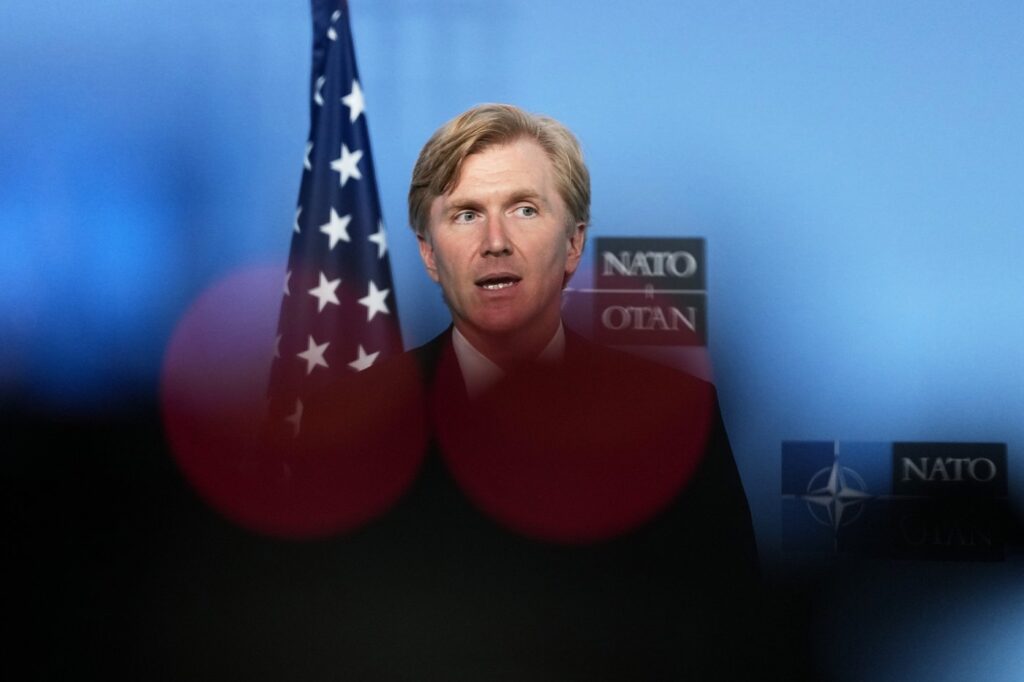
Tensions are escalating between the Pentagon and Congress regarding the flow of information related to the U.S. military's priorities, as lawmakers from both parties criticize a Defense Department leader for being excessively opaque. This discord was highlighted during a classified briefing where Defense Undersecretary Elbridge Colby failed to deliver the anticipated update on the Trump administration's National Defense Strategy.
Senators expressed their dissatisfaction following the briefing, particularly noting that Colby's answers did not adequately address their concerns. Issues discussed included the ongoing situation in the Iran war and fears regarding the potential deployment of troops to polling places during the upcoming midterm congressional elections. Colby did confirm that discussions surrounding the deployment of the National Guard were ongoing.
Senator Jacky Rosen, a Democrat from Nevada and a member of the Senate Armed Services Committee, remarked that Colby was "not forthcoming" and "did not really address our concerns or issues." Additionally, Senator Kevin Cramer, a Republican from North Dakota, described the briefing as evasive, saying it felt like a "dodge and punt" situation. He expressed surprise that a congressionally mandated update yielded no definitive statement from Colby.
Colby was expected to deliver a briefing on the National Defense Strategy, a comprehensive document first released in January. This strategy is designed as a guide for military operations and reflects the Trump administration's "America First" philosophy, which emphasizes nonintervention in foreign conflicts and reevaluates long-standing alliances with Europe.
According to the annual National Defense Authorization Act passed by Congress, Colby was required to brief the Senate Armed Services Committee on the implementation of this strategy by September 15 of the same year. Senator Mike Rounds, a Republican from South Dakota, criticized the outcome, stating, "They owe us a report, and we did not get the report."
Senator Mark Kelly, a Democrat from Arizona, voiced concerns regarding the strategy in relation to the Iran war, raising issues about what he termed a "munitions deficit." Experts have indicated that military contractors may take approximately three years to replenish stockpiles of advanced weaponry such as missile interceptors.
Kelly expressed his frustration, stating, "You walk out with more questions than when you went in," further underscoring the unsatisfactory nature of the briefing. Colby was directly asked about the discussions surrounding potentially deploying the National Guard for voter security on Election Day, to which he acknowledged awareness of discussions but did not confirm any commitments.
Cramer noted that Colby never provided a definitive "yes" or "no" in response to whether discussions about troop deployment for voter security took place. As the midterm elections approach, the notion of troop deployment has gained increased scrutiny, with Senator Elissa Slotkin, a Democrat from Michigan, pressing high-ranking officials, including Defense Secretary Pete Hegseth and General Dan Caine, to confirm that no troops would be sent to polling places. Caine previously addressed Slotkin in a letter assuring her that there are "no plans to send Federal military personnel or Federalized members of the National Guard to polling places during the 2026 elections."
Not all lawmakers are critical of Colby's briefing, however. Senator Jim Banks, a Republican from Indiana, described the session as "constructive" and "substantive," claiming it answered all his questions. When asked if he was satisfied with the briefing, Senator Roger Wicker, the Republican chairman of the Senate Armed Services Committee, refrained from commenting on the classified session, stating, "You understand."