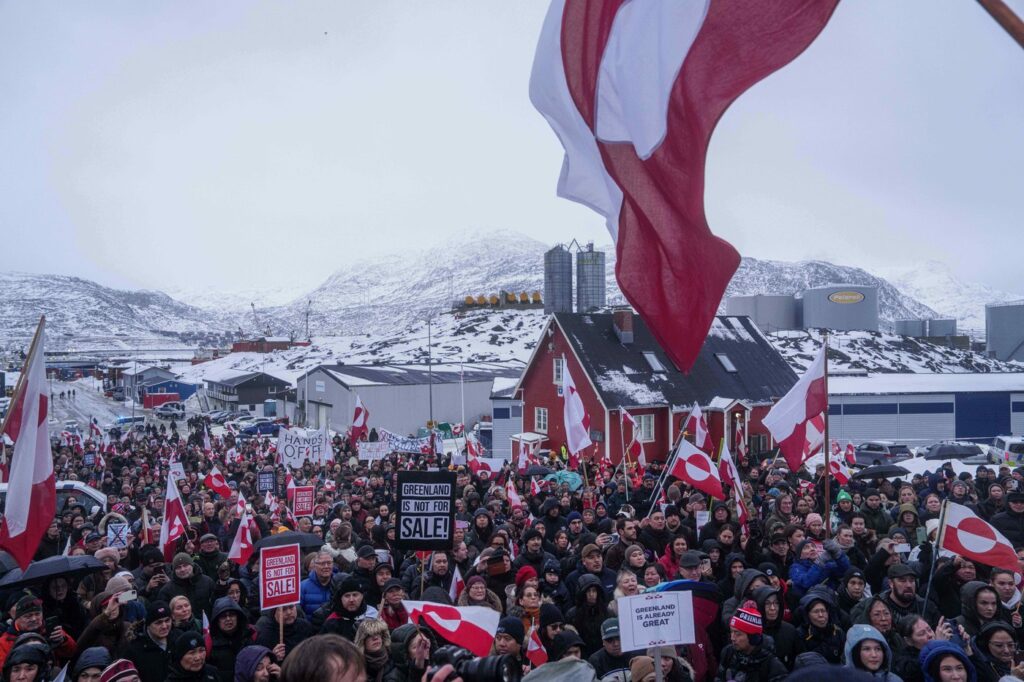
WASHINGTON (AP) — President Donald Trump announced a newly brokered agreement with Denmark designed to enhance the U.S. military presence in Greenland, following months of contentious dialogue that included threats to take the territory by force from the NATO ally. This new deal serves to maintain Denmark's sovereignty over the island while addressing several U.S. security concerns.
In a social media post, Trump characterized the emerging agreement as providing the United States with "permanent control over security, and all other needs, in Greenland," asserting it effectively resolves all U.S. concerns tied to the territory, which has a population of about 56,000 residents. He emphasized that the Trump administration would “immediately” begin efforts to expand its military footprint on the mineral-rich island.
The agreement is the result of months of quiet negotiations among U.S., Greenland, and Danish officials, aimed at finding a balanced resolution to address Trump's security apprehensions. The timing of the announcement also allows Trump to present a foreign policy achievement just ahead of the midterm elections while he balances other significant military actions, including initiatives regarding Venezuela and Iran.
Denmark's Prime Minister Mette Frederiksen confirmed that the deal is set to be formally signed by all three governments at the upcoming United Nations General Assembly. However, the agreement will require parliamentary approval from both the Danish and Greenland governments before becoming enforceable. Frederiksen remarked that the deal acknowledges the sovereignty and territorial integrity of Greenland and Denmark, affirming both populations' right to self-determination.
Greenland's Prime Minister Jens-Frederik Nielsen echoed this sentiment, stating that the emerging deal serves the interests of all involved parties while respecting Greenland's needs. This development follows a period when Trump demanded that Denmark sell Greenland to the U.S., labeling it vital for American security, and refrained from ruling out military force to acquire the territory, despite Denmark being a NATO ally.
Both Denmark and Greenland consistently rejected Trump's suggestions that the island was for sale and condemned any actions perceived as U.S. intelligence gathering efforts in the region. Additionally, such moves were met with fierce opposition from Russia and many European nations. Nevertheless, Trump's latest announcement indicates that an understanding may have been reached, potentially putting an end to a considerable diplomatic impasse for Denmark.
Trump's post implied a future of collaboration with both the Danish and Greenlandic populations, emphasizing the strategic importance of the island. He has frequently argued that securing Greenland is essential to counter threats posed by competitors like Russia and China while making unfounded claims about the presence of Chinese and Russian military forces near the island.
The agreement itself prohibits any base of a non-NATO member on Greenland and limits foreign adversaries from investing on the island, thereby ensuring that neither China nor Russia can establish a military base there. Secretary of State Marco Rubio praised the deal as a "historic" and "huge win" for the United States, framing it as a comprehensive solution to national security concerns in the region.
While it is acknowledged that the U.S. already maintains a military presence in Greenland, including operations at the Pituffik Space Base, the strategic significance of the island has long been recognized dating back to World War II, when the U.S. occupied Greenland to prevent it from coming under Nazi control and to safeguard critical North Atlantic shipping routes.
Despite Trump's earlier aggressive rhetoric toward Denmark regarding Greenland, Danish authorities have shown readiness to assist the U.S. in expanding its military roles and commercial activities within Greenland. However, Trump's earlier demands for the acquisition of the island and threats to use military force created tensions within the NATO alliance and disconcerted European partners. Observers note that the situation deeply impacted the U.S. reputation in Europe, emphasizing the need for efforts to mend these diplomatic relations.
— AP Diplomatic Writer Matthew Lee contributed reporting.