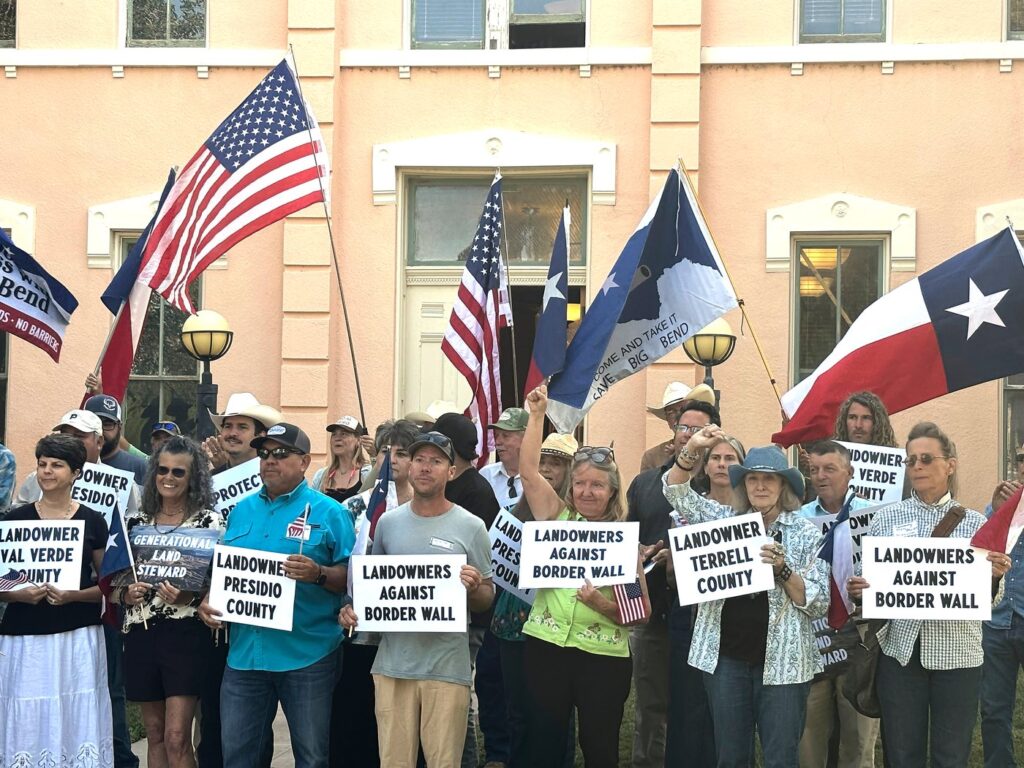
COMSTOCK, Texas (AP) — The Trump administration has officially begun construction on the border wall in the Big Bend region of west Texas, a significant development given the area's history of substantial opposition to such plans. This construction initiative represents a crucial element of President Donald Trump's broader immigration policies, encapsulated in a $46 billion strategy aimed at erecting walls and barriers across the entire U.S.-Mexico border, alongside new roads and technological advancements.
Customs and Border Protection (CBP) announced that the installation of border wall panels is currently taking place within a 47-mile stretch of Hudspeth County, an area known as Big Bend 1. This region is part of a larger 500-mile stretch extending from Hudspeth County, situated south of El Paso, to Lake Amistad. The first panels of the wall were erected on September 15, with a photo shared by CBP illustrating a crane lifting one of the 30-foot-tall steel panels into position, alongside observing construction workers.
The ongoing installation activities are distinct from a separate infrastructure project within the nearby Big Bend National Park, where work has been temporarily halted to engage with opponents of the wall. In this broader Big Bend area, CBP faces significant resistance from a coalition of landowners, environmental advocates, business proprietors, and ranchers who argue that this remote region does not experience high levels of illegal immigration.
Activists have emphasized their commitment to opposing border construction efforts even as wall installations progress. Clara Benson, a founding member of the No Big Bend Wall Coalition, asserted in a recent interview that reports of trucks transporting supplies to remote areas along the Rio Grande have been received, with contractors preparing the site for upcoming construction. While delivering her remarks from Washington, D.C., where she was meeting with lawmakers, Benson vowed to persist in the struggle against the wall initiatives in the entire region, stating, “We will continue to fight for this land no matter what the outcome is.” She underscored the determination of local residents, indicating that they would resist efforts to dismantle the wall if it were built.
The announcement of construction activities aligns with the Trump administration's intensified efforts to establish a continuous barrier along the southern border, incorporating 30-foot-tall steel bollard walls and barriers intended to block vehicles from crossing. CBP has reported a construction pace of approximately 12 miles of barriers erected per week, effectively doubling the rate previously mentioned by the agency's head, Rodney Scott. This increased momentum comes as the agency announced reaching the milestone of 200 miles of new barriers constructed since the start of the Trump administration.
Opposition has been heightened by various environmental organizations, small towns concerned about flooding effects, Native American groups citing disruptions to sacred sites, and landowners fearing encroachments on their property. In Texas, much of the resistance has coalesced around plans for Big Bend National Park, a key tourist destination along the Rio Grande. Many landowners in the vicinity have challenged the federal government's construction efforts, leading to concerns about both environmental impact and property rights.
Recently, a coalition comprising landowners, ranchers, business operators from the Big Bend region, and a nonprofit organization dedicated to preserving the area's landscape and culture filed a lawsuit aiming to halt the administration's border wall plans. Additionally, local activists and landowners have participated in county meetings to urge elected officials against cooperating with CBP’s contractors, with numerous landowners denying access to their property for governmental surveying activities.