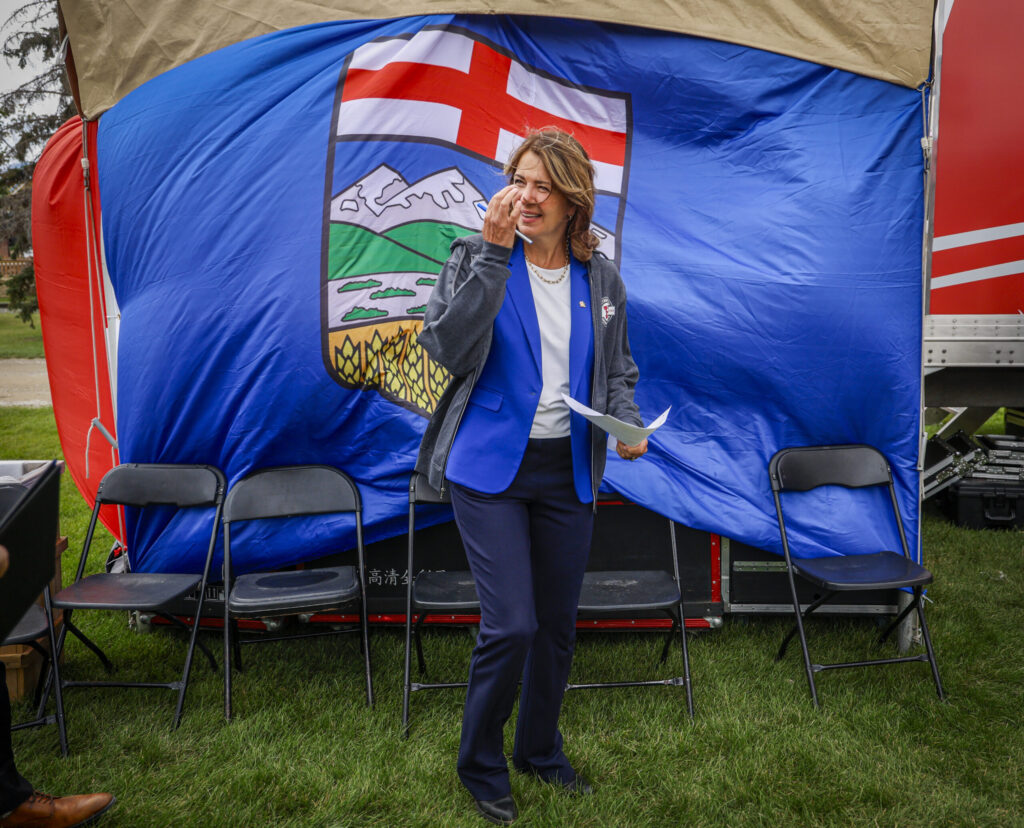
Alberta Premier Danielle Smith expressed deep emotions during a recent virtual assembly addressing Alberta's future in Canada, co-hosted by notable figures such as former Opposition leader Preston Manning and former British Columbia premier Gordon Campbell. The event highlighted the historic grievances Albertans have faced from the federal government, with Smith detailing these indignities while visibly emotional.
In her speech, Smith announced a referendum scheduled for October 19 that will ask Albertans whether they wish to remain part of Canada or consider initiating a second binding referendum on the legal process for separation. She emphasized her belief in a sovereign Alberta's role within a united Canada and identified the anger and hurt experienced by many Albertans over the years.
"A lot of Albertans are angry and some are more than angry. They’re hurt. I hear it at town halls, in coffee shops, at hockey rinks and in my email inbox," said Smith, pausing to gather her emotions as she spoke of the challenges facing residents. She shared poignant stories of individuals feeling pressured, families struggling to afford homes, and parents grappling with rising grocery and utility bills. These anecdotes resonated deeply with the audience, illustrating the profound discontent present in the province.
Preston Manning acknowledged Smith's emotional response, reminding attendees that expressing feelings is a vital part of engaging with public sentiment. Smith has characterized the call for a referendum as a means to address what she sees as legitimate frustrations among Albertans regarding federal interference in provincial matters. Critics, including the Alberta NDP, have accused her of amplifying the grievances of a minority to placate hardline separatists within her party.
Smith contended that frustration with Ottawa is not a new phenomenon, citing a decade of perceived neglect towards Alberta's economy. She urged listeners to consider, "When a proud, hardworking people feel their contribution is taken for granted and their livelihood is treated as something to be phased out, some begin to ask a painful question. Does this country actually want us?" This sentiment underscores the growing sentiment for separation among many Albertans, despite polling suggesting that those wanting to remain in Canada will likely prevail.
Nevertheless, Smith noted that even a considerable number of votes for separation is "too high for comfort." She conveyed optimism regarding Alberta's relationship with Ottawa, particularly following battles over pivotal legislation. Smith pointed to recent negotiations that have led to improved recognition of Alberta's contributions, particularly within the context of energy production and environmental regulations.
Echoing these sentiments, Smith stated, "I support Alberta remaining in Canada… and I also believe Albertans deserve a say." She underscored the importance of continued advocacy while articulating a commitment to making Canada work for Alberta. Asserting that pressure from Albertans has yielded results, she urged not to abandon the pursuit of progress at the federal level. Smith argued that with new leadership, such as Prime Minister Mark Carney, Alberta has an opportunity to negotiate beneficial agreements regarding energy, transforming the province's image from one of a target to a treasure.
As the assembly concluded, Smith's remarks painted a complex picture of Alberta's future, intertwining emotions, political aspirations, and the desire for both dialogue and action. Her conviction that Alberta must remain engaged in Canada while also advocating for its interests resonated with many in attendance.