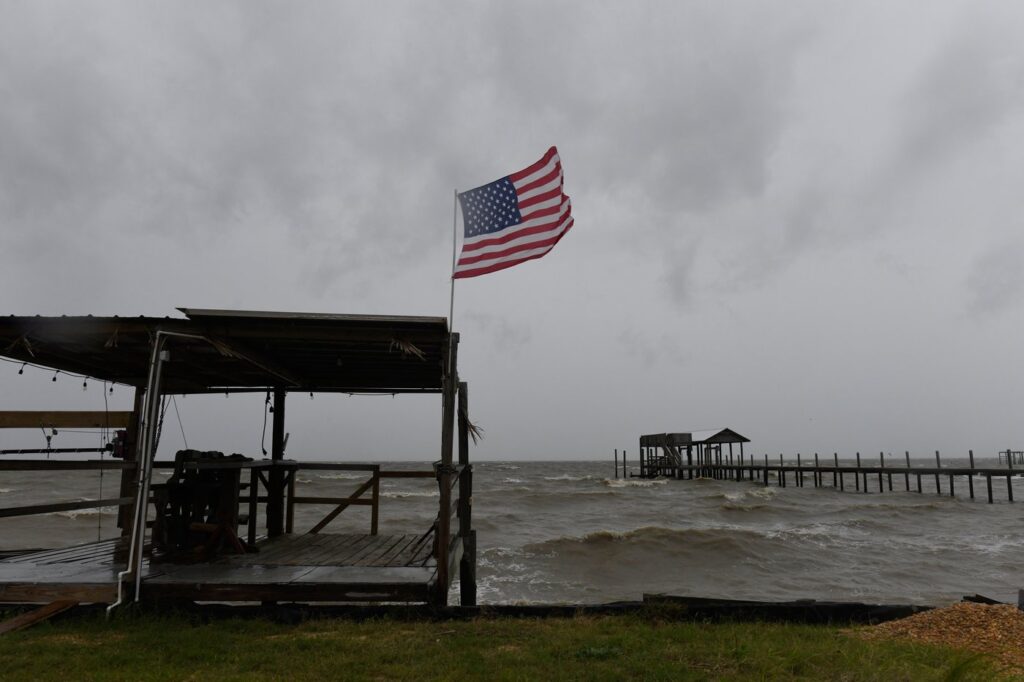
PANAMA CITY BEACH, Fla. (AP) — Hurricane Isaias caused significant damage as it made landfall along the Florida Panhandle on Friday, peaking as a Category 2 hurricane near Destin, Florida. The storm brought hurricane-force winds that stripped roofs off hotels and condominiums, while also delivering torrential rains that posed threats of flash floods and tornadoes across the Southeastern United States.
As Isaias charged north on Saturday, authorities reported at least four fatalities attributed to the hurricane. This included two deaths in Florida and Alabama caused by falling trees — one victim in Escambia County, Florida, and another in Birmingham, Alabama. Additionally, concerns about flooding extended as far as the Appalachian region.
Despite dire predictions of storm surges, many major coastal routes remained open by Saturday morning, reportedly cleared of downed trees and power lines that usually litter the streets after such a powerful storm. However, within hours after Isaias made landfall, nearly 900,000 customers lost power across Florida and Alabama, particularly concentrated in areas along the Gulf Coast.
Severe damages were reported, particularly in Pensacola, where the roof was blown off a hotel and the local airport sustained damage. Nearby, in Destin, a boathouse was flattened, and a high-rise building in Panama City Beach lost part of its facade. Individuals began the challenging task of cleaning up, with a worker in a condominium complex sweeping up insulation and others setting right beach chairs that had been scattered by the powerful winds.
In Gulf Breeze, Florida, a resident named Jayme Mitich shared her harrowing experience of hiding beneath a mattress with her 13-year-old daughter, Jeweliana Jackson, as a part of their roof was torn off. Their living room was left soaked, and the area was strewn with roof shingles and broken beams, showcasing the storm's destructiveness.
As Isaias advanced across Alabama, it retained its tropical-force winds, bringing further peril. Cory Moon, Birmingham’s fire chief, confirmed one death from a tree falling on a house, while another related fatality stemmed from a vehicle crash involving a downed tree in Barbour County. In Mobile, Alabama, local officials reported numerous downed trees and power lines, further complicating recovery efforts.
Despite the chaos, some residents expressed relief. Maranie Adams, who weathered the storm in Gulf Shores, Alabama, felt fortunate compared to previous hurricanes such as Sally, which had caused severe flooding under her home. She noted the anxiety of the storm but emphasized her relief as Isaias passed.
In an effort to assist impacted households, President Donald Trump declared a state of emergency for Georgia after earlier declarations for Florida and Alabama, thus facilitating federal aid. In response to the disruptions caused by Isaias, the U.S. Energy Department allowed emergency exchanges of crude oil from the strategic reserve.
This Atlantic hurricane season is notable for its unusual calmness, and Isaias was the first hurricane to hit the eastern U.S. since 2024. The National Weather Service cautioned that parts of Georgia and the Carolinas could experience heavy rainfall, aiming to support flood awareness as the storm moved into the Tennessee Valley and mid-Atlantic regions on Sunday.
In the Pacific, a separate storm, Simon, escalated to a Category 4 hurricane and approached Mexico's coast, promising substantial rainfall that could result in life-threatening flooding and mudslides in southwestern areas starting Sunday. Additionally, Tropical Storm Rachel threatens to bring heavy winds and rains to northern Mexico and Southern California over the weekend.