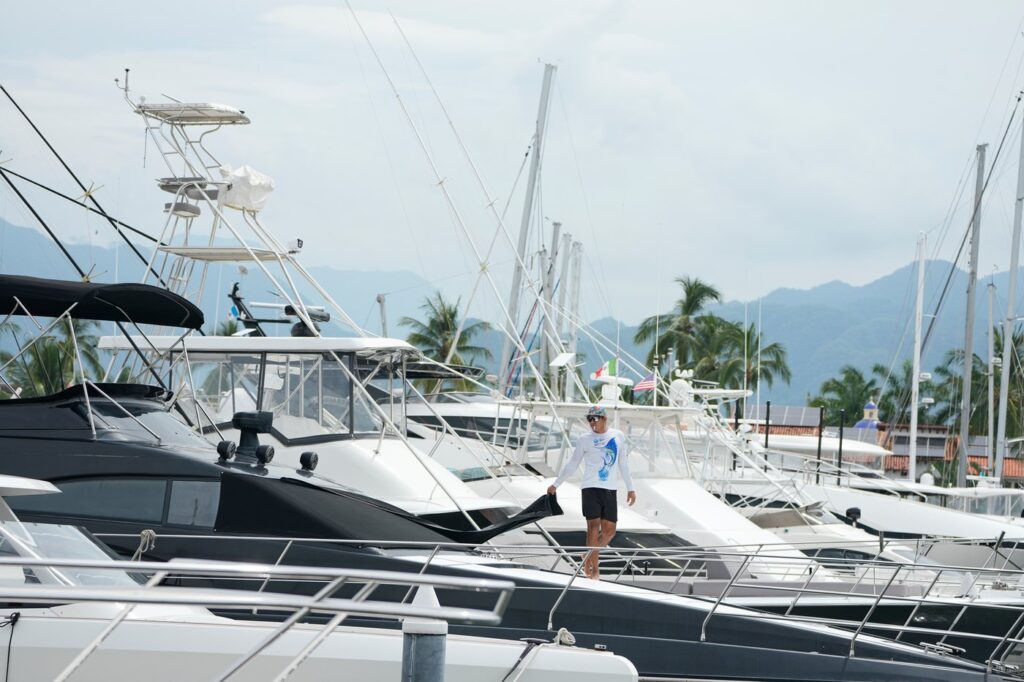
PUERTO VALLARTA, Mexico (AP) — Hurricane Simon struck Mexico's Pacific coast as a Category 3 storm on Sunday, with its eye remaining just offshore while powerful winds and torrential rain affected residents living between the Sierra Madre mountains and the ocean. The hurricane's center was reported to be moving parallel to the coast, with expectations for its most damaging conditions to impact the Puerto Vallarta area around midnight, continuing into Monday morning.
On Sunday, Hurricane Simon experienced a slight weakening, with maximum sustained winds reduced to 120 mph (195 kph), as reported by the U.S. National Hurricane Center in Miami. Despite this decrease in intensity, the storm still posed a significant threat to the region, particularly for the communities around Puerto Vallarta, a well-known tourist destination in Jalisco state. Many local residents live in areas where infrastructure may not withstand severe weather conditions.
By the afternoon, Simon's eye was moving northwest, approximately 45 miles (75 kilometers) south of Cabo Corrientes, at a speed of about 5 mph (7 kph). Philippe Papin, a senior specialist at the hurricane center, indicated that Cabo Corrientes, located at the southern tip of Bahia de Banderas, is the region most likely to experience a direct hit from the storm. Forecasts predicted powerful winds that could extend from Mexico's western coast to the Sierra Madre mountains.
The hurricane's winds extend outward up to 15 miles (30 kilometers), with tropical-storm-force winds reaching up to 60 miles (95 kilometers) from the storm's center. This wide range means that the entire area between Mexico's western coast and the Sierra Madre mountains could face significant impacts. Papin emphasized that residents should be prepared for catastrophic winds and life-threatening storm surges along the west-central coast of Mexico, where a hurricane warning is in effect. Heavy rainfall accompanying the storm may lead to life-threatening flooding and mudslides, particularly in regions with steep terrain along the coastline.
The hurricane center estimated that Simon could drop an additional 2 to 4 inches (5 to 10 centimeters) of rain, with isolated areas receiving up to 8 inches (20 centimeters) across the states of Colima, Jalisco, Nayarit, and Sinaloa through early Thursday. Maximum rainfall totals of 30 inches (76 centimeters) could be possible in parts of Michoacan, Colima, and Jalisco, posing severe flooding risks and increasing the likelihood of mudslides, especially in elevated areas.
As Simon approached Puerto Vallarta, National Guard troops patrolled the streets, and police used megaphones to instruct joggers and others who were outside to return to shelter. Jalisco state authorities suspended classes on Friday and Monday in 22 coastal municipalities and began evacuating at-risk individuals. The tourism sector was also directed to ensure that both workers and visitors are safely accommodated in shelters or safe zones.
Mexican President Claudia Sheinbaum took to social media to urge residents in Jalisco, Colima, Nayarit, and Michoacan to stay sheltered until authorities declared the danger had passed. She called on them to follow local civil protection officials' guidance and avoid travel on public roads, reiterating that precautionary evacuations to safety zones were ongoing and emphasizing the importance of safety.
Hotel worker Víctor Martínez shared that he was shopping for nonperishable food items due to public transportation suspensions, which prevented him from going to work amid an evacuation at his hotel. Reflecting on the community's experiences with severe weather, he remarked, "It happened to us before. It hit us years ago," referencing a destructive Category 5 hurricane that struck in 2002. People are now more prepared and cautious, taking necessary precautions to prevent the challenges faced during that previous event.
Despite the looming threat of Hurricane Simon, tourists continued arriving in Puerto Vallarta. Visitors Ricardo Ramírez and Brenda Villarreal, unfamiliar with hurricane conditions, attempted to locate food near the city's waterfront and were met by police encouraging them to seek shelter. Ramírez and Villarreal, who traveled from Guadalajara, expressed their unpreparedness for the unfolding situation. Villarreal noted, "We don’t know the extent of the danger yet. We’re just starting to see what’s going on."