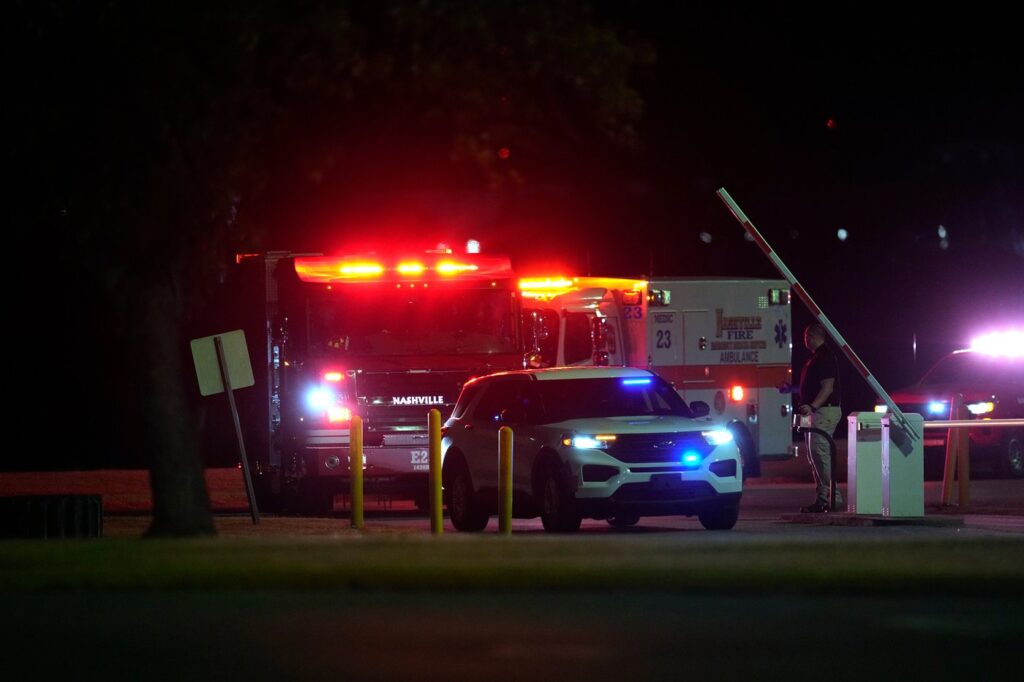
NASHVILLE, Tenn. (AP) — Emergency assistance for Christa Pike faced significant delays due to confusion between first responders and Tennessee prison officials after her execution attempt on September 30, 2023, resulted in failure. The complications were revealed through 911 dispatch recordings obtained by The Associated Press.
The critical 911 call was placed at 8:40 p.m., shortly after the lethal injection procedure began, but the dispatcher was unable to confirm the legitimacy of the call due to the caller's inability to provide necessary identification codes. By 9:03 p.m., a dispatcher stated, “Per supervisors here at the DEC (Department of Emergency Communications), we have been informed it is a false call. There is no medical assistance needed at Riverbend Prison.” It took approximately half an hour after the initial call before prison officials confirmed the situation as genuine around 9:11 p.m., at which point emergency responders were allowed access to the facility.
Christa Pike, 50, was involved in a notorious case related to the 1995 stabbing death of her classmate Colleen Slemmer. Pike, who was just 18 at the time of the crime, had been sentenced to death and was one of the youngest women to receive such a sentence. During the execution attempt, Pike was administered two doses of pentobarbital, a lethal drug, but failed to die from the injections. State procedures dictate that a second dose should be given if the first does not result in death, but they do not outline protocols for scenarios where an inmate survives.
The initial call seeking emergency assistance suggested that Pike was unconscious and not breathing normally. After being transported to a hospital, she spent several days on a ventilator, with her attorneys expressing doubts about her survival. However, she regained consciousness and was discharged back to prison after spending over 30 years incarcerated.
The confusion surrounding the 911 call began with an anonymous caller at Riverbend who reported the execution attempt and that Pike was still alive. As emergency responders attempted to verify the legitimacy of the call, they communicated with representatives from the prison's Central Control who denied making such a call. A first responder reported on the radio that someone outside the prison gates claimed the situation was real. It was not until Central Control confirmed the incident at 9:10 p.m. that responders could proceed into the facility. An ambulance and fire trucks were seen arriving inside the prison shortly thereafter around 9:14 p.m.
As emergency medical personnel prepared to transport Pike, confusion remained evident, as a medic advised dispatch to ensure that the prison was informed of her destination due to all the preceding confusion. In total, two additional calls were made; one at 9:08 p.m. from one of Pike's attorneys, Kelly Gleason, who emphasized that Pike needed immediate medical assistance after completing the execution protocol.
The Tennessee Department of Correction has not issued a statement specifying what went wrong during the execution attempt, but Governor Bill Lee has paused any further execution attempts pending an investigation. The outcome of Pike's situation raises questions regarding execution protocols and drug administration, with medical experts suggesting potential factors such as drug quality and issues related to the intravenous lines might have contributed to her survival. Pike's attorneys previously alerted the courts and correctional officials about her pre-existing medical condition that could lead to complications during the injection process.