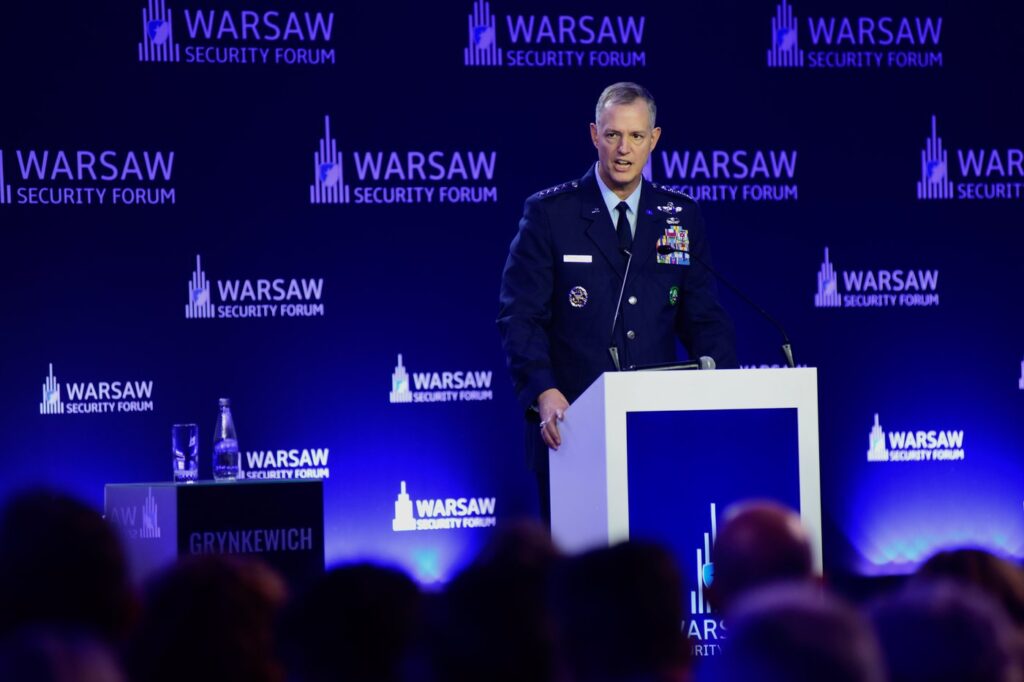
WARSAW, Poland (AP) — NATO's top military commander, U.S. General Alexus Grynkewich, asserted that the alliance is "ready to fight tonight" if attacked. His statement comes amidst rising concerns among European officials that Russia may increase covert actions or conduct a limited military incursion to test NATO's defenses.
In recent months, European nations have witnessed a surge in covert Russian activities, including an arson attack on an Estonian defense firm and a thwarted attempt to target a Ukrainian aircraft at a German airport. These incidents have led to heightened vigilance within NATO regarding potential aggression from Moscow.
Speaking at the Warsaw Security Forum, Grynkewich outlined NATO’s “Theory of Victory,” emphasizing that while he does not foresee an imminent conflict, preparation for war and maintaining open lines of communication are essential to preserving peace. He stated that if Russia were to attack NATO, the alliance would leverage a combination of sensors, autonomous systems, and military force to counter any assault.
Grynkewich emphasized NATO's strategy in response to a potential Russian attack, asserting that the alliance will aim to block the initial assault, blunt any continued aggression, and if necessary, "break the enemy’s forces." This strategy extends to targeting not just attacking forces but also the logistics and support systems that sustain them.
European intelligence has indicated a growing risk of a limited military attack by Russia on NATO nations, particularly those neighboring Russia. Denmark’s defense intelligence service has highlighted this concern, suggesting that Russia could resort to covert operations to sow discord within the NATO alliance.
Despite these risks, the political landscape presents challenges for NATO as well. Notably, President Donald Trump has stirred controversy in Europe by agreeing to a deal to purchase diesel from Russia, with the aim of lowering fuel prices in the U.S. before midterm elections. Earlier statements from Trump regarding pulling U.S. troops from Europe have also raised questions about the U.S. commitment to NATO.
It is critical, according to Grynkewich, for NATO members to coordinate a unified response to Russian aggression to delineate clear "red lines" for Moscow. He argued that the best reaction to increased Russian malign activity and sabotage is to reinforce support for Ukraine, a sentiment echoed by notable NATO leaders.
While Grynkewich assured that NATO does not seek war and is unlikely to be caught off guard by Russian aggression, he acknowledged previous shortcomings among certain NATO nations in effectively responding to drone incursions and other threats. Instances of drones crashing in NATO countries bordering Russia have highlighted ongoing vulnerabilities.
In recent months, multiple incidents have been attributed to Russian actions, leading Western officials to document over 200 occurrences since the beginning of the conflict in Ukraine. In September, Germany accused Russia of attempting to use a drone bomb to target a Ukrainian aircraft at Leipzig airport, while British officials foiled a plot aimed at a drone facility near London, and Estonia reported a fire at a defense company due to Russian involvement.
According to Denmark’s recent defense intelligence assessment, there are concerns that Russia could seek to acquire Ukrainian drones to launch attacks in Europe while masking its involvement. The strategies discussed by Tusk and others indicate a expectation that Russia may employ tactics designed to weaken NATO's collective response capability by creating confusion regarding the source of attacks.
Despite these provocations, both Danish intelligence and NATO officials agree that while Russia remains engaged in Ukraine, executing a large-scale attack on NATO is improbable, suggesting that the alliance's deterrence strategies are effectively in place.