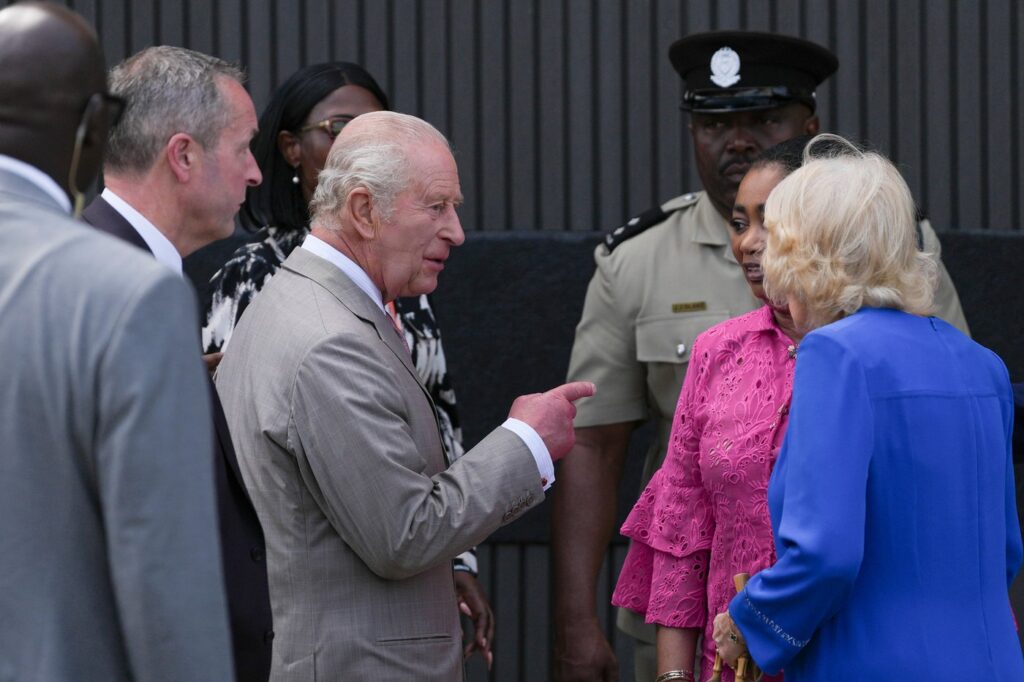
ST. JOHN'S, Antigua (AP) - King Charles III addressed the transatlantic slave trade, referring to it as a “shameful chapter of history” during his speech at the Commonwealth Heads of Government Meeting in Antigua on Tuesday. This statement follows recent comments from British Prime Minister Andy Burnham, who expressed openness to making a formal apology concerning Britain's colonial past and suggested a program for debt restructuring aimed at the Commonwealth's poorest nations; however, he dismissed proposals for the U.K. to pay reparations.
In his speech, Charles acknowledged the lasting impact of the transatlantic slave trade on the Commonwealth, particularly on Caribbean nations. He stated, “That shameful chapter of history is one that fills my heart with horror and my soul with the most profound personal sorrow,” emphasizing that history teaches us that “evil need not have the last word.” He called for character and courage to overcome past injustices. Furthermore, he highlighted the Royal Navy's role in ending the slave trade, while outlining his commitment to addressing historical wrongs through various initiatives, including improving access to education, investing in job creation, promoting intra-Commonwealth trade, and advancing climate change resilience measures.
“We cannot change the actions of those who came before us,” Charles remarked, “but we can learn from the past.” His sentiments were met with a contingent of protesters outside the venue, who held signs demanding accountability and reparatory justice. Among the demonstrators was Shana Michelle of Antigua, who articulated the lingering psychological impact of colonialism, stating, “Technically, we’re free, but mentally a lot of us aren’t.” She pointed out the need for a shift in self-perception and the recognition of colonial legacies in contemporary language and identity.
Michelle accused the British government of hesitance to acknowledge past wrongs due to fears of being held accountable for historical injustices. She insisted that a mere apology is insufficient and that reparative actions must follow as a vital step in addressing the historical grievances associated with slavery.
The British royal family has a historical connection to the slave trade, with figures such as Elizabeth I supporting early slave traders like John Hawkins, and Charles II promoting the expansion of slavery. Conversely, figures like the Duke of Clarence opposed slavery abolitionists, illustrating the complex intertwining of monarchy and the slave trade throughout history.
During the ceremony, leaders, including Burnham, Australian Prime Minister Anthony Albanese, and Canadian Prime Minister Mark Carney, walked past protesters before entering the theater for the formal event. The Commonwealth, composed of 56 nations, hosted several heads of government, representing nearly a third of the world’s population. Antigua and Barbuda Prime Minister Gaston Browne announced that significant funding commitments had been made for various initiatives within the Commonwealth.
In a noteworthy development, officials revealed that the Commonwealth Nature Initiative had garnered over $200 million in pledges aimed at protecting at least 30% of the world's land and oceans by 2030. “Countries whose futures are shaped by international decisions must have a meaningful voice in making them,” Browne asserted, stressing that no nation should have to compromise its future for immediate survival.