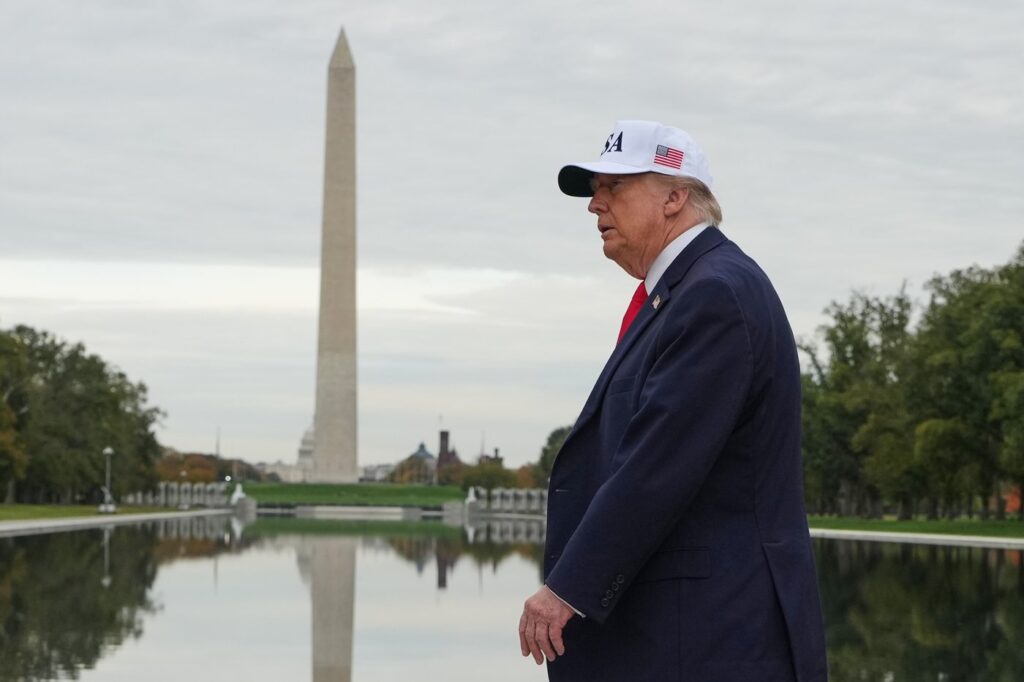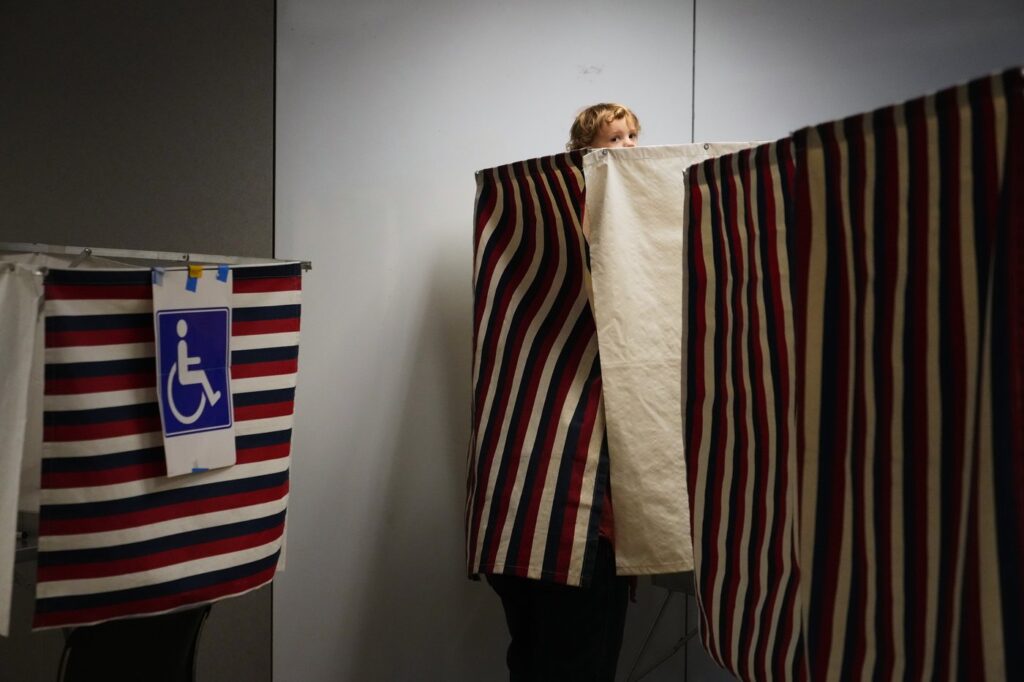
As Election Day approached for this year’s midterm elections, the atmosphere in Washington was marked by uncertainty due to the ongoing actions of President Donald Trump. Throughout the year, he had attempted to influence how states conduct their elections and raised concerns about the legitimacy of election outcomes, particularly in case of Republican losses. Despite his rhetoric surrounding election integrity, millions of Americans had already cast their votes, with early voting turnout surpassing that of the last midterm in 2022. The voting process, so far, faced relatively few issues, in stark contrast to Trump’s assertions of widespread election fraud.
By the evening of Election Day, the primary disruptions to the voting process were related to weather. Specifically, flooding in Florida and parts of the Southwest necessitated changes to polling locations and prompted emergency measures. In Westchester County, New York, a technical issue with ballot scanners delayed vote counting but did not halt the voting itself, leading to a critical congressional race in the area being affected.
Trump's administration had been actively working to leverage presidential power in an attempt to sway election outcomes in favor of Republicans, which could determine control of Congress. The Justice and Homeland Security departments engaged in a controversial initiative aimed at finding non-U.S. citizen voters, leading to dozens of arrests in California in a high-profile operation. The Department of Justice also launched an unprecedented monitoring effort across all 50 states, intended to observe polling places, a move matched by significant activity from Democratic groups.
Despite the heightened tension surrounding voting integrity, Trump’s repeated false claims of rampant voter fraud prompted election officials to prepare for potential challenges at polling sites, including the presence of immigration agents and federal officials. U.S. Immigration and Customs Enforcement, on its social media, warned that it would aggressively pursue alleged noncitizen voters, further inflaming fears of intimidation at the polls.
However, actual incidents on Election Day reflected more mundane complications. Hannah Fried, CEO of the voting rights group All Voting Is Local, described most encountered problems as typical issues in elections that were managed efficiently. David Becker, executive director of the Center for Election Innovation and Research, noted that the smoothness of the day could be attributed to the earlier high turnout for early voting.
The most significant issue arose in Westchester County, where a programming error rendered ballot scanners inoperative, resulting in a judge allowing ballots to be transported to a secure location for proper counting. Other locations across the country also faced technical difficulties, such as delays caused by a malfunction in Florida’s new voting system, and extended voting hours in Pennsylvania and North Carolina due to similar issues.
Severe weather conditions impacted voter accessibility in the Southwest, with heavy rains causing flooding in various states including Colorado, Arizona, Utah, and New Mexico. To mitigate the disruptions, election officials modified polling locations, with some counties allowing electronic voting to accommodate the challenging weather.
While attempts by the Trump administration to influence election processes faced legal setbacks, including a U.S. Supreme Court ruling that denied a request to discard ballots in California, challenges persisted. Nevertheless, Trump's administration received a temporary win when the 9th U.S. Circuit Court of Appeals allowed the Justice Department to continue its monitoring activities during the election.
As voting progressed, concerns lingered over whether Trump would accept the election results, as he had previously refrained from committing to do so unless he perceived the process to be "honest." This refrain was consistent with patterns observed in past comments surrounding election legitimacy, as he seemed to maintain an ambiguous stance regarding the outcome.
Reportedly, legal disputes over election processes are likely to continue beyond Election Day, raising further concerns about the legitimacy and resolution of the electoral outcomes.