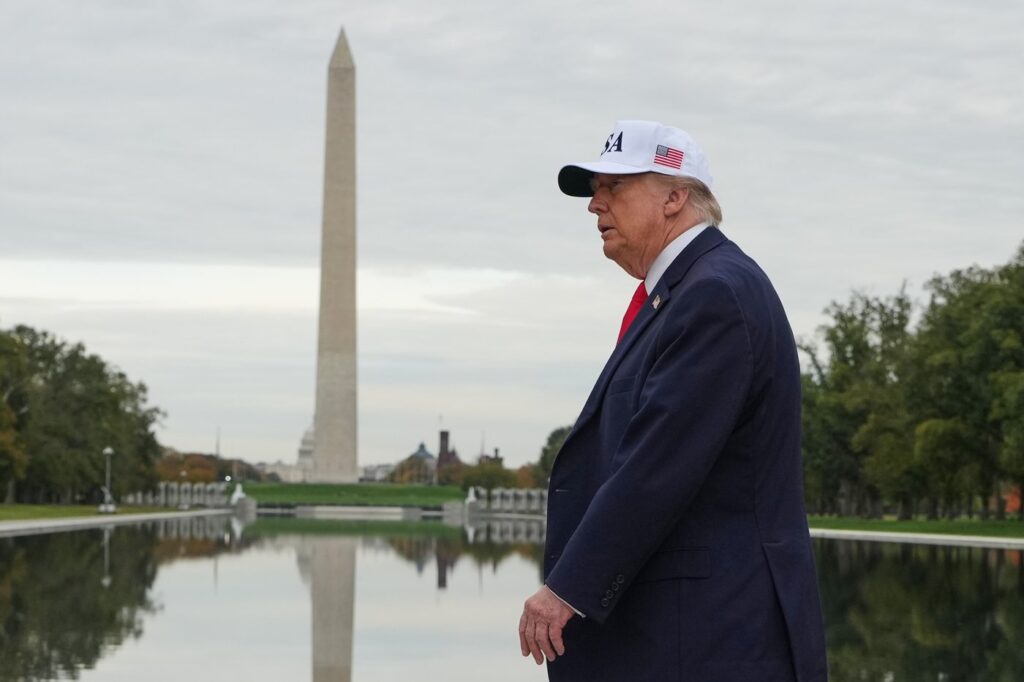
On Tuesday, voters across the United States sent a strong message to President Donald Trump by flipping control of the Senate to the Democratic Party. This shift was not only a direct rejection of Trump's endorsements but also a reaction to widespread concerns about rising costs stemming from his provocative tariff policies and ongoing war with Iran.
The Democrats achieved significant victories, capturing several Republican-held seats in key states such as North Carolina, Ohio, Iowa, Texas, South Carolina, and Kansas. In many of these races, Trump had personally backed the GOP nominees or actively campaigned for them, further emphasizing the degree to which the elections could be seen as a referendum on his leadership.
Trump's attempts to align the midterm elections with his personal brand were evident as he encouraged voters to “pretend I’m on the ballot.” Despite this strategy, as results rolled in, Trump began to shift blame, claiming that Democrats simply ran effective campaigns and disparaging GOP candidates for their failures at the polls. His repeated insistence that he would have won in a landslide had he been on the ballot is indicative of his struggle to reconcile these electoral losses with his political identity.
A Democratic majority in the Senate could result in increased oversight over the Trump administration, allowing Democratic lawmakers to launch investigations into various aspects of his presidency, as well as impede his choices for key government positions. This shift in power is likely to challenge Trump’s authority after two years of support from a mostly compliant Republican Congress.
Specific candidates endorsed by Trump faced scrutiny and skepticism, such as Republican Darline Graham in South Carolina, who lost to Democrat Annie Andrews, and Texas Republican Ken Paxton, who was defeated by Democrat James Talarico amidst corruption allegations and personal scandal. Both candidates struggled with public perceptions of their qualifications and integrity, demonstrating the potential pitfalls of Trump’s specific endorsements.
Moreover, Trump backed candidates like Michael Whatley, who lost in North Carolina. The defeats extended to the Midwest, where high fuel prices had unsettled voters. Democrats claimed victories in Kansas and Iowa, where voters expressed dissatisfaction with Trump’s tariff policies. In Ohio, Democrat Sherrod Brown regained his Senate seat, further solidifying the Democratic trend in states that had previously backed Trump in the past election cycle.
Trump's political losses were exacerbated by the defeat of Texas Governor Greg Abbott, whom Trump had vigorously supported. Following Abbott’s loss, Trump publicly criticized him, labeling him as a “RINO” (Republican in Name Only), signaling a deeper division within the party that may hinder its cohesiveness moving forward.
Voter sentiment also reflected substantial dissatisfaction with Trump’s economic policies. An AP Voter Poll indicated that a significant majority of voters feel Trump’s administration has negatively impacted the economy. Approximately two-thirds of the electorate believe his policies have worsened economic conditions, while only a small fraction perceives any improvement. This sentiment is mirrored in assessments of Trump’s leadership style, with many voters questioning his capabilities and priorities.
Looking ahead, a Democrat-controlled Congress will likely focus on investigating the Trump administration's policies and its ties to private corporations, along with relatives' business dealings involving the Trump family. With this shift in legislative power come greater resources for oversight, including budgetary provisions and subpoena powers, putting the Trump presidency under increased scrutiny.
As President Trump braces for these challenges, he remains aware of the high stakes involved. With a Democratic congress, the potential for legislative confrontation looms large as Trump vows to use his veto power when necessary. The forthcoming political battles and investigations signal a turbulent period ahead, both for Trump and the larger Republican party.