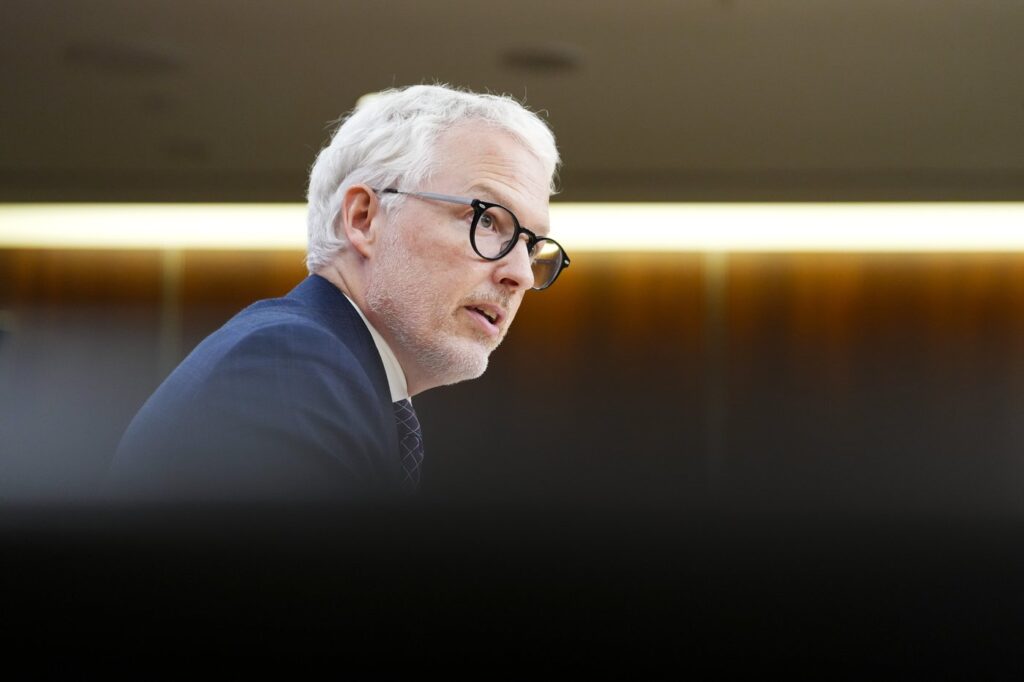
The United Nations' senior humanitarian official, Tom Fletcher, expressed appreciation for Canada’s significant contributions to global humanitarian efforts, labeling the country as a "humanitarian superpower." This statement came during his visit to Ottawa, where Fletcher emphasized the importance of accountability regarding the wars that exacerbate suffering worldwide.
Fletcher leads the Office for the Coordination of Humanitarian Affairs and has been active on the front lines in conflict zones such as Ukraine and Gaza. He has consistently urged the international community not to overlook ongoing humanitarian crises in regions like Sudan, Afghanistan, and Mali. Fletcher's tenure at the UN commenced shortly before the United States implemented severe reductions to foreign aid, although he commended the recent restoration of some funding by the U.S. government.
During the interview, Fletcher highlighted the dire situation in Sudan, where approximately 19 million people are facing acute hunger. He warned that the plight of the Sudanese population could worsen due to changing climate conditions and supply route disruptions caused by the U.S. engagement in the region. The ongoing civil war in Sudan has led to aid workers being barred from certain areas based on the perceived political affiliations of the local populations.
Fletcher raised concerns about the normalization of practices employed by the Israeli government in Gaza, such as restricting journalists and limiting humanitarian aid. He noted that these tactics could undermine international law and contribute to a broader culture of impunity across various crises. While he has faced pushback from supporters of Israel, Fletcher emphasized the need for consistent reporting on humanitarian issues, regardless of external pressures aimed at altering the narrative to downplay the suffering in places like Gaza.
Moreover, he discussed how technology is increasingly utilized in modern warfare, particularly through the employment of drones in conflicts across Sudan, Ukraine, Gaza, and Lebanon. Fletcher described this advancement as alarming, urging that member states ought to enforce accountability within themselves and among each other regarding these humanitarian issues.
Fletcher commended Canada for its advocacy and financial contributions to humanitarian assistance, which he stated "saves millions of lives every year" across various global hotspots, including Sudan, Afghanistan, Gaza, Ukraine, and Haiti. He pointed out that humanitarian efforts are currently underfunded and overstretched, highlighting the risks faced by aid workers, with an alarming statistic of a thousand humanitarian deaths in the last three years.
During his visit, Fletcher met with Randeep Sarai, Canada's Secretary of State for International Development, who announced the renewal of $6 million in federal funding aimed at coordinating global emergency responses. However, Fletcher noted a shift in Canada's foreign aid policy since the appointment of Prime Minister Mark Carney, referencing cuts to global health funding and a pivot towards integrating more private sector involvement in aid efforts, along with the removal of the "feminist" label from its foreign policy.
This change has drawn criticism from the aid sector, which argues that prioritizing domestic economic growth detracts from addressing critical global issues related to migration and conflict. Despite this pushback, the Canadian government maintains that it can simultaneously combat poverty abroad while promoting Canadian businesses at home.
The coalition Co-operation Canada, which comprises most Canadian aid organizations, has expressed support for reforms while urging the government to avoid further reductions in development and humanitarian funding. Kate Higgins, the coalition's head, remarked that Canada's national security strategy emphasizes the need for "strong international partnerships" and a responsible foreign policy, advocating for continuous humanitarian funding and principled diplomacy in the future.
Looking ahead, Canada is poised to chair a donor support group next July, which will engage with other developed nations regarding the UN’s humanitarian funding allocations. Fletcher views this as an opportunity to "reimagine" humanitarian aid in a landscape where traditional government assistance is falling short. He expressed interest in collaborating with technology companies and the private sector to develop innovative solutions to current crises.
While acknowledging the significant roles of UN agencies and large organizations, Fletcher also suggested that regions with reliable internet connectivity and functioning markets might benefit from direct cash transfers and healthcare programs that involve private companies. These partnerships could provide practical solutions while simultaneously generating profit.