In a significant turn of events during the 2026 midterm elections, Democrats achieved control of the U.S. Senate, while remaining poised to reclaim the House of Representatives. This electoral outcome has been widely interpreted as a rejection of President Donald Trump and the Republican Party, particularly in regions traditionally thought to be Republican strongholds.
Six Senate seats and over a dozen House seats shifted toward Democrats, marking a historic victory in states such as Texas, Kansas, and South Carolina, which have not elected Democratic senators in decades. Additionally, Democratic gains were noted in North Carolina and Ohio, reshaping the political landscape.
Key victories included notable Democratic candidates such as Keisha Lance Bottoms in Georgia, Amy Acton in Ohio, Rob Sand in Iowa, and Gina Hinojosa in Texas, all winning gubernatorial races that previously belonged to the GOP.
Polls indicated that voter frustration over high living costs and dissatisfaction with the current administration's policies were key factors influencing the election results. The AP Voter Poll revealed a distinct shift in voter sentiment, with many blaming the Trump administration for the economic challenges faced by households.
Senator Kirsten Gillibrand, who chairs the Democratic Senatorial Campaign Committee, expressed surprise at the magnitude of the blue wave, highlighting the Democratic victories as unprecedented. She noted that candidates effectively addressed pressing concerns such as housing, fuel, and medical costs.
In Kansas, newly elected senator Adam Hamilton articulated his win as a rejection of Washington policies, while expressing a commitment to address the economic pressures facing constituents. Meanwhile, in Ohio, Senator Sherrod Brown celebrated his victory over Republican Jon Husted, pledging to advocate for the interests of everyday Ohioans.
In Alabama, Democrat Shomari Figures managed to secure re-election despite facing redistricting efforts aimed at weakening Democratic representation. Figures highlighted the challenges posed by the redrawn district yet expressed confidence in his campaign message.
Rob Sand's victory in Iowa was celebrated with a call for bipartisan cooperation, as he prepares to dismantle a long-standing Republican trifecta in the state. Furthermore, Gina Hinojosa's election as the first Latina governor of Texas was framed as a monumental shift in the state's political dynamics, with widespread support from voters in a state long governed by Republicans.
California's Xavier Becerra also emerged victorious, campaigning against Trump-era policies, while promising to stand firm against future Republican challenges. Following the elections, Senate Majority Leader Chuck Schumer conveyed that "relief is on the way" for American voters who had called for change.
The Democratic victories in traditionally Republican territories, particularly in Texas, signify a potential realignment of voter behavior in the state, with voters signaling they are ready for a change after decades of Republican leadership. Former Texas GOP executive director Wayne Hamilton characterized the defeats as a stark indicator of the Republican Party's challenges ahead.
Former President Trump himself reacted to these results by criticizing Texas Governor Greg Abbott, stating that Abbott's perceived shift away from Trump-aligned policies contributed to his electoral loss. Trump framed the situation as a personal failure of leadership within the GOP, as party officials began pointing fingers at him for the poor performance across multiple key races.
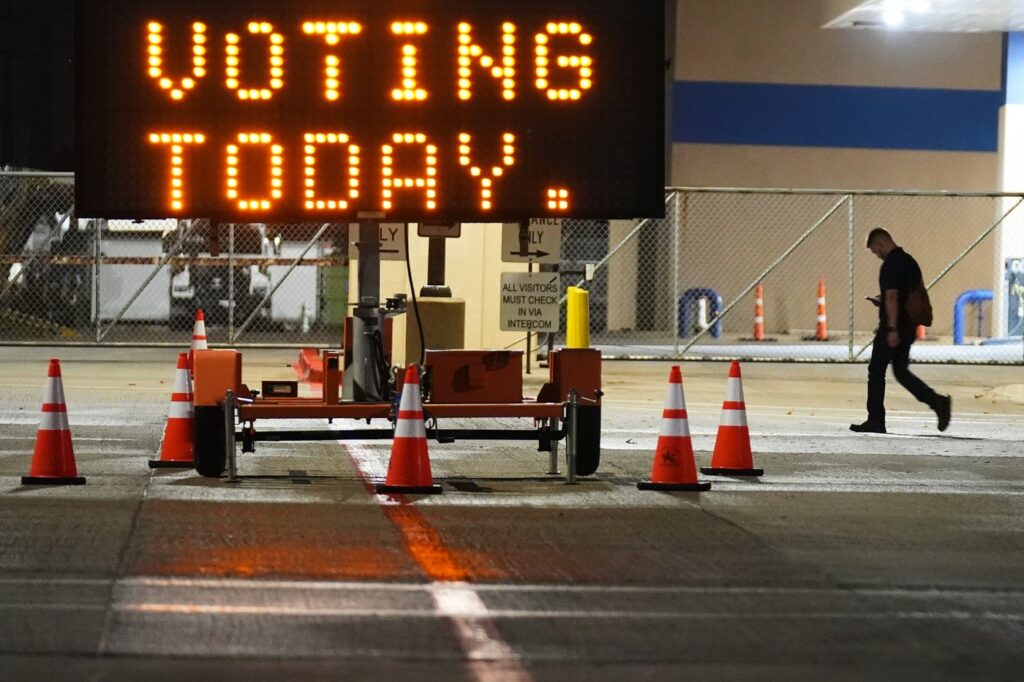
As the electoral counting continued into midnight, attention shifted to Alaska, where polls were set to close, underscoring the dynamic nature of the ongoing midterm results and further potential shifts in congressional representation.