A federal judge in Florida has ordered Jonathan Rinderknecht, the suspect charged in connection with California's devastating Palisades Fire, to remain in custody due to concerns over his mental health and flight risk.
During a detention hearing on October 9, 2025, U.S. Magistrate Judge Nathan Hill expressed his worries about Rinderknecht's mental stability and his potential inability to attend future court hearings in California. Assistant U.S. Attorney Rachel Lyons presented evidence suggesting that Rinderknecht displayed characteristics typical of an arsonist, and his family had voiced serious concerns over his declining mental state.
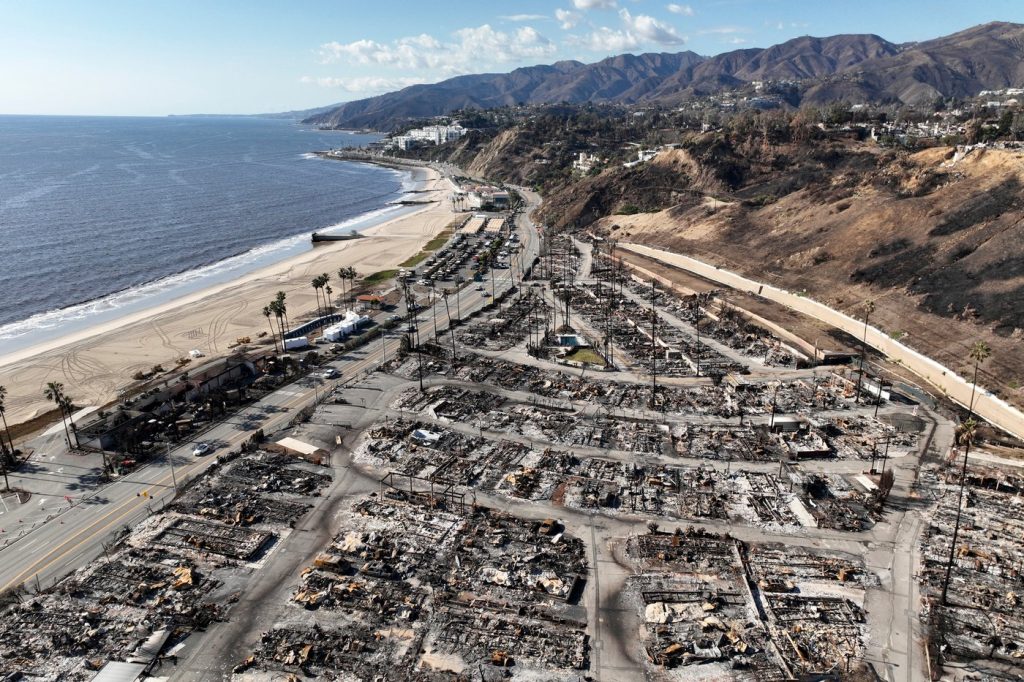
Rinderknecht allegedly started a small fire on January 1 that smoldered for days before reigniting on January 7 and sweeping through coastal areas of Pacific Palisades and Malibu, resulting in 12 fatalities in hillside neighborhoods. Overall, the blazes that erupted that day claimed more than 30 lives and destroyed over 17,000 structures in Los Angeles County.
Lyons argued that Rinderknecht posed a flight risk, highlighting that he has family connections in France and speaks French. Shackled and dressed in a red jail uniform, Rinderknecht listened attentively as Bureau of Alcohol, Tobacco, Firearms, and Explosives (ATF) agent Thomas Harrison recounted the concerns raised by Rinderknecht's family regarding his mental health. Harrison indicated that Rinderknecht had been living with his sister and brother-in-law in Brevard County, Florida, but they had since moved out and initiated eviction proceedings against him due to fears for their safety. Rinderknecht had reportedly threatened to burn their house down during an argument, leading to police involvement.
Despite the alarming behavior, Rinderknecht had not been arrested nor charged following either police intervention. Lyons emphasized that if Rinderknecht is convicted, the sentence could be severe given the loss of life involved. She described him as a loner with a bleak outlook on life, frequently engaging with ChatGPT and struggling financially as an Uber driver.
Contrarily, Assistant Federal Defender Aziza Hawthorne argued for Rinderknecht's release under strict conditions, questioning the credibility of the threats made against his family. She pointed out that there were no reports of physical violence and stressed that Rinderknecht had been consulting with a psychiatrist. Hawthorne contended that Rinderknecht was not a flight risk and had familial support throughout the legal proceedings.
After the hearing, emotional family members were seen comforting one another, but they declined to speak with reporters. Rinderknecht is expected to remain in custody at the Seminole County Jail until a hearing scheduled for October 17, 2025, during which prosecutors will present their case against him.
Authorities began focusing on Rinderknecht in January after he was initially interviewed on January 24. Over the months leading to his arrest on October 8, investigators ruled out other possible causes for the fire's ignition, including fireworks and lightning. They meticulously analyzed Rinderknecht's phone records to trace his movements on the day the fire began.
Kenny Cooper, ATF special agent in charge of the Los Angeles Field Division, stated that they followed more than 200 leads both domestically and internationally while combing through the burned hillsides. He revealed that investigators collected over 13,000 pieces of evidence, including fire debris and DNA samples, and conducted more than 500 scientific tests.
Cooper defended the efforts of firefighters, asserting that the ignition of the fire was entirely Rinderknecht's responsibility. He downplayed the role of firefighters in failing to detect the dormant blaze, explaining that it had smoldered underground and remained active for days. Interim Los Angeles Fire Chief Ronnie Villanueva acknowledged challenges faced during the initial response, including inadequate resources and communication difficulties, which hindered fire suppression efforts during critical moments.