PARIS (AP) — The Louvre, the world’s most-visited museum, remained closed on Monday, following a daring daylight heist that resulted in the theft of historic jewels. The theft took place on Sunday, prompting authorities to reassess security measures at cultural sites across France.
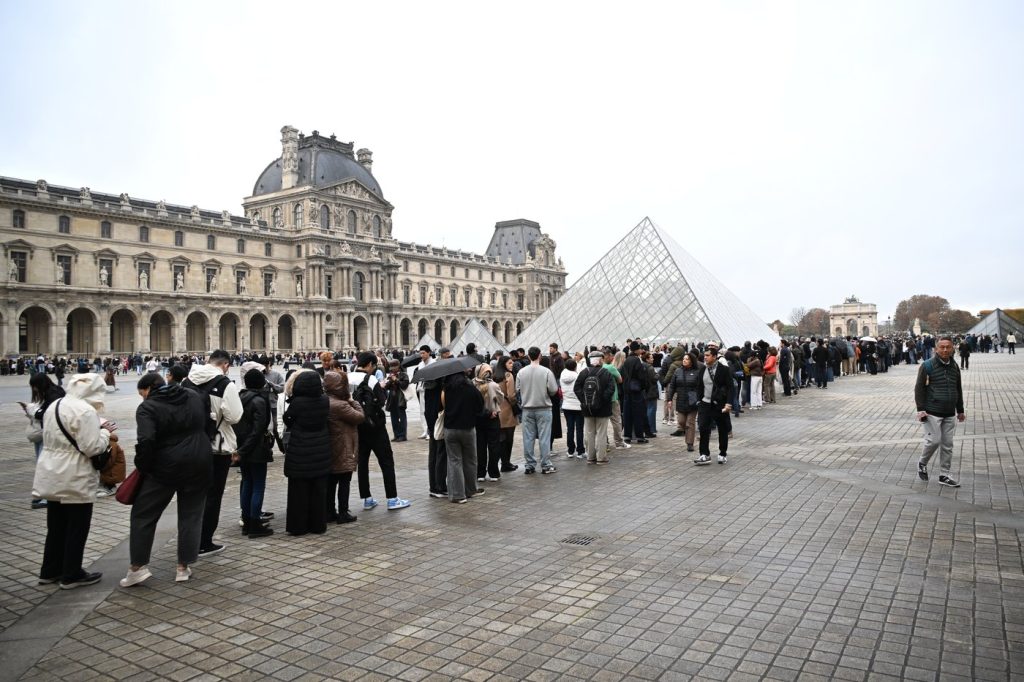
The museum's staff instructed dozens of visitors waiting in front of the iconic glass pyramid entrance to disperse. In a statement shared on social media, the Louvre announced that visitors with booked tickets would receive refunds. Additionally, the museum is set to remain closed on Tuesday, which is its regular closing day.
The robbery occurred shortly after the museum opened, when thieves utilized a basket lift to access the Louvre's facade. They outmaneuvered security by forcing a window, smashing display cases, and escaping with priceless Napoleonic treasures. This incident is considered one of the highest-profile museum thefts in recent memory, taking place just 250 meters away from the beloved Mona Lisa.
Culture Minister Rachida Dati characterized the heist as a professional operation that lasted merely a few minutes. French Justice Minister Gerald Darmanin acknowledged security failures, questioning how the windows were not adequately secured and how a basket lift was accessible from a public road. He indicated that, although complete security might be unattainable, the incident exposed significant shortcomings in the museum's security protocols.
In response, Interior Minister Laurent Nunez ordered regional prefects to promptly reevaluate security measures at museums and other cultural sites nationwide. Minister Dati informed the public that investigators are currently analyzing evidence collected at the scene. She noted that security officers prevented one of the criminals from setting the basket lift on fire, which allowed law enforcement to gather crucial evidence in the process.
The theft reportedly lasted less than eight minutes total, including just under four minutes inside the museum. The thieves were noted for their remarkable efficiency, knowing exactly which items they targeted. Dati also emphasized that a decade-long "Louvre New Renaissance" initiative, launched earlier this year, includes plans for essential security enhancements.
This 700-million-euro ($760-million) project aims to modernize the museum's infrastructure, alleviate crowding issues, and create a dedicated gallery for the Mona Lisa by the year 2031. The robbery specifically targeted the opulent Apollo Gallery, where the Crown Diamonds are displayed. Although alarms alerted Louvre agents to the intrusion, the thieves managed to escape before security could intervene.
A Louvre employee recorded a footage of an individual in the Apollo Gallery wearing a yellow jacket and positioned near a glass case, but it remains uncertain whether this person is connected to the suspects involved in the theft. In total, eight precious items were stolen, including a sapphire diadem, a necklace, and a single earring from a matching set associated with 19th-century French queens Marie-Amélie and Hortense. Additional stolen items included an emerald necklace and earrings from the set belonging to Empress Marie-Louise, Napoleon Bonaparte’s second wife, a reliquary brooch, and Empress Eugénie’s diadem along with a large corsage-bow brooch—part of a highly valuable 19th-century imperial assortment.
One significant item, the emerald-set imperial crown of Napoleon III’s wife, Empress Eugénie, which contains over 1,300 diamonds, was later discovered outside the museum by French authorities. The swift nature of the heist and the luxury of the stolen artifacts have prompted concerns about future security and preventive measures within the Louvre and other significant cultural institutions.