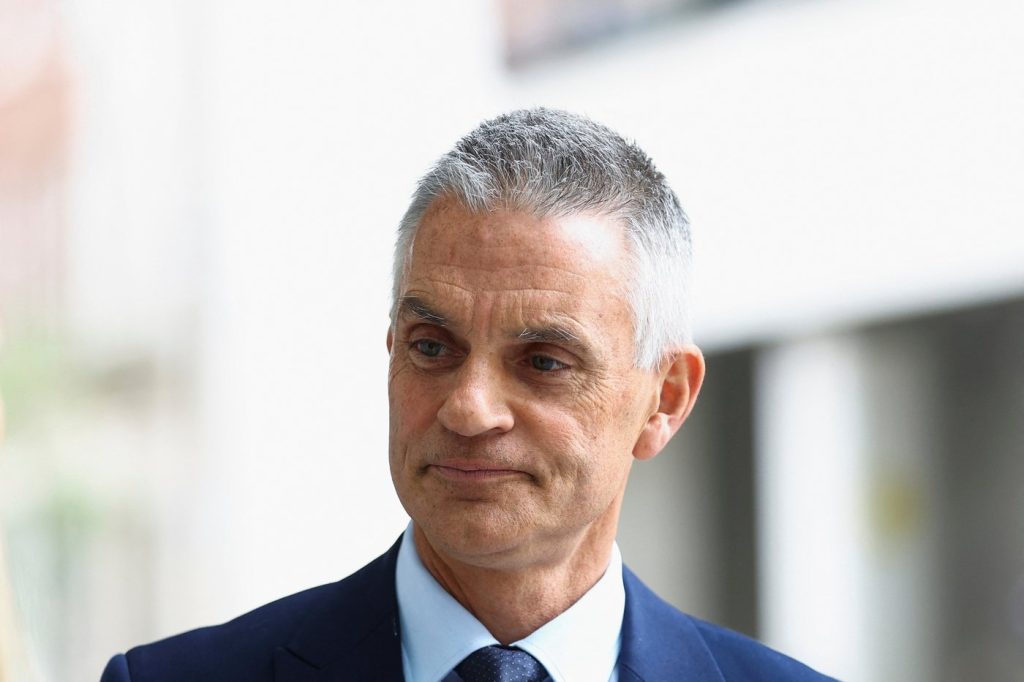
LONDON (AP) - The BBC announced Sunday that its Director-General Tim Davie and news CEO Deborah Turness have both resigned following significant criticism regarding the editing of a speech by U.S. President Donald Trump. This editing occurred in a documentary aired by the BBC last year, focusing on Trump's remarks made on January 6, 2021, just before the Capitol riots.
The broadcaster faced backlash for allegedly misleading viewers by omitting key parts of Trump's speech where he called for peaceful demonstrations. Critics highlighted that during the BBC's "Panorama" episode, Trump was quoted in a manner that suggested he incited violence, while omitting his calls for peace. The edited version featured Trump stating, “We’re going to walk down to the Capitol and I’ll be there with you. And we fight. We fight like hell,” without including the crucial context where he urged supporters to act "peacefully and patriotically.”
In his full remarks, Trump stated, “I know that everyone here will soon be marching over to the Capitol building to peacefully and patriotically make your voices heard,” a phrase removed in the BBC's version. This has led to accusations of bias against the organization, already heightened by criticisms regarding its coverage of other sensitive topics, including transgender issues and perceived anti-Israel bias in its Arabic service.
Tim Davie, who led the BBC for five years, addressed his staff in a letter, indicating that his decision to resign was his own. He acknowledged that there had been mistakes made, taking ultimate responsibility for the editorial choices of the corporation. Davie described the BBC as “delivering well overall,” but acknowledged the controversy surrounding the Trump speech edit was significant enough to warrant his departure.
Deborah Turness echoed similar sentiments, stating that the fallout from the Trump documentary had reached a point where it was detrimental to the BBC, an institution she deeply values. She emphasized her accountability as the CEO and clarified that although mistakes were made, claims suggesting that BBC News is institutionally biased are unfounded.
Trump responded to the controversy by sharing a link to a Daily Telegraph article discussing the edited speech on his Truth Social platform, expressing gratitude for the exposure of what he called "Corrupt 'Journalists.'" He described the editorial decisions as harmful to democracy.
Increasing scrutiny on the BBC's leadership has been further fueled by a dossier published by the right-leaning Telegraph, which criticized not only the Trump speech editing but also highlighted flaws in the BBC’s stances on various social issues. The BBC, over its 103-year history, receives funding through a mandatory annual license fee, which subjects it to greater scrutiny compared to its commercial counterparts.
Critics assert that the BBC’s charter mandates impartiality, and it is often seen as a “political football,” with various sides accusing it of bias. The broadcaster's news coverage, particularly regarding the current Israel-Hamas conflict, has faced intense scrutiny, including the removal of a documentary from its streaming service due to the child narrator's familial connections to Hamas.
In the wake of the resignations, political reactions have varied. Kemi Badenoch, leader of the opposition Conservative Party, labeled the BBC as having "institutional bias," calling for genuine reforms throughout the organization. Conversely, Lisa Nandy, a Labour minister, acknowledged Davie’s contributions and pledged government support to ensure the BBC's continued importance in British society, especially emphasizing the need for trusted news and quality programming going forward.