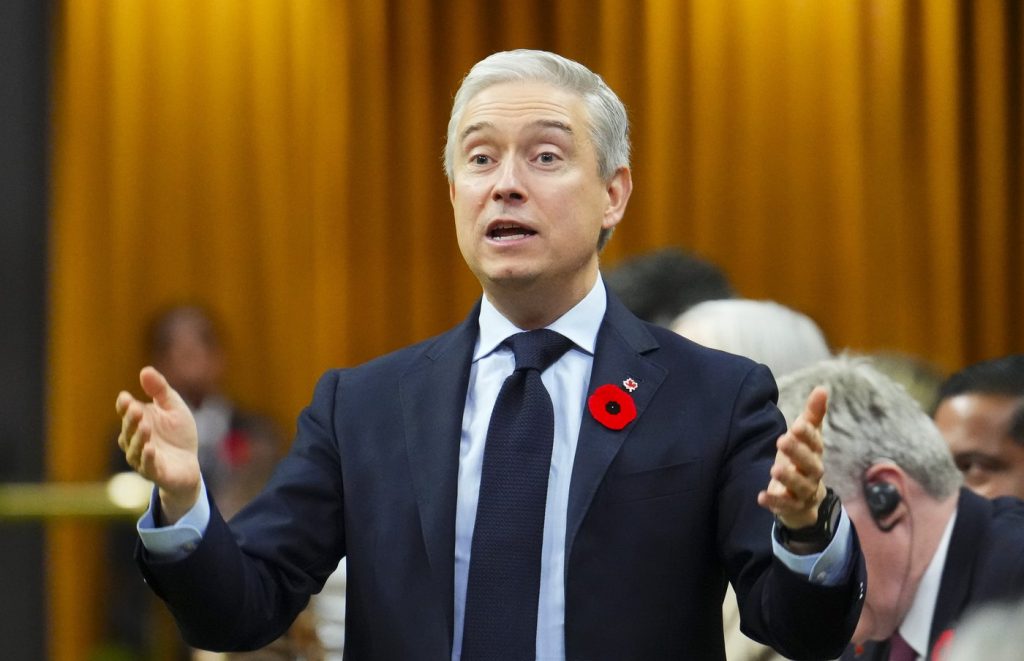
CALGARY – Finance Minister François-Philippe Champagne emphasized his ambition to position Canada as the NATO partner of choice for supplying critical minerals, particularly as nations shift their focus toward defense initiatives. Speaking to a Calgary business audience, Champagne underscored the importance of refining these high-demand materials within Canada rather than merely exporting them in their raw state.
During his address, Champagne stated, “Exploration, extraction is something. But what we need is refining. That’s the key.” He highlighted minerals like titanium, which is essential for manufacturing submarines, as critical to national defense strategies.
Champagne's speech followed the recent federal budget announcement, which proposed a $2-billion “critical minerals sovereign fund” over a five-year period aimed at supporting equity investments, loan guarantees, and offtake agreements. According to Champagne, critical minerals are increasingly becoming a decisive factor in the global competitiveness of nations. He cautioned that relying solely on market forces could hinder timely responses to these emerging demands.
On the topic of energy resources, Champagne remarked that public perceptions are evolving regarding oil and gas development and its role in market accessibility. He noted that the Prime Minister had shifted the narrative to embrace Canada as an “energy superpower” in both clean and conventional energy sectors, which he believes has reshaped public attitudes toward energy security as it relates to economic and national security.
The Finance Minister asserted that Canada must improve its regulatory frameworks to prevent delays in project development and enhance productivity across sectors. He remarked, “I think we have done a course correction now,” expressing optimism that new confidence is emerging in government and its commitment to fostering growth and investment.
Deborah Yedlin, the president and CEO of the Calgary Chamber of Commerce, acknowledged positive aspects of the budget, including indications that a cap on industrial carbon emissions might be lifted. However, she raised concerns about persistent regulatory challenges, stating, “It’s one thing to say that we’re looking at ways to increase investment, but we really need to deal with the regulatory challenges.”
Yedlin expressed encouragement within the energy sector, pointing out the significance of government leaders openly discussing Canada’s potential as an energy superpower, a narrative that has been absent for quite some time. Her comments reflect an evolving climate in which economic considerations are more closely tied to energy policy and investment strategies.
This renewed dialogue around both critical minerals and energy resources illustrates the Canadian government's strategic approach in navigating contemporary challenges while enhancing its position in global markets. As Canada continues to refine its policies and regulatory environment, the interplay between energy security, economic competitiveness, and national defense remains a pivotal focus for both government officials and industry leaders alike.