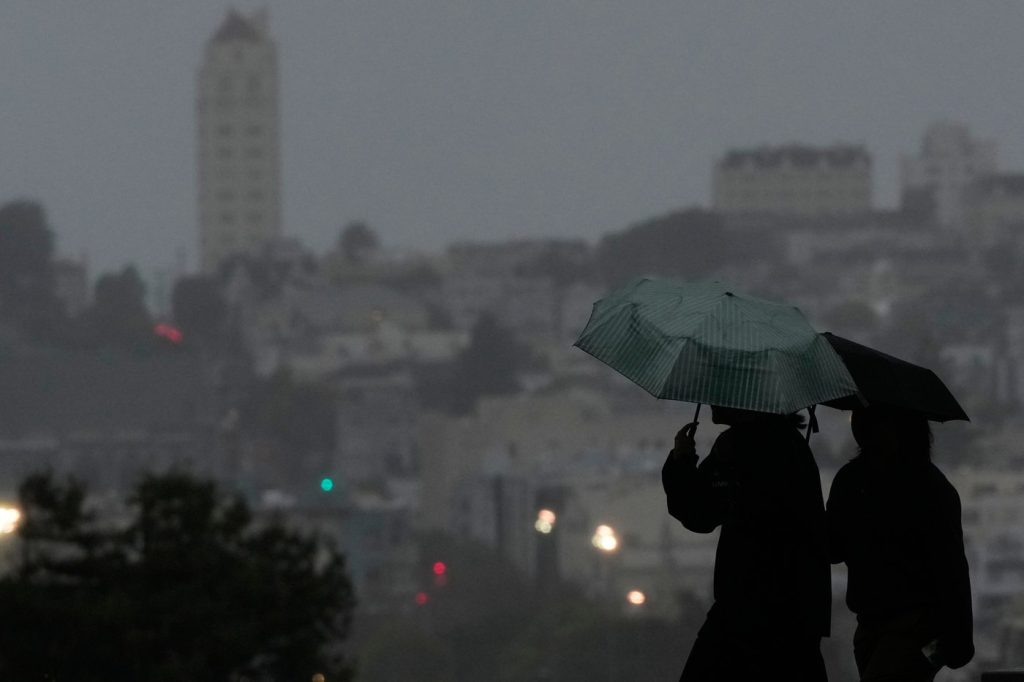
California officials and weather forecasters are advising holiday travelers to avoid the roads on Christmas Eve and Christmas Day as powerful winter storms are expected to hit the state with relentless rain, heavy winds, and mountain snow through Friday. Millions of people are anticipated to travel across California, but they may encounter hazardous, if not impossible, traveling conditions due to several atmospheric rivers forecasted by the National Weather Service.
Ariel Cohen, a meteorologist with the National Weather Service in Los Angeles, urged travelers, saying, "If you’re planning to be on the roads for the Christmas holidays, please reconsider your plans." Officials warned that Southern California might experience its wettest Christmas in years, raising concerns about flash flooding, mudslides, and debris flows in areas affected by last January’s wildfires. To mitigate these risks, Los Angeles County is actively contacting approximately 380 vulnerable households, advising them to evacuate.
On Tuesday, most areas experienced scattered showers, which were expected to intensify into Christmas Eve. While some regions might see rain and winds taper off briefly on Wednesday, another storm system is projected to arrive shortly afterward. A flood watch and high wind warning cover vast areas of the Sacramento Valley and San Francisco Bay Area until Friday, with severe weather likely to impact travel through the Sierra Nevada, where heavy snow and strong gusts could lead to "near white-out conditions" making travel perilous.
Additionally, severe thunderstorms and a slight chance of tornadoes were forecasted for the northern coast. Since Saturday, heavy rainfall and flash flooding in Northern California have already prompted water rescues and resulted in at least one reported death. In response, Shasta County Sheriff Michael L. Johnson declared a state of emergency to prepare for additional rain and allow for hazard mitigation and search and rescue operations.
Southern California typically receives 0.5 to 1 inch (1.3 to 2.5 centimeters) of rain during this time of year, but forecasters predict that many areas could see between 4 to 8 inches (10 to 20 centimeters) this week, particularly in mountainous areas where amounts could exceed those forecasts. Wind gusts are also expected to reach between 60 to 80 mph (96.5 to 127.8 kph) along various parts of the central coast.
Potential flooding, rockslides, and mudslides are highly likely, particularly in areas previously burned by the deadly January wildfires, leading officials to anticipate numerous road closures and airport delays. Downed trees and power lines may accompany the storms, with parts of Los Angeles already receiving evacuation warnings from Tuesday onward. To prepare for the storms, the county has installed K-rails around burn scars to mitigate sliding debris and is providing free sandbags to residents for home protection.
Los Angeles County Supervisor Kathryn Barger emphasized the seriousness of the situation, stating, "When experts are projecting this type of rain in this short period of time, it’s serious." Despite evacuation notices, many residents in burn scar areas have chosen not to leave, prompting Los Angeles Police Department Chief Jim McDonnell to urge them to reconsider their decision, labeling the threat posed by the storm as "real and imminent."
Local and state officials are preparing for emergency response throughout the week, with resources and first responders already deployed to various coastal counties and Southern California. The California National Guard is also on standby for assistance as the situation develops.
An atmospheric river is defined as a long, narrow band of water vapor that forms over an ocean and transports moisture from tropical regions to northern latitudes. Earlier in December, atmospheric rivers drenched Washington state with nearly 5 trillion gallons (19 trillion liters) of rain in just one week, threatening record flood levels due to a combination of warm weather, air, and unusual weather conditions linked to a tropical cyclone in Indonesia.