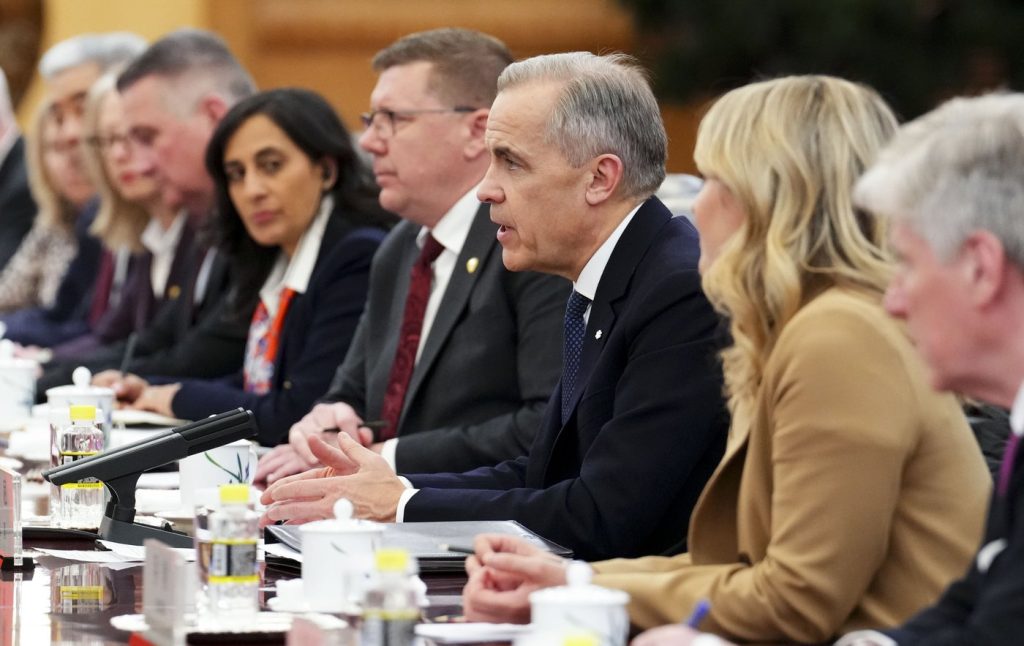
OTTAWA – On Thursday, Canada and China unveiled a series of agreements aimed at enhancing bilateral trade and investment. However, the significant tariff dispute between the two nations remains unresolved. Vina Nadjibulla, vice-president of the Asia Pacific Foundation, highlighted the agreements as a signal to revitalize institutional mechanisms that have been inactive for the past decade due to strained relations. Nadjibulla cautioned that any progress could be hindered by changes in the political environment.
The absence of a tariff deal remains a critical issue in the Canada-China trade relationship. Canada has imposed tariffs on Chinese electric vehicles, aluminum, and steel, leading to Beijing retaliating with duties on Canadian agricultural products, including canola and seafood. Beijing has stated it would lift canola tariffs if Canada rescinds its electric vehicle levy. Various provincial leaders, particularly from Atlantic and Western Canada, have urged Ottawa to reconsider its stance, while Ontario Premier Doug Ford maintains that the tariffs are essential to protect domestic jobs in the auto sector.
Prior to Prime Minister Mark Carney's visit to China, Canadian officials indicated that while there might be progress, a resolution to the tariff conflict was not expected. Nadjibulla noted the unusual timing of ongoing tariff discussions during Carney's visit.
In addition to tariff discussions, both countries released an “economic and trade co-operation road map.” This expansive document outlines sectors for potential collaboration and areas where Canada has restricted Chinese involvement. It emphasizes mutual investments in agriculture, energy, and consumer goods, while also aiming to enhance Canada's aerospace and advanced manufacturing sectors without anticipating similar Chinese investments in Canada. Prime Minister Carney has consistently opposed Chinese investment in sensitive industries.
The roadmap also pledges to enhance transparency for foreign investments, which Nadjibulla noted could have implications for Canada’s ongoing dealings with the United States regarding trade. She emphasized the need for Canada to engage with various nations, including China, rather than waiting for U.S. trade matters to be resolved.
Moreover, the agreements revive the Joint Economic and Trade Commission, which aims to address trade barriers, and will be co-chaired by trade ministers from both nations. This commission is expected to meet in Canada in the summer or fall, potentially providing another opportunity to address tariff disputes, particularly regarding canola and agricultural products.
Energy cooperation has also emerged as a focal point in the agreements, with Canada positioned as a key partner for China's oil, liquefied natural gas, and petroleum imports. The memorandum acknowledges the continued importance of conventional energy in the transition to renewable resources and outlines collaboration in areas like offshore wind and the Canadian-designed CANDU reactors.
Additionally, the agreements emphasize enhancing tourism ties between the two countries. A memorandum signed during Carney's meetings highlights collaborative efforts on promotional campaigns that showcase the natural beauty of both nations, targeting themes that resonate with Chinese tourists. This includes cultural exchanges centered on historical figures like Norman Bethune, who significantly contributed to Chinese medicine during wartime.
In a bid to address trade irritants, an agreement also focuses on improving sanitary oversight in animal health sectors. This move comes in response to previous trade barriers hindering the export of Canadian pet food to China.
Moreover, the economic agreements reaffirm both nations' commitment to rules-based trade within the framework of the World Trade Organization (WTO) while acknowledging its current operational challenges. Indications were made regarding China's interest in joining the Comprehensive and Progressive Agreement for the Trans-Pacific Partnership, although Canada's long-standing requirements for new members pose substantial barriers for China.
The reports highlighted various agreements and areas of cooperation that signal a willingness from both governments to strengthen trade and investment ties despite existing challenges and unresolved issues.