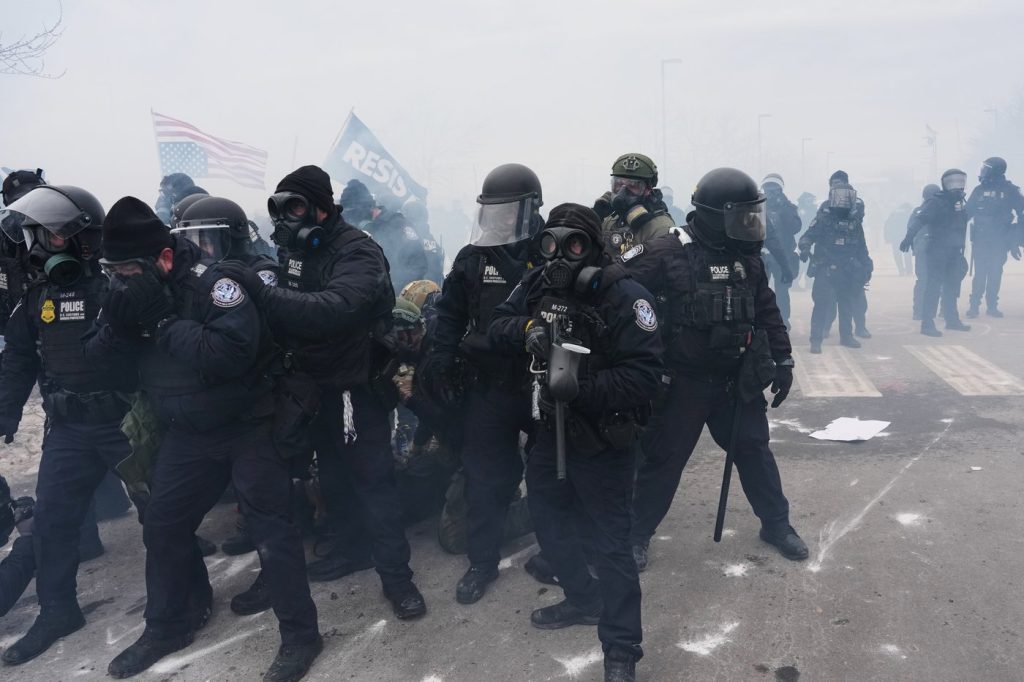
MINNEAPOLIS (AP) — President Donald Trump, on Thursday, threatened to invoke the Insurrection Act of 1807 to deploy troops in response to ongoing protests against federal officers in Minneapolis. These protests were triggered by the enforcement of his administration's extensive immigration policies, following a series of violent incidents involving Immigration and Customs Enforcement (ICE) officers.
The tensions escalated dramatically after a shooting incident on January 14, where an immigration officer shot and wounded a man who allegedly attacked him with a shovel and a broom handle. This incident intensified the fear and anger in the community, particularly after the previous fatal shooting of 29-year-old Renee Good by an ICE agent on January 7.
Trump stated, "If the corrupt politicians of Minnesota don’t obey the law and stop the professional agitators and insurrectionists from attacking the Patriots of ICE... I will institute the INSURRECTION ACT,” highlighting his willingness to use this rarely invoked federal law for domestic law enforcement against the objections of state governors. This echoes similar threats he made in 2020 regarding the George Floyd protests, as he expressed an increasingly aggressive stance against the opposition in Minneapolis.
The law has been invoked more than two dozen times in U.S. history, most recently by President George H.W. Bush in 1992 amid the unrest in Los Angeles, requested by local authorities. In contrast, Minnesota Governor Tim Walz, a Democrat, urged the President to lower tensions and cease the punitive measures, stating, “This is not who we are.”
Minnesota Attorney General Keith Ellison has stated he would challenge any military deployment by the President and is actively pursuing a lawsuit against the Department of Homeland Security (DHS), which claims more than 2,500 arrests have been made under the Metro Surge operation initiated in late November.
Protests have been a common occurrence since the fatal shooting of Good. On the night of January 15, demonstrators gathered at a federal building, expressing their outrage with chants of "shame on you" directed at the ICE officers stationed there. However, this protest appeared slightly more subdued compared to previous nights, following calls from local leaders for calm.
The American Civil Liberties Union (ACLU) of Minnesota has filed a class-action lawsuit on behalf of three individuals — two Somali and one Hispanic — all U.S. citizens who alleged they were unlawfully questioned or detained during recent protests. The ACLU aims to end practices perceived as racial profiling and warrantless arrests by the authorities. Similar lawsuits have been initiated in cities like Los Angeles and Chicago, often facing challenges and setbacks in higher courts.
In response to ongoing unrest, local educational institutions are adapting. St. Paul Public Schools, accommodating over 30,000 students, announced a shift to online learning for those uncomfortable attending in person, while Minneapolis Public Schools is also providing temporary remote learning options. The University of Minnesota plans to adjust its upcoming term based on the evolving situation.
The incident leading to the ICE shooting stemmed from an attempt to apprehend a Venezuelan driver illegally in the U.S. After fleeing, he crashed into a parked car and continued to run on foot. Officers subsequently confronted him, which led to an altercation involving two other assailants. According to the DHS, an officer fired his weapon in self-defense during this confrontation.
As the situation unfolds, the FBI reported that a number of government vehicles were damaged and property was stolen when agents responded to the shooting. Photos evidencing the vandalism surfaced, motivating the FBI to offer a reward of up to $100,000 for information leading to the suspects involved in the disturbances.