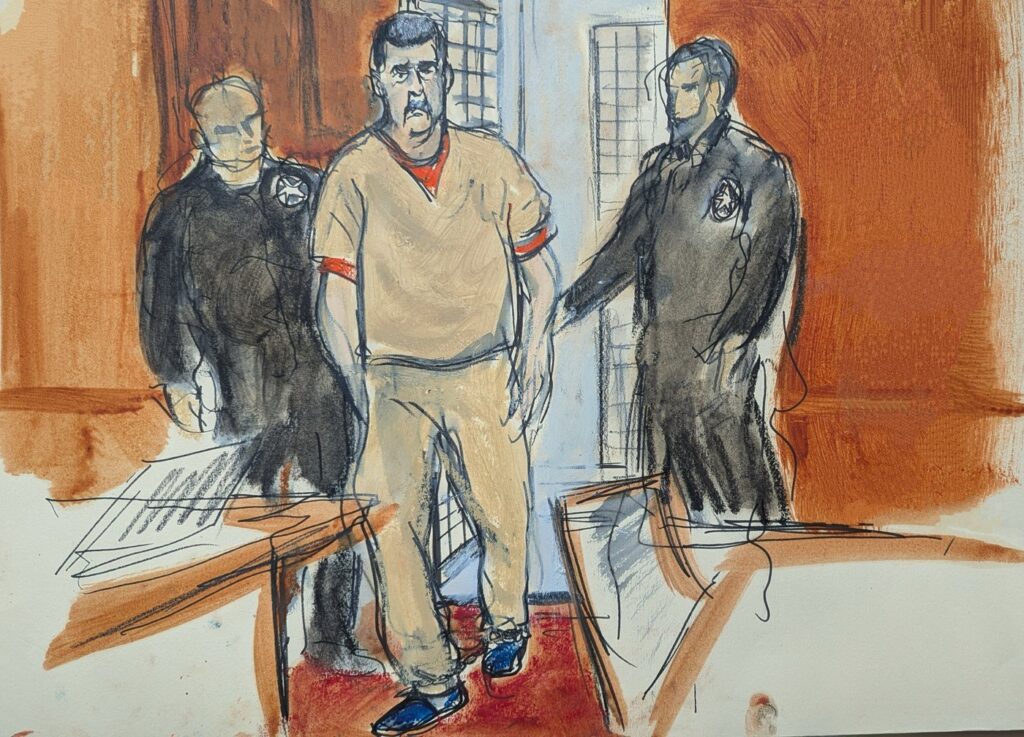
A U.S. judge recently questioned the Trump administration's rationale for preventing the Venezuelan government from financing the legal fees of former President Nicolás Maduro, who is currently imprisoned in New York facing drug trafficking charges. Judge Alvin Hellerstein's inquiries came during a court hearing where Maduro and his wife, Cilia Flores, appeared in beige jail uniforms, alongside their legal team arguing that the sanctions imposed on Venezuela by the U.S. government infringe upon Maduro's constitutional rights by blocking access to government funds for their defense.
During the hearing, Judge Hellerstein expressed skepticism regarding the continued validity of the prosecution's argument, given the recent thawing of relations between the U.S. and Venezuela. Since Maduro's capture by U.S. military forces in January, diplomatic ties have been restored, and economic sanctions on Venezuela's pivotal oil industry have been eased. The judge remarked, “The current paramount goal and need and constitutional right is the right to defense,” suggesting that the changing geopolitical landscape could necessitate a reevaluation of the U.S. government's stance.
Despite the judge's probing questions, he did not issue an immediate ruling or set a timeline for when a decision might be made. Outside the courtroom, both supporters and detractors of Maduro gathered, demonstrating the polarized opinions surrounding the former leader. While critics chanted against Maduro, supporters held signs in his favor, showcasing the deep divide in public sentiment regarding his detention and the implications of U.S. policies.
Inside, the courtroom atmosphere contrasted sharply with the protests outside. Cilia Flores' lawyer, Mark Donnelly, faced swift reprimand from Judge Hellerstein when he referred to her as "the first lady," highlighting the strict decorum expected in legal proceedings. As the hearing concluded, Maduro made a "V" gesture, symbolizing a message of resilience that has been prevalent in Venezuelan culture, indicating that their fight is far from over.
The U.S. attorney, Kyle Wirshba, argued that allowing Maduro and Flores to access government funds for their defense would undermine the sanctions that were established due to allegations of systemic oppression and corruption within Maduro's government. He reiterated that they could utilize personal funds for their legal costs, a claim the defense disputes on the basis that they lack the financial means to do so.
Maduro's attorney, Barry Pollack, contended that the case's complexity demands proper legal representation and that forcing them to accept public defenders would unnecessarily drain resources meant for individuals unable to afford legal help. Pollack has also moved to have the case dismissed, although Judge Hellerstein indicated reluctance to take such drastic actions at this time, preferring to explore other remedies first. He noted that Pollack could return to this request if the Treasury Department maintains its block on funds.
During a separate Cabinet meeting in Washington, President Donald Trump labeled Maduro as a "major purveyor of drugs coming into our country," affirming his view that the former president will receive a fair trial. Meanwhile, the ongoing humanitarian crisis in Venezuela continues to affect its populace deeply, as public-sector salaries remain meager and inflation skyrockets, further complicating everyday life for many citizens.
The case against Maduro and Flores is not only a legal battle but a significant reflection of the complex political dynamics between the U.S. and Venezuela. As Maduro maintains his innocence and proclaims himself the legitimate president, the evolving international relations, the legal proceedings, and the domestic repercussions continue to unfold, leaving the future of his leadership and Venezuela's governance uncertain.