WASHINGTON (AP) — The delay in the opening of a bridge that connects Michigan and Canada is influencing one of the most pivotal Senate races in the United States, as Democratic candidate Mallory McMorrow seeks to leverage the situation against President Donald Trump and Republican opponents. McMorrow's campaign recently launched an ad campaign accusing Trump of obstructing the opening of the Gordie Howe International Bridge to favor a major political donor.
The Gordie Howe Bridge, which spans the Detroit River and links Detroit, Michigan, with Windsor, Ontario, was scheduled for a ribbon-cutting ceremony on June 12. However, the ceremony was abruptly postponed as officials claimed that the U.S. and Canada were still negotiating to resolve "outstanding issues."
This ongoing dispute presents a unique opportunity for Democrats to directly associate Trump with a project that has clear economic implications in a critical battleground state. For McMorrow, this also offers a strategic advantage as she aims to distinguish herself in a three-person primary race against U.S. Representative Haley Stevens and Abdul El-Sayed.
The winner of this primary is anticipated to face Republican candidate Mike Rogers, who previously lost to now-Senator Elissa Slotkin in 2024. Rogers has also utilized the bridge's delay in his campaign messaging, assuring voters that he will take action to ensure the bridge's timely opening should he win.
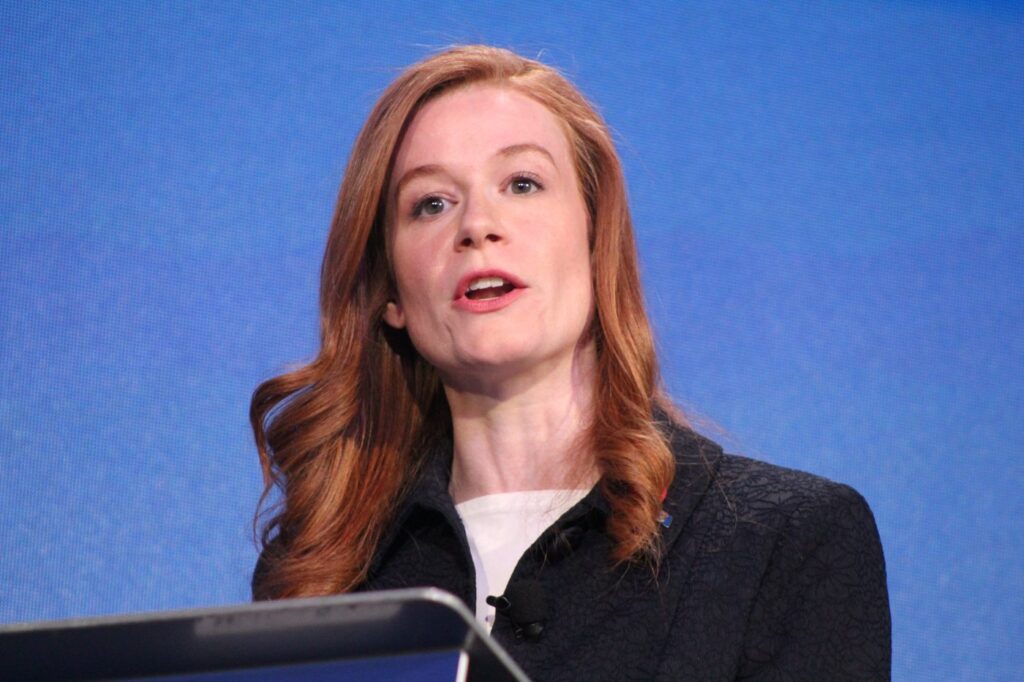
In her ad, McMorrow stands before the Gordie Howe Bridge, asserting that it is ready for use but remains closed due to Trump's refusal to allow its opening. "I'm Mallory McMorrow and I have one message for the president: open this damn bridge," she declares in the video.
McMorrow suggests that Trump's obstruction is linked to a significant donation made by the Moroun family, who own the Ambassador Bridge, a competing toll bridge. Federal campaign finance records indicate that Matthew Moroun contributed $1 million to Trump's super PAC earlier this year. The Ambassador Bridge charges tolls of up to $10 per automobile and $20 per axle for commercial trucks.
In February, Trump publicly demanded that Canada relinquish half ownership of the new bridge to the U.S. government, along with other unspecified terms, amid escalating trade disagreements with Canada. The Canadian government financed the Gordie Howe Bridge's construction, with the project negotiated by Michigan's former Republican governor Rick Snyder. Construction has been ongoing since 2018, with total costs expected to reach approximately $4.4 billion.
Named after legendary Canadian hockey player Gordie Howe, who had a distinguished career with the Detroit Red Wings, the bridge is anticipated to be an essential economic link between the U.S. and Canada.
As McMorrow competes for recognition in a race perceived predominantly as a two-candidate contest, she acknowledges her status as a "dark horse" candidate. The state senator, who gained attention for a viral speech in 2022, faces formidable competition from Stevens, who has substantial campaign resources, and El-Sayed, who has the endorsement of progressive icon Senator Bernie Sanders.
The Gordie Howe-related digital ad is the second in a series, with an initial budget exceeding $400,000 allocated for television and digital platforms in the Detroit market. The first ad, a 30-second television spot, premiered earlier this week.
McMorrow expressed concern regarding the primary, asserting, "Right now in this primary, my two opponents are trying to present a false binary choice." Various outside groups are beginning to invest heavily in the race, including a PAC affiliated with the American Israel Public Affairs Committee, which has spent nearly $8 million this month supporting Stevens. Conversely, the Yes Michigan Action Committee, a super PAC backing McMorrow, has reserved close to $6 million for advertising, according to AdImpact reports.
Recently, El-Sayed became the first Democratic contender to directly invest in advertising for the race. "We have six weeks. I mean, anything can happen," McMorrow remarked, reflecting on the changing dynamics as more voters begin to engage with the race.