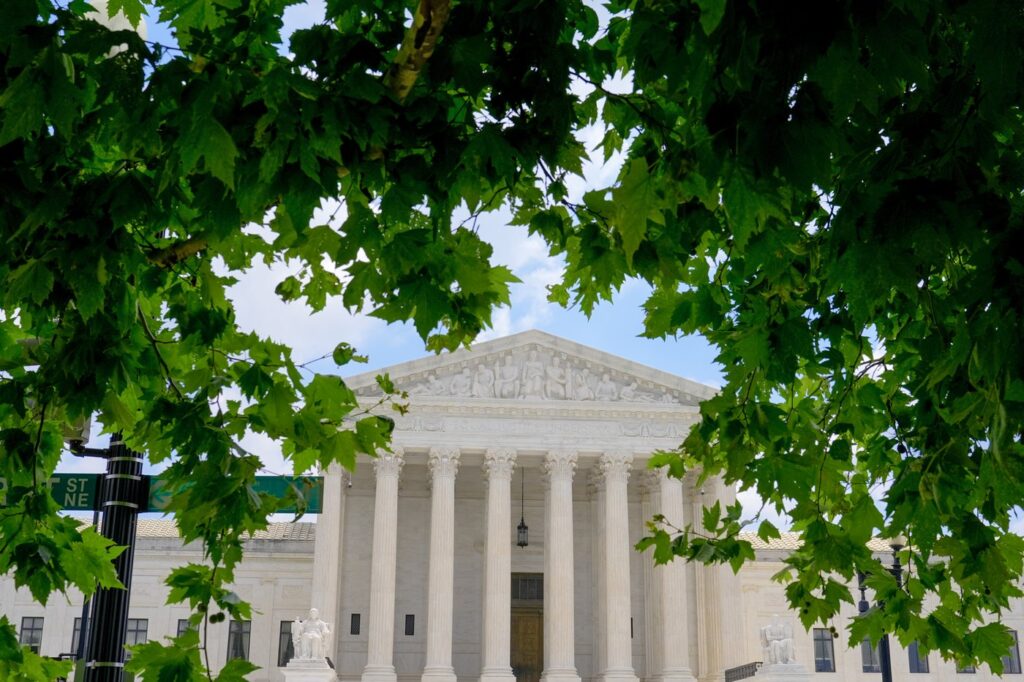
On Tuesday, the U.S. Supreme Court upheld a broad interpretation of birthright citizenship by a 6-3 vote, rejecting former President Donald Trump's executive order that sought to deny citizenship to children born in the U.S. to parents who are in the country illegally or temporarily. This decision preserves the longstanding understanding of the 14th Amendment, which states that anyone born on U.S. soil is considered a citizen, with very few exceptions.
Chief Justice John Roberts authored the majority opinion, emphasizing that the right to citizenship is a fundamental right intended for all individuals born in the U.S. He quoted congressional debates that led to the adoption of the 14th Amendment, stating, “Citizenship, then and now, was the right to have rights—to freely participate in our political community.” Roberts also affirmed that the Court is committed to maintaining the promises laid out in the Amendment.
Justice Brett Kavanaugh provided a unique perspective in the ruling. While he disagreed with the constitutional interpretation, he referenced a federal law that he believed supports the notion of birthright citizenship. Conversely, Justices Samuel Alito, Neil Gorsuch, and Clarence Thomas dissented, arguing that Trump's proposed restrictions should have been upheld. In a lengthy 91-page dissent, Justice Thomas criticized the majority decision, asserting that it is a misapplication of the 14th Amendment and detracts from its original purpose of ensuring equal rights for freed slaves.
Trump expressed his disappointment with the ruling, claiming it was "too bad for our Country," and suggested that Congress could "easily" legislate a change. However, the legal basis for the decision relies firmly on constitutional grounds, indicating that a constitutional amendment would be necessary to overturn it. During the court arguments held in April, justices across the ideological spectrum questioned the legality of Trump's order, which illustrated the contentious nature of executive power regarding immigration policies.
This ruling stemmed from Trump's appeal against a lower-court decision from New Hampshire, which deemed the citizenship restrictions illegal. The birthright citizenship order had been announced on the first day of Trump's second term and was a component of his broader immigration crackdown. This case marked the first major immigration-related policy challenge from Trump's administration to reach the Supreme Court, alongside earlier decisions that had struck down other measures, including global tariffs imposed by Trump.
Previous lower court rulings had consistently blocked Trump's executive order, referencing the 1898 Supreme Court decision in Wong Kim Ark, which affirmed that a child born in the U.S. to Chinese nationals was entitled to citizenship. This precedent reinforces the interpretation of the 14th Amendment as extending citizenship to all individuals born in the U.S., regardless of their parents' immigration status, with exceptions only for children of foreign diplomats or those belonging to a foreign occupying force.
The court's majority opinion, including Chief Justice Roberts and Justices Amy Coney Barrett and the three liberal justices, solidified the position that children born to parents illegally or temporarily in the U.S. are citizens at birth. Kavanaugh's position indicated that while Trump’s order does not violate the Constitution, it opens the door for Congress to legislate changes concerning birthright citizenship in the future.
The implications of Trump's executive order were significant, as it could have impacted over 250,000 babies born in the U.S. annually, according to research from the Migration Policy Institute. The restrictions not only threatened the citizenship status of children of undocumented immigrants but would also have affected those with legal temporary resident status, such as students or green card applicants.
In summary, the Supreme Court's ruling upholds the principle of birthright citizenship as enshrined in the 14th Amendment, countering Trump's efforts to redefine it through executive action. The decision highlights the ongoing legal and political debates surrounding immigration and citizenship in the United States.