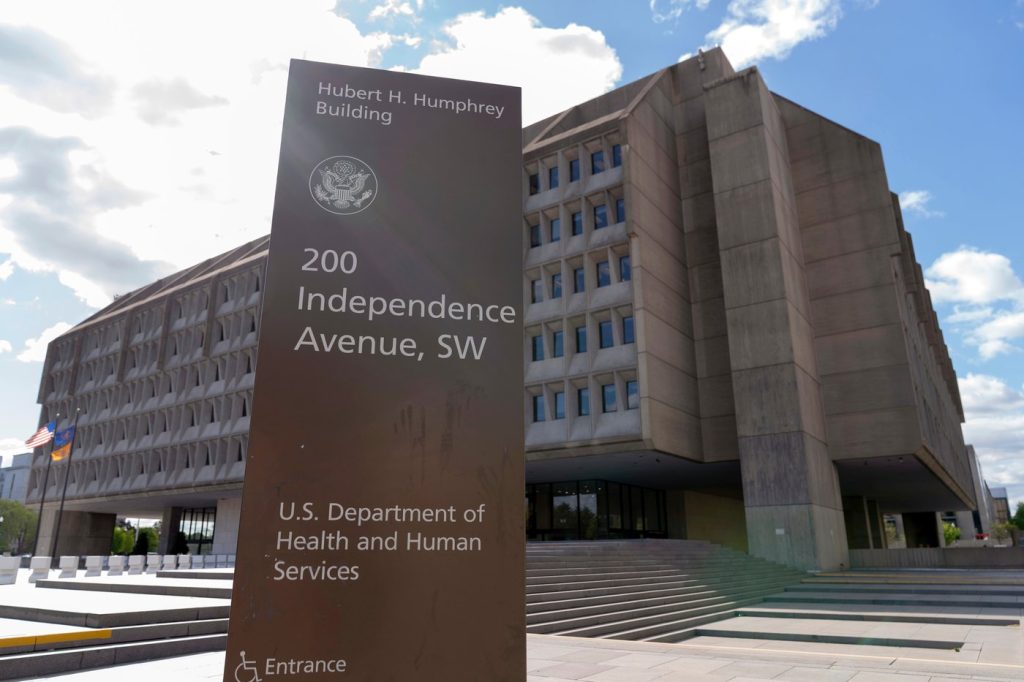
NEW YORK (AP) — The Trump administration announced on Tuesday a freeze on federal funding for New York's Medicaid Fraud Control Unit (MFCU), a key state agency tasked with investigating and prosecuting fraud within the Medicaid healthcare program. The decision was made following claims from U.S. Department of Health and Human Services Inspector General Thomas March Bell, who criticized the state for not securing enough criminal indictments and convictions related to Medicaid fraud.
In a letter to New York officials, Bell indicated that funding would be suspended through at least September 30, citing insufficient performance in handling cases of Medicaid fraud. This suspension marks the second instance of the Trump administration cutting funding for state Medicaid fraud units this year, as part of a broader initiative to combat fraud within the healthcare sector. The administration has implemented various measures, including a new task force and targeted investigations, that have predominantly affected states governed by Democrats.
The suspension of funding comes on the heels of an acknowledgment by the Trump administration of an error in figures used to justify a prior fraud investigation into New York’s Medicaid program. Critics argue this mistake demonstrates a pattern of premature attacks without verifying facts. In response, New York Attorney General Letitia James pledged to contest the funding freeze, citing her office's success in recovering over $627 million for Medicaid and their recognized leadership in anti-fraud efforts.
Inspector General Bell's letter highlighted the MFCU’s slow pace in securing criminal convictions compared to similar units in other states, noting that New York achieved the lowest number of convictions from 2023 to 2025. Although he acknowledged that New York had strategically chosen to focus on high-impact, complex fraud cases, he maintained that this approach did not yield enough results to justify continued funding.
Bell declared, “Enough is enough,” stating that New York’s MFCU had failed to meet the conditions of its grant award. However, he indicated that the funding suspension could potentially be lifted before September 30 if New York demonstrates corrective actions to address the concerns outlined in his letter.
In defense of their performance, New York's Attorney General's office stated that they are recognized as a national leader in Medicaid fraud investigations and prosecutions. A report from the HHS indicated that New York was among four states accounting for half of the total civil recoveries. Furthermore, officials argued that the unit primarily targets higher-level fraud involving company owners and executives, often resulting in significant recoveries for Medicaid.
The funding freeze followed a similar action taken against Hawaii in June 2025, where the state faced funding cuts after three years without any indictments or convictions for Medicaid fraud. Joan Alker, the executive director of Georgetown University’s Center for Children and Families, criticized the federal government’s move to cut funding for prosecuting fraud, emphasizing the irony of hindering efforts that are meant to address fraud in social safety-net programs.
For months, the Trump administration has expressed concerns about alleged laxity regarding fraud in Medicaid and other social safety-net programs in various states, predominantly those led by Democrats. They have sought detailed information on fraud prevention measures from at least five states, four of which are governed by Democrats.
In addition to New York and Hawaii, other states like Minnesota and California have also faced withheld Medicaid funding over similar fraud-related concerns. Minnesota’s Governor Tim Walz accused the administration of retaliative funding cuts. The crackdown on fraud has extended to Medicare programs as well, with a six-month moratorium on new enrollments for hospice and home care providers announced by Dr. Mehmet Oz, the head of the Centers for Medicare and Medicaid Services.
Associated Press writer Anthony Izaguirre contributed to this report, while Geoff Mulvihill reported from Haddonfield, New Jersey.