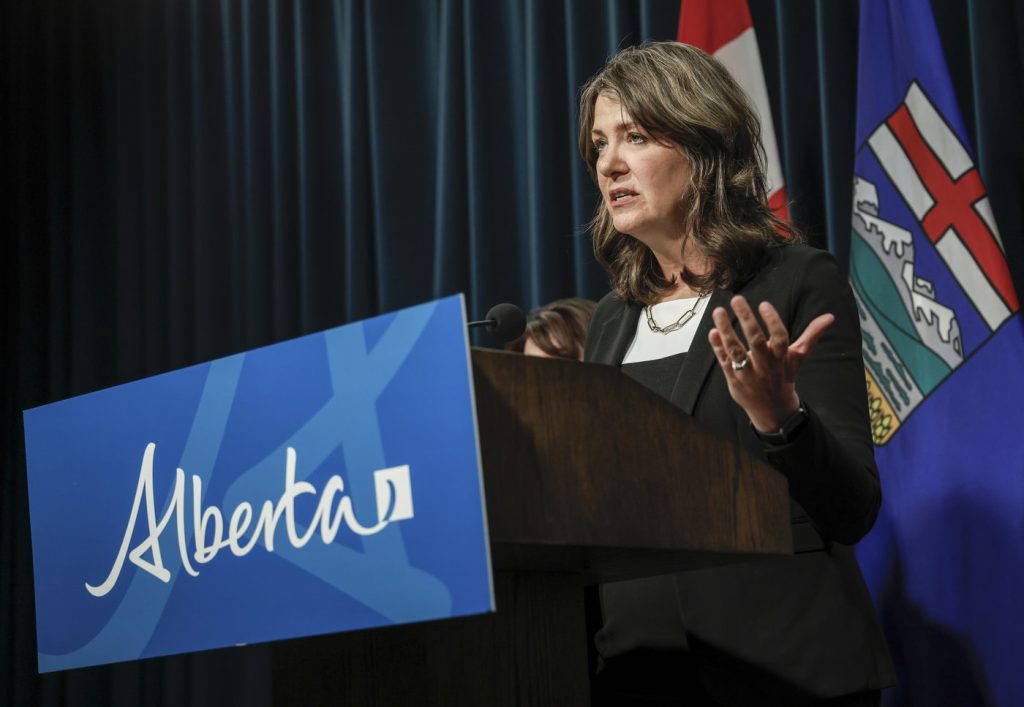
EDMONTON – Alberta Premier Danielle Smith has publicly responded to U.S. President Donald Trump’s recent threat to impose a 50 percent tariff on Canadian goods. During a provincewide call-in radio show on Saturday, Smith stated that she does not intend to retaliate with an alcohol ban against American products. Instead, she believes that it should be left to retailers and consumers to decide how to stock their shelves in light of the impending tariffs.
Smith emphasized, “People should understand that the Americans have not banned a single product from Canada from going into the United States, so it’s a pretty extraordinary measure to put a ban in place.” She advocates for a calm and measured approach to the situation, urging against emotional reactions and insisting on addressing sectoral issues individually.
Last year, several Canadian provincial liquor boards ceased purchasing American alcohol in reaction to Trump’s previous tariff threats and comments regarding annexation. While provinces like Saskatchewan and Alberta have resumed sales of American alcoholic products after temporary bans, major purchasing provinces such as Ontario and Quebec continue to hold off on stocking U.S. alcohol.
The relationship regarding trade between the two nations has become a contentious issue among both political parties in the United States. Trump’s recent announcement of potential tariffs on numerous Canadian goods is reportedly a reaction to these provincial bans on U.S. alcohol. In addition, he has also levied extra tariffs of 10 percent on various countries, including Canada, but clarified that these new duties will not apply to goods covered under the continental trade pact known as CUSMA (United States–Mexico–Canada Agreement).
American officials have linked their latest tariff threats to Canada’s previous actions, including the imposed alcohol bans. In light of the situation, Canadian Prime Minister Mark Carney has indicated that both the Canadian and American governments have resolved to strengthen trade negotiations moving forward.
While other provincial leaders such as Ontario Premier Doug Ford, British Columbia Premier David Eby, and Premier Susan Holt of New Brunswick have signaled openness to increasing pressure to ensure a fair trade agreement, Smith, alongside Saskatchewan Premier Scott Moe, has adopted a more rigid stance against using their provinces' cross-border exports as leverage in negotiations.
During the radio show, Smith was queried about why Alberta continues to take a non-retaliatory approach. In her response, she reiterated her preference for a calm strategy aimed at winning the hearts and minds of Americans over resorting to aggressive retaliatory measures. “Eventually we think it will have an impact on the decision makers, and that’s the approach we want to stick with,” she added, implying that diplomacy is preferable to a confrontational stance.
Smith expressed her optimism that the federal government in Ottawa would successfully reach an agreement with Trump concerning the looming tariff threats. She noted, “We’re counting down the days with this new deadline. It sounds like a level of intensity is going to increase to try to get to the finish line on that.”
This situation underscores the complexities of Canada-U.S. trade relations, as various provincial actions have elicited a broad range of responses from American officials. Going forward, the dialogue between the two nations may pivot on how provinces choose to respond to federal directives and external pressures regarding trade and tariffs.