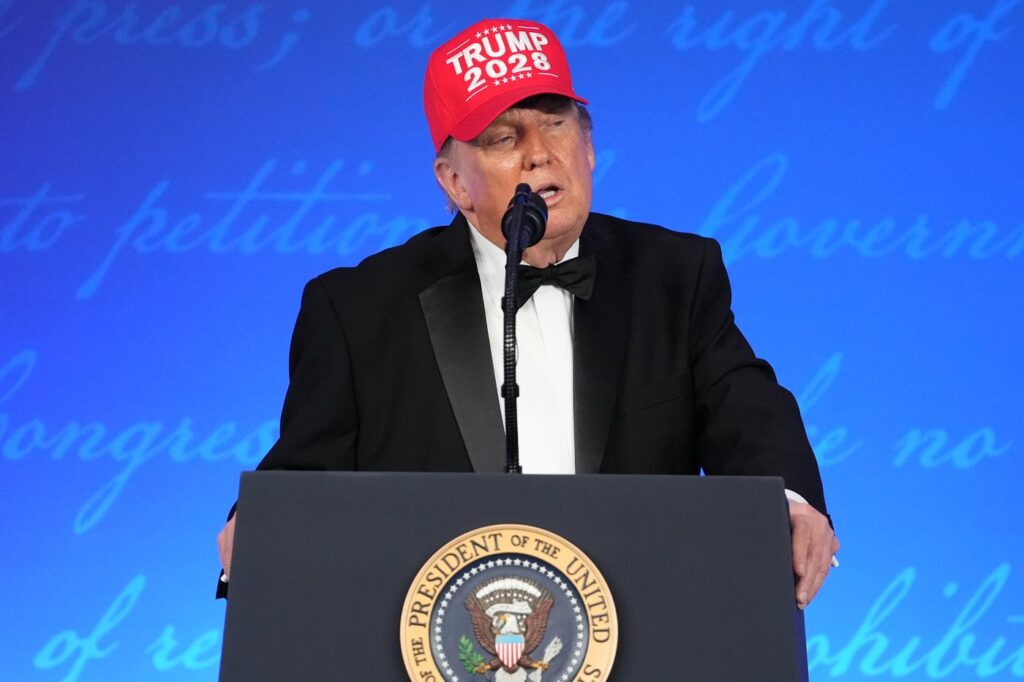
In recent weeks, the rhetoric from U.S. President Donald Trump towards Canada has become increasingly negative, with the president referring to Canada as the "51st state" and addressing Prime Minister Mark Carney as a "governor." This shift in tone has been mirrored by several Republicans, signaling a broader trend of targeting Canada for criticism amid Trump's declining approval ratings.
Political analysts attribute this shift to Trump's need for scapegoats as he grapples with controversies surrounding his administration, including unpopular policies and an ongoing war with Iran. Robert C. Rowland, a professor of rhetoric at the University of Kansas, noted that no previous U.S. president has engaged in such disparaging comments about Canada, highlighting a significant departure from a historically respectful bilateral relationship.
The anti-Canada sentiment has escalated recently, particularly following the arrival of wildfire smoke from Canada into parts of the United States. In response, Trump threatened tariffs and several Republicans, including Michigan state senator Aric Nesbitt, made inflammatory remarks on social media. Nesbitt criticized Canada’s forest management, suggesting that unless Canada improved, it risked becoming the "51st state." Michigan Rep. John James echoed this sentiment on social media, issuing what he termed a "FINAL WARNING TO CANADA," emphasizing the responsibility of sovereignty in preventing disasters affecting the United States.
Rowland remarked that Trump’s presidency represents a stark break from the long-standing mutual respect traditionally shared with Canada, recalling moments like the 1985 Shamrock Summit between President Ronald Reagan and Prime Minister Brian Mulroney, and the camaraderie displayed by former president Jimmy Carter at Pierre Trudeau’s funeral.
During Trump’s first term, there were tensions related to trade negotiations under the Canada-U.S.-Mexico Agreement, but observers claim that the current level of hostility towards Canada is unprecedented. These derogatory views are influencing the opinions of Trump's supporters, particularly within the MAGA crowd, leading them to adopt negative attitudes towards Canada based on Trump’s rhetoric. Rowland highlighted that attitudes towards Trump significantly shape political opinions, including views on Canada.
Polling data reflects this trend; a Gallup survey published in March indicated a notable decline in favorable views of Canada among Republicans, dropping from 85 percent in 2025 to 62 percent. In contrast, 80 percent of political independents and 95 percent of Democrats maintain favorable opinions of Canada. Political science professor Matthew Lebo from Western University noted that the influence of Trump’s statements is especially potent among MAGA voters, who are likely to align their views with what Trump portrays regarding Canadian relations.
Political strategists predict that some Republican politicians might leverage Canada-bashing as a tactic to galvanize support from Trump’s base in the lead-up to upcoming primaries. However, there is concern that such approaches may alienate non-MAGA voters during general elections, making it a potentially risky strategy for electoral success.
The evolving discourse surrounding Canada also illustrates the growing political polarization evident in the United States, which places Canada in a precarious position, where U.S. government policies can drastically swing based on electoral outcomes. Additionally, a June poll from the Pew Research Center indicated that only 33 percent of Canadians viewed the United States favorably, a slight decline from previous years, reflecting the impact of the current political climate on international perceptions.