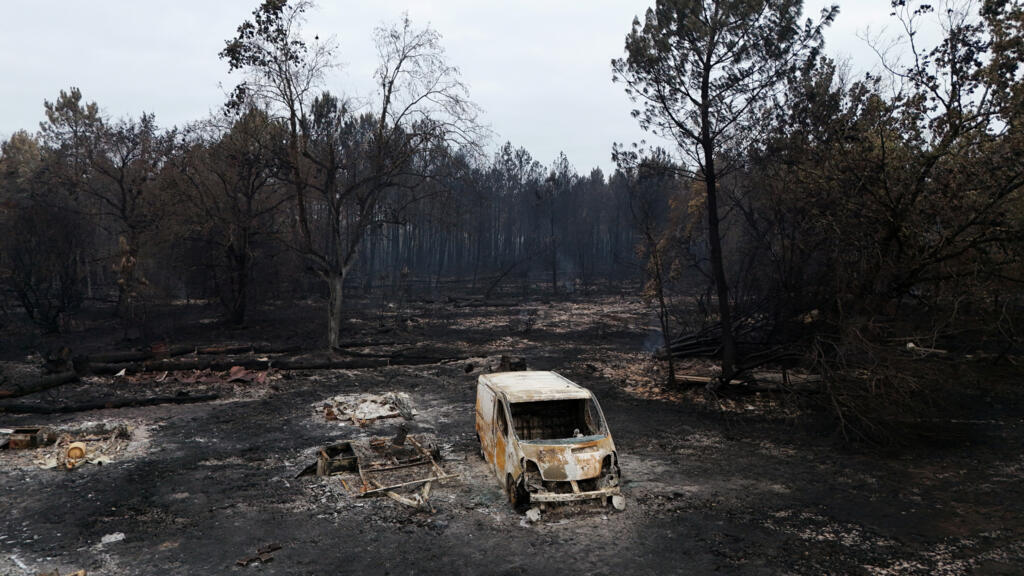
The ongoing megafire in the Gironde department, located in the southwest of France near Bordeaux, has become a significant concern since it began on July 22. As of Tuesday morning, the fire has consumed approximately 42,000 hectares of forest, prompting extensive firefighting efforts and increased vigilance from local authorities.
According to the local prefecture, the situation regarding the fire has remained "stable" following a relatively calm night. This stability is critical as it provides a temporary respite for firefighters engaged in battling the blaze. However, concerns remain high as weather forecasts indicate a potential rise in temperatures later in the day. Predictions suggest that temperatures could soar between 33°C and 35°C inland, coupled with a southeast wind that may exacerbate the fire conditions.
The nature of the fire and its potential for further spread highlights the challenges faced by the firefighting teams on the ground. The combination of high temperatures and wind can rapidly change the dynamics of a wildfire, leading to renewed outbreaks and complicating containment efforts. Firefighters remain on high alert as they strategize to manage and control the active blaze.
As the situation in Gironde develops, authorities continue to monitor the fire closely. Local residents and communities in the vicinity are advised to stay informed about the ongoing situation and heed any safety advisories issued by officials. The fire's impact not only threatens local ecosystems but also poses risks to nearby towns and infrastructure.
The megafire in Gironde is part of a broader trend of increased wildfire activity observed in various regions across Europe, driven by climate change and extreme weather events. Such fires can burn for weeks on end, highlighting the urgent need for effective wildfire management strategies and firefighting resources.
In light of the evolving circumstances, it is imperative for the public to remain vigilant and prepared for updates regarding the fire's status. Continuous coverage and communication from local authorities are vital in ensuring the safety of both residents and the efforts to extinguish the fire. Emergency response teams are working diligently to contain the flames, and additional resources may be deployed if necessary.
Despite the current stabilization, the risk of reignition due to escalating temperatures and wind conditions calls for heightened awareness. The community's cooperation and adherence to safety protocols will be crucial in navigating this challenging situation. As updates unfold, the local prefecture will provide further information regarding fire conditions and safety measures to mitigate risks associated with the ongoing wildfire.