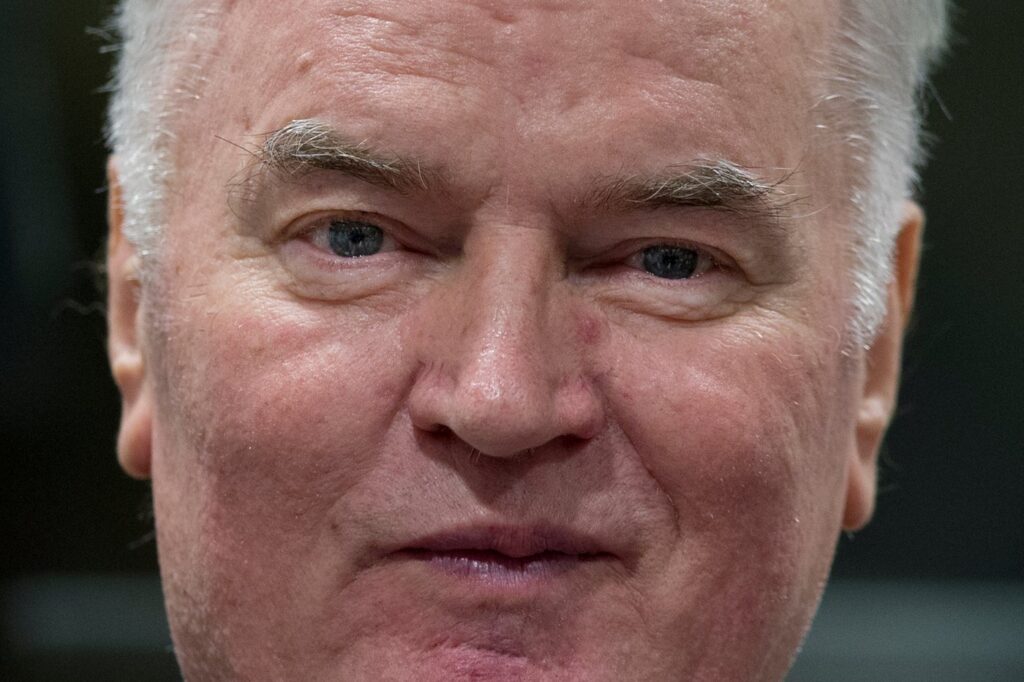
BELGRADE, Serbia (AP) Ratko Mladic, the former Bosnian Serb general notorious for his role in the Bosnian War and responsible for the 1995 Srebrenica massacre, died at the age of 84 while serving a life sentence for war crimes. U.N. officials confirmed that he passed away on Thursday at a hospital in The Hague, Netherlands. A relative of Mladic confirmed the reports, stating that Mladic’s son, Darko Mladic, was en route to the Dutch city.
The United Nations tribunal for war crimes committed during the disintegration of Yugoslavia sentenced Mladic to life imprisonment in 2017, acknowledging his significant role in the atrocities, including the siege of Sarajevo and the murder of over 8,000 Bosnian Muslim men and boys in Srebrenica—deemed the first genocide in Europe since World War II. Mladic had been in custody since 2011 after years of evasion.
Renowned for his ruthless tactics and extremist nationalism, Mladic described himself as a "Serbian God" while commanding forces that committed horrific acts against non-Serb civilians. He became commander of the Bosnian Serb army as the ethnic conflict in Bosnia and Herzegovina escalated in 1992, leading campaigns that isolated and terrorized cities like Sarajevo and established concentration camps.
During his command, Mladic laid siege to Sarajevo, killing civilians with snipers and heavy artillery. His forces perpetrated systematic killings against non-Serb civilians and enemy soldiers, which culminated in the barbaric events at Srebrenica, where he oversaw the separation, execution, and mass burial of thousands of Muslim men. This brutality has left a lasting impact, with Mladic viewed as a hero by some Serbs while being condemned by many others for his actions.
Mladic was born on March 12, 1942, in Bozinovici, Bosnia, and grew up with a strong sense of nationalism, influenced by his father's death during World War II at the hands of Croats. He was a communist officer who later embraced radical nationalism as Yugoslavia unraveled into war, gaining notoriety for his uncompromising stance against Bosnian Muslims and Croats.
After the war, Mladic spent years evading capture, living in secluded areas of Bosnia before eventually moving to Serbia. His life on the run began around 1996 after being indicted by the U.N. tribunal. Initially hiding in a military compound, he later appeared in public events, including family gatherings, always evading apprehension until his eventual capture in May 2011.
Amid ongoing health issues later in life, Mladic appeared frail during his trials at The Hague, yet he retained a defiant attitude, famously shouting at the judges during his sentencing. His death raises complex emotions among survivors and victim family members, with some expressing bitterness that he never fully acknowledged his crimes.
Munira Subasic, from the Mothers of Srebrenica group, articulated mixed feelings about his passing, lamenting that many in Serbia still deny the extent of Mladic's crimes despite the undeniable pain felt by victims' families. Conversely, residents in Bosnian Serb strongholds mourned him, portraying Mladic as an "honorable" figure and a defender of Serbian pride amidst the conflict.
Throughout his life, Mladic remained a polarizing figure, representing the broader ethnic tensions and lasting legacies of the Balkan Wars in the 1990s. His actions and the resulting tribulations continue to reverberate through the region, as communities grapple with the deeply entrenched narratives of victimhood and heroism shaped by this turbulent history.