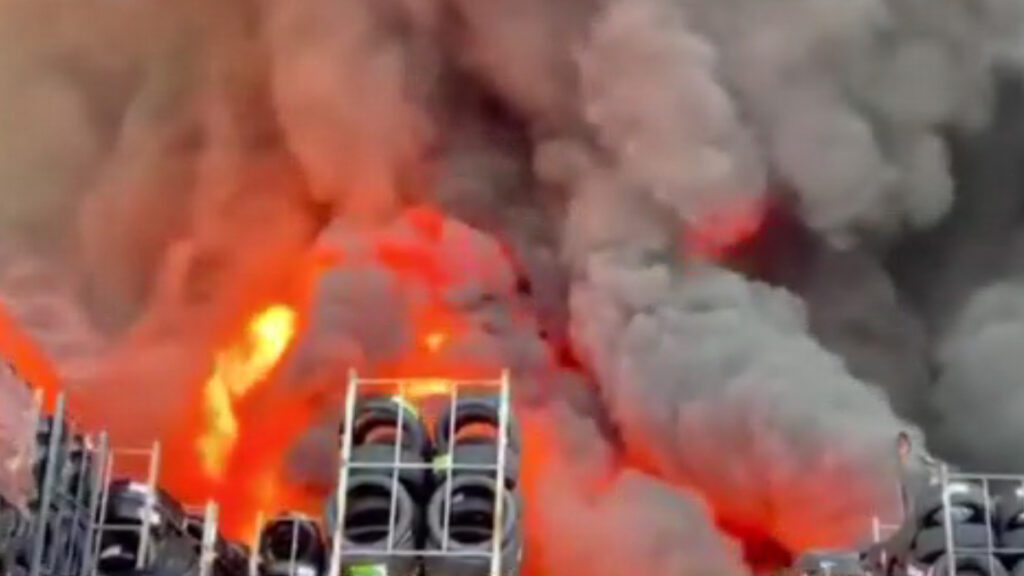
MYLA, Ukraine (AP) – A Russian drone strike on a warehouse in Myla, a village located in the Bucha district west of Kyiv, resulted in the deaths of 37 individuals. Ukrainian officials reported that the warehouse was storing shells, mines, and other ammunition, which led to massive explosions and fires that spread to dozens of nearby homes and buildings during the attack on Friday night.
This incident marks the deadliest attack of the ongoing war in 2026 and occurred amid nearly continuous Russian strikes that have severely disrupted life in and around the Ukrainian capital. Kyiv officials highlighted that Russia has been building up missile stocks and launching significant attacks every few days, aiming to overwhelm Ukrainian defenses.
Tymur Tkachenko, the head of the local regional military administration, reported that the strike caused extensive damage, affecting at least 50 residential buildings and resulting in the fatalities, with 34 of the deceased residents being from a care home for the elderly and disabled. In total, over 370 people were evacuated from the affected area.
Witnesses described the shock and chaos in Myla as the blasts unfolded. Oleksandr Vodolaz, a resident, recounted that the drone hit the warehouse at approximately 8 p.m., followed by rapid detonations that took residents by surprise. Many were unaware that such weapons were stored in their vicinity. Another local, Zhanna Kravchuk, expressed confusion over the storage of these explosives so close to civilian homes.
Ukrainian President Volodymyr Zelenskyy condemned the attack, describing it as a "terrible situation" and attributing it to "terrible negligence" on the part of those responsible for storing explosives adjacent to civilian populations. He pointed out that Ukrainian law prohibits the storage of ammunition near residential areas, and criminal proceedings have been initiated. Zelenskyy stressed the importance of accountability for those who allowed such dangerous storage practices.
In a subsequent social media post on Saturday, Zelenskyy elaborated that the first attack targeted an ammunition storage site, identified as a Defense Forces facility. The Prime Minister, Serhii Koretskyi, echoed this sentiment, referencing a prior attack in July on a Kyiv suburb that also struck an ammunition depot, resulting in numerous casualties. He noted the persistent pattern of negligence in the handling of military supplies as unacceptable.
The fatalities from the Myla attack exceeded the 31 people killed in the July 2 strike on Kyiv, which had previously been identified as the war's deadliest incident of the year. Meanwhile, Russian authorities claimed responsibility for hitting a warehouse that was allegedly storing components for long-range drones, alongside attacks on various logistics centers and facilities in the Kyiv region.
In parallel, Russian airstrikes have continued to inflict damage in other regions of Ukraine, such as the southern Kherson area, where recent attacks resulted in two deaths and numerous injuries. Local officials have recommended that residents evacuate due to the increased risk of prolonged power outages and ongoing hostilities.
Ukrainian officials have noted a significant uptick in the use of Russian jet-powered drones, posing a challenge for the country's air defenses. As these drones grow in number and effectiveness, Ukrainian authorities are diligently working on methods to counter this threat, although current interceptor capabilities have not met expectations.
In response to the challenges posed by Russian assaults, Ukraine has ramped up its long-range military operations against Russian industries and energy infrastructures. President Zelenskyy announced a goal to increase the frequency of these operations, targeting one thousand drone launches per day, as the country continues to adapt to the evolving landscape of warfare.
Recent developments also included Ukrainian drone strikes in the Rostov region of Russia, resulting in injuries to at least 11 individuals, including children. This reflects the ongoing tension and conflict that persists between the two nations as the situation remains highly volatile.