A divided Supreme Court ruled on Monday, allowing the White House to proceed with a controversial $400 million ballroom project while legal challenges unfold. This decision is viewed as a significant victory for President Donald Trump, who is capitalizing on executive power to reshape the nation's capital.
The Supreme Court's 5-4 ruling replaced a temporary order that had been issued earlier this month, just days before a court-ordered halt to the project was set to take effect. Chief Justice John Roberts had signed that temporary order and was assigned to manage appeals from the capital. However, he publicly dissented against the latest decision, arguing that the project is likely illegal as it lacks Congressional approval.
Chief Justice Roberts stated that the decision is "no victory for the separation of powers," a sentiment echoed by the court's three liberal justices. In contrast, the majority opinion contended that the National Trust for Historic Preservation likely did not possess the legal standing necessary to challenge the project.
The unsigned order referenced government claims that the ballroom would serve national security interests by providing a shield for a planned underground military installation and a secure venue for large events, superseding the current use of tents. The majority opinion dismissed the Trust's claims of harm, attributing any potential offense to the aesthetic impact of the new structure on its members.
Trump celebrated the ruling, asserting in a social media post that the Supreme Court had favored the construction of the Ballroom/Military Complex without any ongoing contingencies or threats. However, the majority's decision did not resolve the legal status of the project; the dispute is expected to move back to lower courts. According to court documents, significant aspects of the project could be completed within months, offering a rapid timeline compared to typical legal proceedings.
Brent Leggs, President and CEO of the Trust, expressed disappointment with the decision but appreciated Roberts' dissent, emphasizing that this ruling does not constitute a final judgment on their argument. The Trust maintains that "each President is a temporary steward of the People's House" and cannot unilaterally execute such extensive renovations without Congressional consent.
The Trump administration had sought Supreme Court intervention following lower court rulings mandating a halt on the project due to its lack of Congressional approval. The Trust's lawsuit highlights the administration's unilateral action, including plans to demolish parts of the East Wing, accusing the White House of attempting to "outrun the courts" to expedite construction.
In previous court proceedings, the administration argued that the President holds comprehensive authority over the renovation of the White House and other federal structures. However, the Trust and dissident justices pointed out that federal law explicitly prohibits construction on federal parks or public grounds in Washington, D.C. without clear Congressional authority. The Trust emphasized its commitment to preserving historic American architecture, reinforcing their right to challenge the project legally.
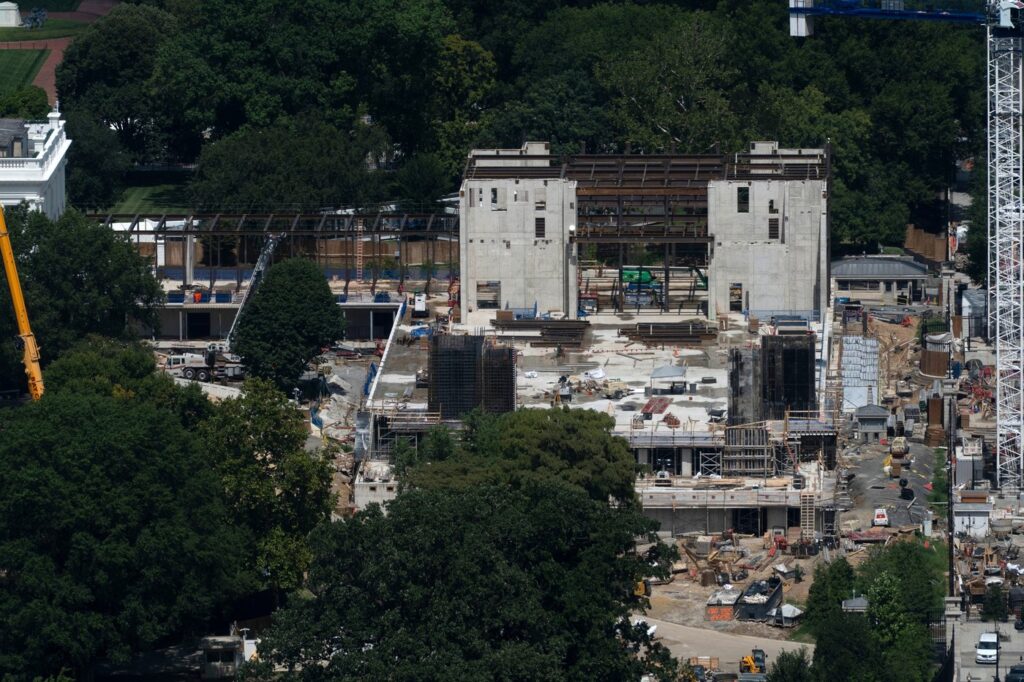
In response to the lawsuit, Trump labeled it as "baseless," asserting that once completed in the summer of 2028, the ballroom and military complex would be a source of national pride. Crews are reportedly working around the clock on the proposed 90,000-square-foot ballroom, with the structure's framework expected to be finished by November and much of the facade by April, aiming for full completion by August 2028.
In April, U.S. District Judge Richard Leon had ordered a cessation of aboveground construction on the ballroom, permitting underground work on bunkers and military installations to proceed. This halt was upheld by a divided appeals court panel; two judges appointed by Democratic presidents determined that the issue was one for Congress, while a third, appointed by Trump, found that the Trust lacked legal standing to sue.
Solicitor General D. John Sauer highlighted the "extraordinary and unlawful" nature of the earlier ruling that halted construction, emphasizing that completion of the project is "vitally required by national security," a focus not initially mentioned when Trump announced plans funded by private donations.
The administration has experienced multiple wins on the Supreme Court's emergency docket, though the justices have also ruled against several of the president's prominent policies after comprehensive reviews.